 I’ve read hundreds of scripts as a festival judge and director over the years and I’ve found 7 steps that help me determine if a script is worth shooting. The 7 steps are ideal for assessing if the story is visually compelling with believable characters.
Since I will be writing about the “main character”, “protagonist” or “Hero” throughout this article, I’ll just call him “Mick” (the Most Important Character Known) to simplify what I share.
1. THE HUMAN CONDITION
During the first read of the script it’s important to recognize if the story points out Mick’s natural flaw. Since we’re all flawed, the film won’t be received as believable if Mick doesn’t have one. Films that have “good” people becoming “better” won’t work, as people won’t be able to relate to an inauthentic Mick. The script needs a flawed Mick who we can embrace.
A great script also reveals what makes Mick do the things he does. These motivations must be presented in a visual manner within the script with lots of verbs, not adjectives. This will give the director a quick handle on how he can visualize the exploration of Mick’s life.
2. THE ACTION PLOTLINE
The script must be clear about the story elements like who the characters are, the location of the action, what form of growth or change happens to Mick, and so on. After the first read, the following questions can be answered to clarify if the story makes sense:
- What is the story about?
- Can it be explained in 2 sentences or 30 seconds?
- Was the story easy to follow and understand?
- Are the obvious problems easy to correct?
- What is the theme of the story?
- Can all plotlines be easily listed?
- Can the story beats be easily picked out?
- Does the climax make a profound or emotional impact?
Further analysis can be done on a scene-by-scene basis. The following questions can help determine if a scene might hit the cutting room floor or survive:
- Does the scene raise a question or resolve a previous question?
- In what way does the scene advance the story?
- How many power exchanges are within the scene?
- How often does the emotional status of the scene change?
3. THE MOTIVATION
Mick must drive the action plot and requires some form of motivation to do so. Reviewing the script elements that drive Mick’s behavior to change from his flawed human condition to something greater must be in place for the action plotline to take the audience on a journey.
The script elements must infer what Mick thinks, how he feels, and thereby what his actions , which all serve to drive the story forward. To establish Mick’s motivation, the script must have some form of objective laced within the story. It needs to be clear and concise. The following questions can help determine Mick’s motivation:
- What does Mick want to do throughout the story?
- What does Mick want to do in each scene?
- What is Mick doing versus what he is saying?
- How does Mick’s choices drive the audience to the next scene?
- What is Mick willing to sacrifice to obtain his objective?
4. THE JUXTAPOSITION OF IMAGES
All great films are a series of shots that tell a story. While many think the dialog is the most important part, it is actually the selection of shots in a series that reveals the essence of the story. My favorite types of films are those that can be watched and understood with the sound turned off. Here is a shot list to make the point:
- A single long stem rose is held behind a man’s back.
- A man’s hand knocks on a door.
- A woman’s hand turns the doorknob.
- The door swings open past long legs and red high heels.
- The rose is pulled out from behind the back.
- A man’s hand places the rose into a woman’s hand.
- The man’s feet fidget.
- The rose flies across the room.
- The rose lands in a wastebasket.
- A woman’s hand pushes against a man’s chest.
- The man’s feet shuffle backwards.
- The door swings closed.
The above shot list was my rendition of Mick trying to make up for a mistake with the woman he loved. The shots suggested that she pushed him back into the doghouse for a bit more time, rejecting his attempt at reconciliation.
The simple positioning of the individual shots generates the audience’s creativity and allows them to draw on their own emotional backgrounds to understand what the shots meant. If the script doesn’t suggest a certain series of visual opportunities in the story, it may be better as a book rather than a film.
5. THE CAMERA’S PERSPECTIVE
Great scripts hint at camera movement, position and point of view. Bad scripts tell the director what type of shot to use. Determining if the writer is a would-be cinematographer or is excellent at his craft by merely suggesting possibilities will help a discerning director to determine the cinematic language of the film.
A helpful script suggests if the camera view is:
- Objective: This type of camera positioning gives the audience an outsider’s look at the story, as if they were standing at the fourth wall looking on.
- Subjective: This placement is typically within the action itself, rather than at a “safe” distance, pulling the audience into the scene. The shaky camera technique is subjective as it makes the audience feel like they are in the story.
- POV: This camera angle is typically set up by a subjective series of shots and then reveals what Mick is seeing.
The emotional tone and pace of the film determines which of the above types of camera shots are best used. Regardless of the suggestion hinted at in the script, the director needs to understand how the shots would drive the central idea or super objective of the story forward. Whatever shots take away from that goal should be changed.
6. THE MOVEMENT OF CHARACTERS
Scenes that suggest movement based on human reactions greatly support the director’s vision. Since every director needs to block the actors in relationship to the camera and other characters, any suggested movement within the story would simplify the shoot.
To determine if the story is mostly made up of talking heads or physical action, the following questions can be considered:
- Where was Mick located in the last scene?
- Where will Mick start in the current scene?
- Will the juxtaposition of A and B impact the story?
- In real life, what would Mick’s natural movement be in the scene?
- Is Mick increased or diminished in the scene?
- Should Mick be closer to or farther from the camera?
- Would an angle shot increase the emotions of the scene?
- If the scene is intimate, will a steady close-up work?
- If the scene is active, would tight shots increase the emotional intensity or distract the audience from understanding the action?
It’s important to understand that the above list is a fraction of the possibilities. It should also be noted that Mick’s movement could be created by him moving or by the director moving the camera.
7. THE IT
Great films are great because of all the story elements that come together. Scripts that help the director to visualize the location and production design, the cinematography and sound with music and effects, the editing potential and pacing, and anything else highly unique like stunts, special effects, and whatever else will take filmmaking to the next level, all make up the thing we call “it”.
The “it” is the synergy that makes the story spectacular, well beyond the sum of the filmic elements that brought the film into being. It is that panache that can’t be created, but shows up. Simply put, it is those elements that make the story universal for all audiences, while being specifically unique as if no niche market has ever seen it before.
When a director finds a script that has all 7 steps showing up in strength within the story he’s considering, he finds his passion for the story growing beyond what he’s capable of holding in. He must tell the story. Anything shy of this isn’t worth the time or effort.
Copyright © 2012 by CJ Powers

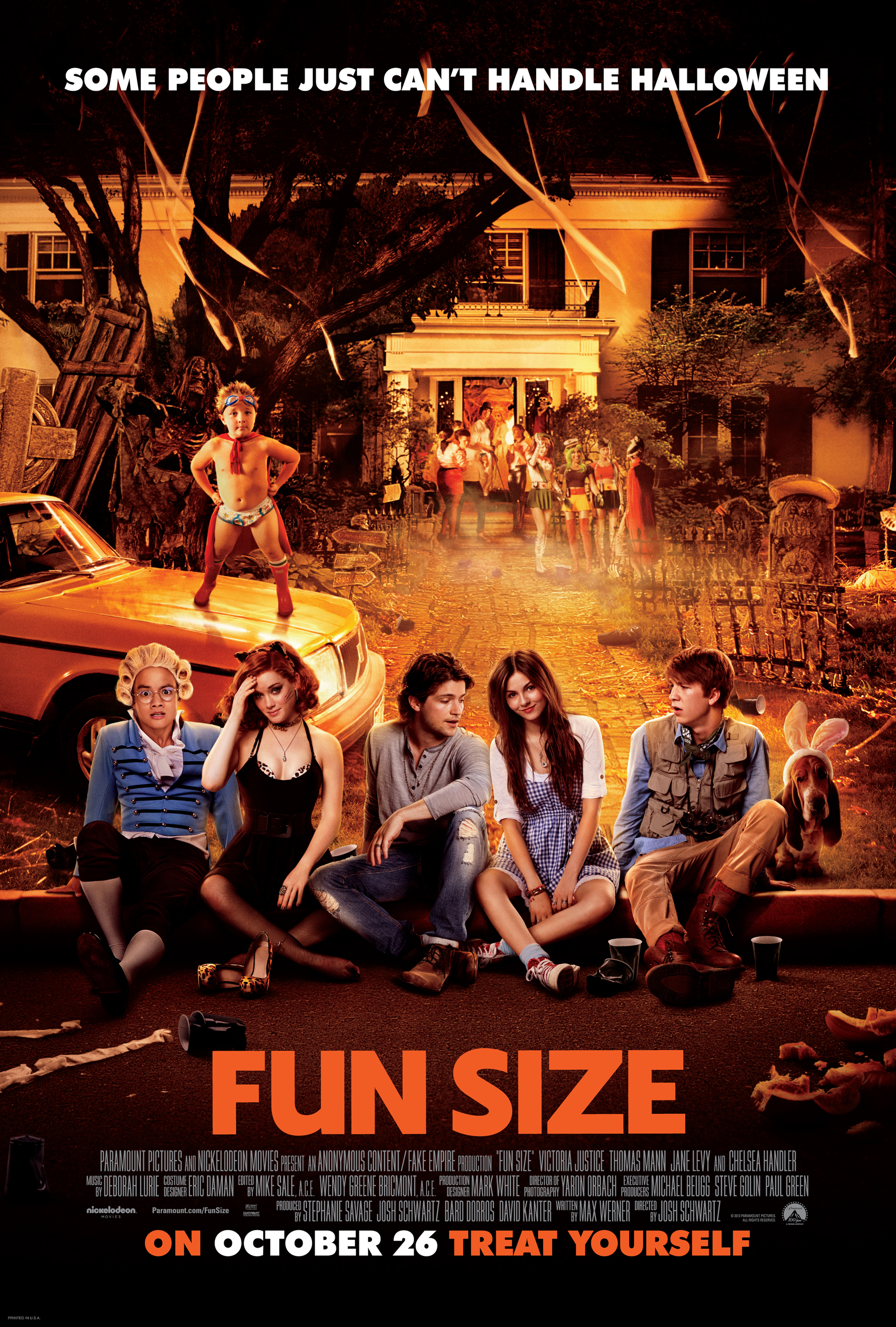 Schwartz’s freshman film had the right cast, but poor execution. There was nothing cinematic about the story and its imagery was less spectacular than many television shows. It might have faired better on Nickelodeon than in theaters, especially since screenwriter Max Werner delivered a flat script, far from his normal work on the Colbert Reports.
 The large amounts of product placement within the film aimed at tweens and moms were incredible. It was so abundant, that it took me out of the story several times. However, the teens I sat next to saw it as a wonderful time to chat, just like they do at home during commercials.
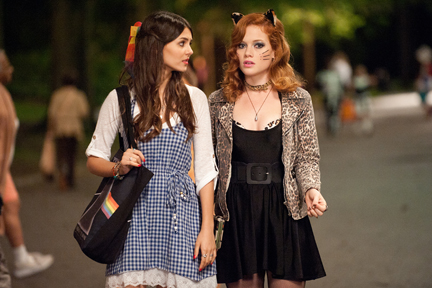 One of these messages came from two lesbian characters. Jackie (Ana Gasteyer) and Barb (Kerri KenneySilver) were down to earth, overachieving moms to Roosevelt (Thomas Mann), sidekick to Wren (Victoria Justice). While the characters are a bit kooky, they raised the most “normal” teen in the film. They were not referenced as lesbians, but as great moms. While they were comedic, the other characters respected them.
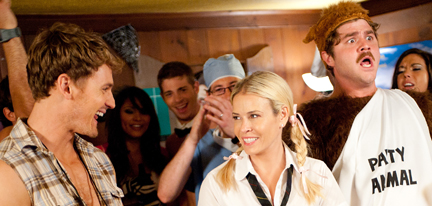 Regardless of the messages, I don’t recommend you, or your teens/tweens watch this poorly made film. Nor do I recommend it as a video rental later. The story was overly predictable, flat, and had little value worth watching. The teens sitting next to me were even bored. Although, I will say it was refreshing to watch Chelsea Handler, one of the raunchiest comedians of all time, playing one of the least raunchy people in the film.

 CJ's Corner