Motion pictures have always been about action. If it were not so, it would have been called “still” pictures. Movement makes film what it is and we find numerous techniques developed over the years that take advantage of the medium. Between all the techniques used in chase scenes to move a story forward, dolly and tracking shots to heighten dialog, or even steadicam shots for continuous shooting, one thing stands out: Actors need action.
 I’ve had opportunity to work with two kinds of actors: seasoned professionals and amateurs. Regardless of which camp they live in, the most important job a director has is to make them feel at home within their character – bolstering their self-esteem to the point where being something they’re not, doesn’t intimidate them.
Unfortunately, there are more bad scripts in the independent world than good ones. Poorly worded scripts can cut at the very fabric of encouraging the actor to his best performance. One example stated:
TERRANCE leaves with a surly expression.
TERRANCE
You are a fool.
He steps through the door.
While I can picture the shot with the guy leaving in a gruff fashion, I can’t fathom how the actor can play “surly”. Nor can I understand how a rooky director might attempt to get him to play “more” surly. If I were an actor listening to the director tell me to be “more surly”, I’m not sure what I could do to facilitate that request. Nor would I know what I had done to be surly in the first place, making me terribly self-conscious in that moment.
Actors can’t play surly because it is not an action.
Webster states that the definition of surly is: irritably sullen and churlish in mood or manner. There is no actor on this earth that can “play” anything from within the definition. And yes, I put the word play in quote marks because it suggests…Action.
Actors need actions – Verbs. Not adjectives. Just verbs.
It’s the job of every actor to research his or her lines and determine what actions are suggested within the script. The above line from the script gives a hint at it, but only the director knows which path should be followed. The director owns the creative outcome of the picture and MUST give direction to the actor in order to focus in on one of a myriad of possibilities.
In this case, I’ll chose to direct the script line by suggesting to the actor that he is motivated:
• To Rebuke
• To Berate
• To Reprimand
By giving three verbs as examples, the actor is able to get a good sense of what I’m looking for. However, sometimes I’ll give one example at a time and see how it plays out. If I need more of something, I try a stronger verb, if less, a softer verb. The key is making sure it’s always a verb that can be acted out.
To rebuke, berate or reprimand someone, requires some form of action. A softer word choice might be to scoff. A harder version might be to shame. In all cases, the verbs generate a movement or action that most actors know how to play.
For instance, the actor might turn back as he walks out the door and state his line while leaning forward with a glint in his eye. Another actor, depending on what he brings to the character, might choose to arrogantly spout his words to bring shame down on the other character. Still, another might turn with an intensity in his voice and move toward the other character spitting out each word, then turning as if nothing happened and walk away.
Telling an actor to be surly, or worse yet, how to be surly, forces the actor to play the role mechanically, which shows up in the film. By using great verbs, the actor’s creative juices flow and they are able to draw from experience and play the scene naturally. When the director sees the natural response, if it is not quite what he wants, he can’t say to give it more without making the performance mechanical. Instead, he must find a stronger verb to inspire more intensity.
Since the actor can’t see that their performance is at the right level of intensity, he must trust the director to have his best interest and performance at heart. After all, being too intense for the scene makes it look way over the top and possibly to the point of being silly. And, too little might mean the death of the scene or a lethargic character, which lacks appeal or drama.
This director and actor relationship is sensitive and requires both people to participate in the character’s development. The director must do everything in his power to draw out the best performance and protect the actor from looking mechanical or out of place for the scene. Mean while the actor must keep his character fresh and consistent with all other discussions and scripted scenes.
Together, the relationship builds award-winning performances that will be remembered beyond a lifetime. This is all made possible by a handful of verbs being used in place of adjectives. And, with the decentralization of Hollywood, the independents that can develop great action will see greater box office success going forward. So, get out there and infiltrate your stories with great verbs and practice directing your talent with verbs.
© 2012 by CJ Powers

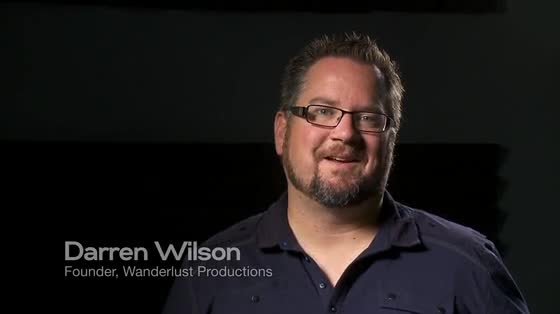 Wanderlust Productions released their latest documentary on DVD by director Darren Wilson. Father of Lights is his third documentary feature and it excels beyond his first two films Finger of God and Furious Love. His production team traveled to numerous locations and encountered many interesting people including a powerful witch doctor and violent gang leaders.
 During their travels, Wilson’s goal was to “film God” and to understand his character. His encounters were facilitated by local Christians and included a visit with a Hindu holy man. They were surprised to learn that the holy man had a dream that this team would explain to him who the Son of God was. Once the Hindu learned the truth, he gave his life to Jesus Christ and started to teach his congregation about his new belief.

 CJ's Corner