Why My Phone Hides Everything but Fitness Apps at the Gym

How AI helped me create an automatic Gym Focus—and reclaim my attention.
This morning, I got into my SUV, and my navigation app offered a route to the gym. It knew my habits.

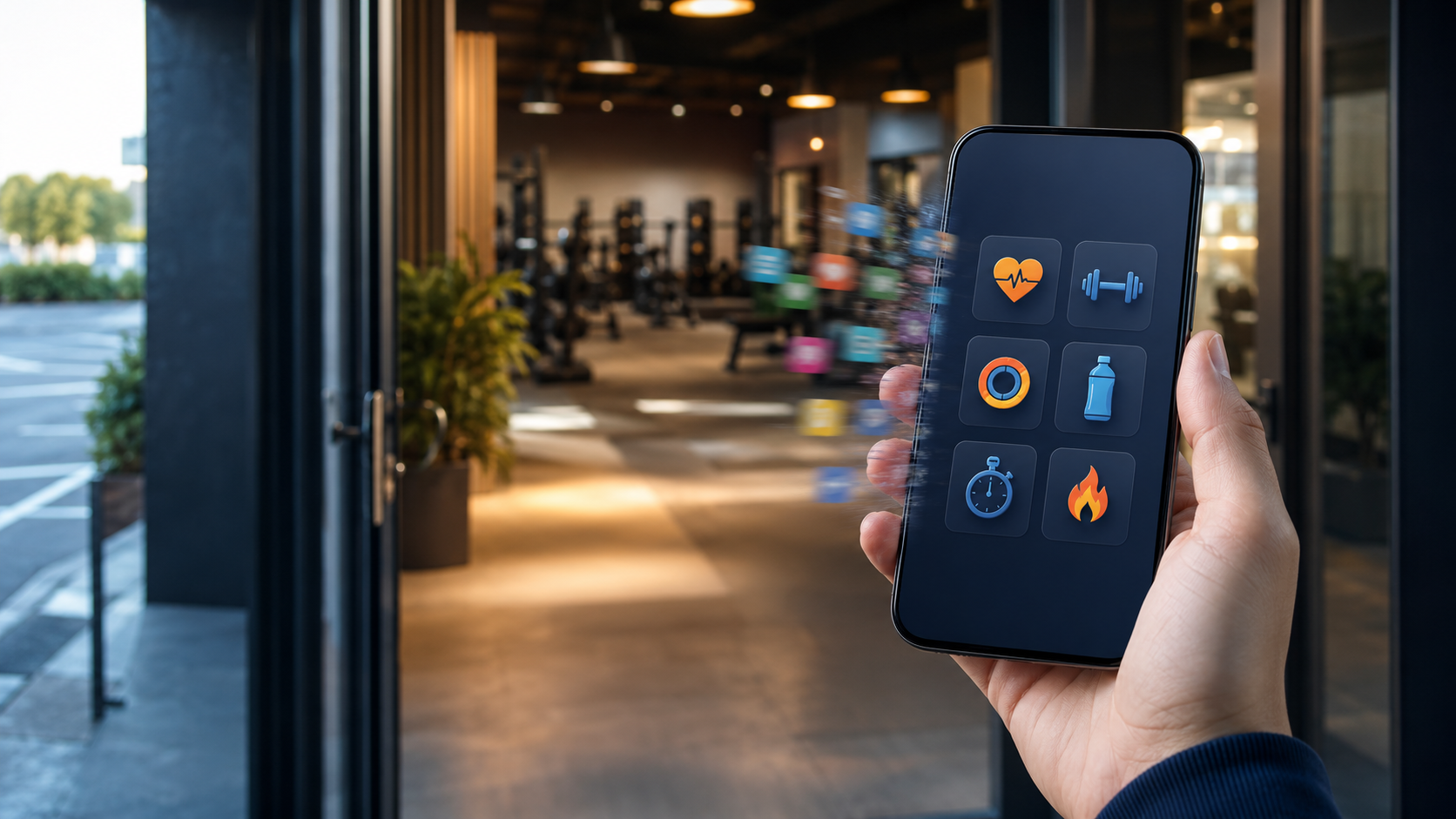
When I pulled into the gym parking lot, my phone notified me that it was time to focus on exercising. Nearly every app page on my iPhone disappeared, leaving me with only one page of exercise apps.

When I finished my workout and left the parking lot, my phone revealed all my app pages. My focused gym time had ended.

I don’t need to remember to turn anything on. I don’t have to reorganize my phone before every workout. The change happens automatically because I used AI to help me build a location-triggered Gym Focus.

But the most important part of this story isn’t what AI did.

It’s the decision I made before asking AI to do anything.

The Observation

Working out is a priority for me—but priorities need support from our environment.

I’ve noticed that our phones treat every part of our lives as if it belongs on the same screen.

Work apps sit next to entertainment apps. Fitness apps compete with email, social media, news, shopping, and games. Every time we unlock our phones, hundreds of options ask for our attention.

And unless we intervene, everything is presented with roughly the same level of importance.

While many of my apps play an important role at some point in my life, most aren’t useful at every moment.

When I enter the gym, I don’t need my entire digital life displayed in front of me. Nor do I want to be overwhelmed by the vast number of apps on my phone. I only need a small set of tools to help me exercise.

That got me thinking. What if my phone could automatically adjust its priorities when mine changed?

The Real Problem

The problem surfaced at a pool party I attended yesterday. One guy complained about the number of minutes he spent searching for the right app. He said he went through this search a few dozen times each day.

The problem: every app was being given equal access to his attention.

We often blame ourselves for becoming distracted, but our phones are designed to keep presenting us with choices. Even if we open the phone with a clear purpose, a notification, an email badge, a news alert, or a familiar social-media icon can lead us somewhere else.

At the gym, that could mean interrupting a workout to check something that could have waited until I finished.

I didn’t need more discipline. I didn’t need to go without certain apps. I needed a better environment.

The Investigation

I looked into Apple’s Focus feature, which can do much more than silence notifications. It can also determine which Home Screen pages appear while a particular Focus is active.

A Focus can be scheduled to turn on at a specific time, when a certain app opens, or when you arrive at a specific location. Apple also allows related apps and widgets to be organized on a dedicated Home Screen page. Apple explains the Focus scheduling options here and the page-customization concept in its Home Screen guide.

The capability already existed. I simply didn’t know how to turn it into the experience I wanted.

So I asked AI for help.

AI had previously given me step-by-step instructions for building a Shortcut. On another project, it even wrote an AppleScript for me. For my gym setup, I explained the outcome I wanted and used AI to walk me through the necessary steps.

This is one of the most practical ways to use AI: not merely to provide an answer, but to translate an intention into a workable process.

The Framework: Group, Focus, and Trigger

AI becomes far more useful when we can clearly explain what we want or need. Using the example of my phone’s Gym Focus, I created three decision points to guide what I provide to AI:

  • Group: Which apps belong together for a particular activity?
  • Focus: Which app pages should appear—and which should disappear?
  • Trigger: What event should activate and deactivate that environment?

For my gym setup, the answers were simple:

  • My fitness apps belonged together on one page.
  • That page should be the only one visible during a workout.
  • Entering the gym parking lot should activate the Focus.
  • Leaving the parking lot should return the phone to normal.

Once I had made those human decisions, AI could help me handle the technical setup.

The Story

The real test came the next day when I drove to the gym, especially since I had forgotten that I had set up the automation.

I entered the parking lot, and my Gym Focus activated. The regular pages on my phone disappeared, leaving the page I had created for fitness.

My phone hadn’t become less powerful. It had become more appropriate for the moment.

After my workout, I got into the car and headed home. Once I left the location, the Gym Focus turned off, and all my regular app pages returned.

Nothing had been permanently deleted or rearranged. My phone had simply changed environments with me. And just in case, I had a button to override my automation if necessary.

The Gym Focus is a small automation, but it solves a very human problem: the difficulty of protecting our attention. You can bet I started thinking about other priorities that might need the same kind of automated protection.

The Practical AI Step

You, too, can use AI to build systems that protect your priorities. Start by writing down the different roles your phone plays in your life.

You might create groups such as:

  • Fitness
  • Work
  • Writing
  • Family time
  • Travel
  • Church or personal reflection
  • Evening relaxation

Next, decide which apps belong together on each activity page.

Then ask AI something like:

Depending on the task and the access you give it, AI may be able to help create part of the automation. In other situations, it will serve as a patient technical guide while you build it.

Either way, review the instructions before making changes and test the automation in a low-risk situation.

The Human Takeaway

AI didn’t decide that exercise mattered to me.

It didn’t decide which apps supported that goal or which distractions interfered with it. It didn’t decide that entering the gym parking lot should mark the transition into workout time.

I made those decisions.

AI helped translate them into a system.

That is the kind of relationship we should be building with technology: humans determine the priorities; AI helps remove the friction.

Your Challenge

Look at the apps on your phone and ask:

Which apps naturally belong together—and during which parts of my day should the other apps disappear?

Create one dedicated page. Choose one Focus. Select one conditional trigger, such as arriving at a location, opening an app, or reaching a certain time.

Then ask AI to help you build it. Don’t use AI simply to help you do more.

Use it to help you focus on what matters.

Copyright © 2026 by CJ Powers

The Garden of Eden: Where We Clarify, Simplify, and Amplify Our Message

Were you taught, like I was as a child, that the Garden of Eden was a paradise? 

"The Garden of Eden: Where We Clarify, Simplify, and Amplify Our Message" by CJ Powers

If not, let me explain that it was a place where everyone had innate abilities that they used daily. Fun and laughter, along with exploration, were a part of everyday life. Then, during the cool of the day, when people naturally walk, talk, and are present with others, God walked with Adam.

The communication was in person and personal, fostering relational closeness. Man’s conversation with God fit the normal, gentle rhythm of the day. At that time, proximity drove the culture of community.

Anna’s Passion for Gardening

I met Anna and learned about her passion for gardening. Her dream was to take an empty lot in her community and revitalize it so those in her village could join in and build relationships. She wanted it to be her Garden of Eden.

She knew that the shifts in the economy had negatively impacted many in the community. Her instinct was to convince those living nearby to meet in the cool of the day and plant, water, and weed a new garden, where conversations would heal hearts and invigorate the community.

Everyone loved the concept and shared their thoughts, offering various ideas on how the community garden could function. Some people wanted flowers, others preferred vegetables, and a few envisioned a venue for special events with a small stage at one end of the lot. 

Communicating the Point of Your Vision

With her ears filled with an abundance of ideas, Anna recognized she needed to clarify one key point: the garden would be a space for everyone. Anna thought through what she had said to elicit a diverse onslaught of ideas, realizing that her initial message hadn’t been properly received. 

Her vision was not adequately communicated, and various people placed their ideas over hers. Anna knew she’d have to go back to each person she talked with and help them understand her vision. She took time to think through how to prepare and came up with three steps.

THE FIRST STEP WAS TO CLARIFY what she pictured and to understand the vision herself. This is often done by focusing on a specific topic, stripping away any unnecessary details, and honing in on the core message she wanted to communicate. 

When you clarify your thoughts, you can deliver your points concisely and with confidence.

Anna reminded everyone of the vision at every meeting or gathering: the garden was to be a shared space that brought the community together—a space for planting, learning, and connecting.

THE SECOND STEP WAS TO SIMPLIFY her message so people of various ethnic backgrounds, levels of education, and mindsets could understand her message. Many of her neighbors were not familiar with gardening, and some spoke English as a second language. So she created a visual flier that used easy-to-understand language and symbols to convey her message: “Come grow with us, no experience necessary!” 

It was straightforward and welcoming to all, including children, elderly neighbors, and non-native English speakers. She used words that people at the sixth-grade reading level could understand, ensuring that the idea would be grasped by everyone in the neighborhood, regardless of background or education.

THE THIRD STEP WAS TO AMPLIFY her message and get the word out to everyone beyond the flyers and meetings. She wanted people to feel the same passion she had for the community space. 

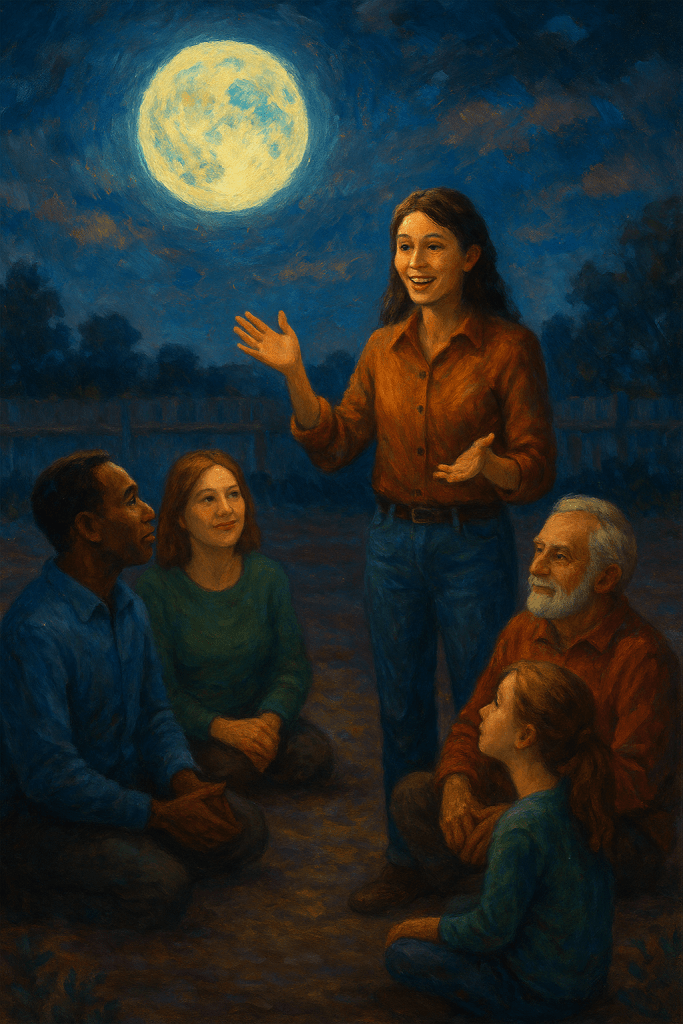
She gathered people on a Friday night under a full moon. She shared a memorable story about how the garden could bring the community together, improve the environment, and create lasting bonds. 

She shared stories of other cities that had turned empty lots into thriving gardens. She even told a personal story about her grandmother’s garden, where Anna spent countless afternoons learning the value of planting seeds and watching them grow.

By weaving these stories into her presentation, Anna was able to amplify the idea, turning it from an abstract project into a vivid picture that everyone could see, feel, and embrace. Her words painted a picture of the garden as a gathering place—a place where people of all backgrounds could meet, learn, and grow together.

Engaging Your Audience

Anna ended the story by suggesting everyone take a few moments before heading home to greet someone they’ve never met. Then she did the same, working her way through the crowd and inspiring everyone she met.

Within three short weeks, the community garden was a huge success. What started as a vague idea became a clear, simple, and amplified vision that brought people together. By clarifying her message, simplifying it for the whole community, and amplifying it with a story that touched hearts, Anna made her dream a reality.

Word spread through the community, and the little lot garden became a popular place to meet for holidays, weekends, and relaxing with close friends. Is it time to create a special place in your community?

Copyright © 2025 by CJ Powers

The Story Behind AI KNOWS

AI KNOWS is a short film born from a conversation I had with a small group of middle school students. We were discussing AI and its implications for the future. One person shared how AI was giving him daily instructions to make him a millionaire by the age of 18. Not only did he follow its every step, but he made it clear that AI was a god that would soon bless him.

Another person shared how AI was erasing all entry-level jobs, so he would never have the opportunity to experiment and apply what he learned in school to real life. He was convinced his risk level for failure was on the rise.

The first kid set his beliefs on false hope. The second kid had lost all hope. I was inspired in that moment to write AI KNOWS as a discussion starter to help parents talk to their kids about our rapidly changing world.

The purpose of the story is to help the audience understand that AI is not a god, nor is it perfect. It was programmed by people using inaccurate databases, which leads to its errors and hallucinations. The story also highlights that wisdom is of greater value than the rapid dissemination of data. Our teens and tweens need to understand that they are valuable and can utilize far greater inputs than AI has to work with, including intuition, experiential wisdom, spiritual wisdom, accurate gut feelings, creativity, and more.

Our team is coming together with some of the best talent from Hollywood. The reason is that they all believe in the message and helping teens and tweens nationwide wake up to the reality of AI, rather than being consumed by the hype or fears that some embrace. This project is timely due to the vast number of people discussing AI daily.

If we can raise the funds needed, filming will begin in early September. The visual effects will start that same week. The goal is to release the completed film during the Thanksgiving Day weekend. However, if the visual effects take longer, the film will be released in mid-December.

The film will be submitted to various festivals to increase our press coverage and catch the attention of more young viewers. The film will also be released on the world’s largest television network: YouTube (Believe it or not, Netflix has about half the viewership of YouTube, and Disney has about half the viewership of Netflix).

Click here to learn more about this project and to watch the video below.

Copyright © 2025 by CJ Powers