
Easter Movies to Watch and Avoid

This Easter season will once again bring an influx of faith-based films to a theater near you. Several of the films will gear up with tremendous hype and false marketing, not out of choice, but rather out of ignorance—blind to the promotional materials not matching their films.

Since I’ve already endured the bad films, there’s no reason why you should find yourself suffering, too. Here are a few tips of what to watch and avoid.
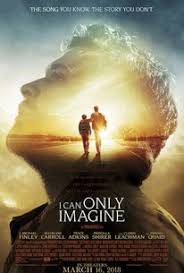
I-CanI Can Only Imagine—WATCH

(March 16, 2018—I’ll give it 4 out of 5 stars)

Out of all the faith-based films being released this season, I Can Only Imagine is the one worth seeing. The film tells the true life story of how the band Mercy Me got started and how the title song became the number one Contemporary Christian hit single of all time.

The best part of the film was watching Dennis Quaid (The Rookie; The Parent Trap; Yours, Mine and Ours), known for happy protagonist roles, play the antagonist—showing off his true acting chops. In fact, his performance was so good that I bought into his creepiness and got a little weirded out, wondering what in his life he might have drawn from to pull off such a nasty character. Quaid’s performance alone is worth the ticket price.

That’s not to say the entire film was great. The story had a hard time getting started and the director clearly struggled with how to end the film, resulting in three back-to-back endings. The standard practice for creating a clean ending is done by making sure all of the subplots resolve prior to the start of the ending sequence. If you only have time to see one Easter movie, pick this one.

PaulPaul Apostle of Christ—AVOID

(March 23, 2018—I’ll give it 2.5 out of 5 stars)

All of the eggs were placed in this big budget Easter basket and stars Jim Caviezel (The Passion of the Christ, Person of Interest) who plays Luke. With so much at risk, there will be a lot of promotional money thrown at the public to launch this costly production. Unfortunately, the funds didn’t show up on the screen. And the story… you’ll be confused during the first 30-40 minutes as you try to figure out what the film is about.

The secret… the film is a story about Luke, but it’s being promoted as a story about Paul. The main character that interacts with the supporting characters is Luke, and Paul is only used as the archetype or the wise counsellor—the Obi-Wan Kenobi, if you will. The story takes place in Paul’s last week before his beheading, a time when he has Luke write his final letters.

There is a tremendous amount of artistic license taken in the film, so don’t expect to drink in the moments as if you’re watching the reenactment of Scripture. The reality of Christian suffering is softened with all the bad scenes taking place off camera. And, the number of people nodding off during the screening I attended was massive. Can you say boring and confusing? Don’t waste your time on this one.
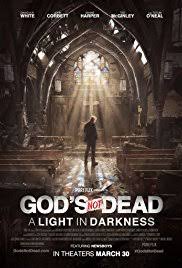
Gods_Not_DeadGod’s Not Dead 3—AVOID

(March 29, 2018—I’ll give it a generous 3 out of 5 stars)

God’s Not Dead: A Light in Darkness never gets the audience to care about the main character. Nor does the audience know why the film is supposed to be important. In other words, this is a TV movie that’s been placed on the silver screen in hopes of it becoming an event film for Easter. Or, the producers are trying to force the trilogy to become a franchise, even though it’s not trending in social media or at the box office (Film 1 $60MM, Film 2 $20MM, Film 3 TBD).

The film gets close to touching on some important issues, but it never takes the time to explore any of it in a depth useful for the audience.

While the budget is supposed to be bigger than its freshman and sophomore counterparts, the story wasn’t properly crafted for the big screen. The film used small screen story structure and stereotypical character development. Within the first five minutes of the film you know how the story will end. In a case like that, the director must get the audience desiring to see how it will unfold, but he didn’t.

Tomb_Raider_(2018_film)Non-Religious Films Competing for Audiences

The films with the greatest chance of drawing in families, regardless of controversy, are the following:

  • Tomb Raider—March 16, 2018
  • A Wrinkle in Time—March 23, 2018
  • Ready Player One—March 30, 2018

These movies are all being promoted as event films for the entire family, but be careful to discuss the stories after watching, so no one accepts the liberal messages without due consideration. The studios know that making high quality, popular films is ideal for delivering their agenda and changing the culture, so expect an attempt for clear, easy to swallow messages being salted into the movies.

Please consider supporting the costs of a new, free webinar designed to help filmmakers craft strong stories, fill in story gaps, and strengthen their story structure—giving them a shot at creating a 5-star film. Click the button below to donate!

Buy Me a Coffee at ko-fi.com

Copyright © 2018 by CJ Powers


Selecting The Best Story Angle

The Angle of StoryI have a friend that found an incredible story that’s worthy of being developed into a screenplay. When he first told me about the true events, he talked about it from the perspective of the children. After chatting on the phone with the family, he shared the story again, but this time from the mindset of the mother. When he introduced me to one of the children, I heard the story from the father’s viewpoint. It was clear that the real life elements, or story beats, were significant enough to impact everyone in the family, giving us several choices in how to develop the motion picture.

After analyzing the information presented, I broke the elements down by each potential story angle to determine which one was best for the film. The categories I used included emotional beats, high stakes at risk, and entertainment value for the audience. The weighting of each category helped determine from what angle the story would be told.

EMOTIONAL BEATS

Film is an emotional medium that requires a story with passionate and poignant twists and turns. While beginning filmmakers think the story must first drive home a valuable message, it’s the emotional throughline that earns the right for the filmmaker to speak a message into the audience’s lives through the B-plotline. Those who try to craft the message within the action plotline soon find their story meanders or falls flat. The action plotline must take the audience on an emotional roller coster ride to properly make use of the medium. The film should therefore be from the perspective that drives the main character through a series of actions that heighten the emotional appeal and the story’s consequences.

Some of the films with clear emotional beats include: Les Misérables, Star Trek 2009, The Blind Side, The Darkest Hour, Schindler’s List, and The Wizard of Oz. These stories were well developed and crafted for the screen. The films were visual and hit every story beat that takes an audience on a journey of exploration. The stories argued both sides of a specific message in a way that enticed the audience to side with the filmmaker’s beliefs.

HIGH STAKES AT RISK

The character with the most to lose typically finds themselves in circumstances that amps up the volume of the emotional beats. This is critical to drive the story to its climatic conclusion. While stories typically have comic relief or temporary lulls in the action, so the audience can catch their breath, the story must be driven by choices that turn into physical and visual action. A “talking-head” plotline, where the main character spews forth nothing more than teachable moments, does not move the story forward or raise the stakes. The throughline must overcome the rule of diminishing returns, which is only possible by raising the stakes.

The rule of diminishing returns relates to the weakening of the audience’s buzz. The college student who gets his first car is excited to drive a secondhand clunker because its his. When after graduation he gets a normal car, he finds it difficult to get excited if he has to drive a clunker again. After a wonderful promotion and driving his upscale company car, the newly married driver struggles to find the excitement in driving the minivan on weekends. With every increased excitement, comes the rule of diminishing returns that makes it harder to generate the same buzz experienced in past events.

P.T. Barnum was a showman who used the rule of diminishing returns to his advantage. Everything he did had to increase its shock value to draw in an audience during the depressed era. Curiosity drove the people to purchase tickets over and over again as Barnum kept increasing the amazing acts within his show. Film is the same way. The audience must be taken on a journey that continues to amaze. The good news is that a director can use techniques to reset the audience’s expectations before every emotional increase so his story doesn’t get out of control.

ENTERTAINMENT VALUE

At today’s high ticket prices and costly cable packages, audience’s demand their monies worth. They want to be taken on a journey that they’ve never been on before or introduced to a character that they can learn about for the first time. To accomplish this goal all stereotypes must be dropped by the filmmaker. He also must find ways of allowing his unique character to directly impact the plot based on his or her choices. The audience must find the story fun in order to watch it a second time, or stirring enough for those who like to have a good cry. A great story with fantastic production values are always at the top of the box office list or award categories—due largely to the embedded entertainment value.

The Oscar nominated film, The Shape of Water, takes the audience on a alien-like journey in time during the Cold War. The audience is also introduced to a compassionate, mute woman. Her unique circumstances and personal drive grabs the audience’s attention, whether they agree or disagree with her life choices. While the film is a far left propaganda piece, it’s entertainment value drives curiosity among conservatives who may revisit their political views after watching the filmmakers perspective.

Developing a cinematic story with great emotional beats, high stakes at risk, and emotional value, earns the filmmaker the right to speak into the audience’s life. The result is consideration by the audience of the filmmaker’s argument, but only when the picture is properly developed using the above proven elements.

Below you’ll find a button to buy me a cup of coffee. Any money raised through this process will go toward the purchase of podcast equipment for a weekly show that explores the creativity and messages in the latest motion picture releases. So please help by clicking…

Buy Me a Coffee at ko-fi.com

Copyright 2018 by CJ Powers

Developing A Cinematic Story

Developing A Cinematic StoryIndependent filmmakers are known to dive into projects without fully developing their story. Some come up with a cool scene idea and toss together a film to facilitate what’s in their mind’s eye for that 2-3 minute segment. The words that flow from their lips two years later is something like, “It didn’t quite turn out the way I pictured.”

The reason is elementary: Film is an argument, and the scene didn’t attempt to address anything worth arguing about.

The first place I’d check out, if given a new time machine, would be that large room where the Constitution of the United States was argued. I can imagine a group of passionate men fueled by their ideals on freedom of speech and religion, and the increasing weight of taxation without representation. It was a venue of the greatest arguments in the history of our country.

Great films cover both sides of an argument. The development process determines how the filmmaker will visualize the argument and lead the audience from a general understanding of the topic to his perspective. But most independent filmmakers can’t tell you what their film argues, which gives insights into why their film will fail at the box office.

A couple months ago, I watched an independent film that will fail during its release this summer because the story’s argument wasn’t explored with the audience, but rather was covered over by 22 unrelated messages. In fact, the argument was so underdeveloped that it took me the first 45 minutes of the film to determine who the main character was and his goal.

Here are a few guidelines that I’d like to suggest to new filmmakers for their consideration during the development phase of their motion picture:

  1. Determine what your film will argue.
  2. List all key points of the argument from every vantage point or perspective.
  3. Determine what view you’d like the audience to hold when leaving the theater.
  4. Select the strongest or most widely-held opposing argument for your antagonist.
  5. Create an 8-step flowchart that moves a person from an opposing viewpoint to your perspective, starting with their belief and ending with yours.
  6. Brainstorm a character that can best move the audience from the start box to the end box of the flowchart in a way that leads the audience to embrace his process.
  7. Based on the above, write a premise that can drive the action or movement of the film.

A simple way to develop a premise is to use an outline similar to the following:

[Title] is a [genre] about a [hero] who, after [big beat that happens to hero], wants to [hero’s desire] by [hero’s plan], which becomes increasingly difficult because of [obstacles/complications].

This quick formula will get your story launched in your mind’s eye and help you to immediately see if the story can be further developed. Here is a sample using The Fugitive that I tweaked for readability.

The Fugitive is a thriller about an innocent doctor who, after being sentenced to life in prison for killing his wife, escapes to find the real murderer, which becomes increasingly difficult with a determined Marshall hot on his trail.

Once you have your argument and premise, the next step is to determine how to weave the two ideas into a compelling story. The throughline will drive the audience’s interest, and the visual depiction of the argument will alter their perception of culture and their future life choices—that is, if the story is well crafted.

A well-designed argument that takes a person from a common view to your perspective is entertaining and can help audiences make culturally significant life changes. Since the motion picture is an argument, it’s easy to see why films have driven our culture for over a hundred years.

Our rich history of cinema suggests that filmmakers must learn how to properly develop their stories for the silver screen. To help encourage filmmakers move in that direction, I’m going to pull together some steps worth sharing in future blogs.

Copyright © 2018 by CJ Powers

How about a hot drink to thaw my fingers from this frigid Chicagoland so I can type another blog? If you’d like to help, please click the button…

Buy Me a Coffee at ko-fi.com