
Crayon Messaging Americans Grasp

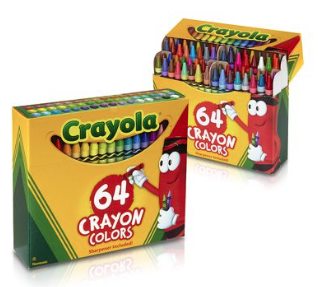
64_Crayon_Box.pngSome say that Trump’s campaign messages captivated Americans, while Clinton’s messages seemed to miss the mark with critical people groups. Others say it was Trump’s lack of intelligence that helped him speak to the people and Clinton’s high intellect that undercut her attempts at the White House. These comments caused me to consider how the messaging of each candidate helped or hurt their campaign.

To win an election, or to communicate any message, the speaker must exclude some vocabulary so their message is clear and easy for the average American to understand. The media typically presents the nightly news at the 8th grade level to make sure they reach as many people in their viewing audience as possible.

This makes sense to me when I compare the communication of information to crayons. Almost everyone in our country understands the basics of communication. It’s like the average person is able to communicate in the 8 basic crayon colors. You know the ones, those boxes with the really thick crayons that are hard for preschoolers to break.

As we grow older we mature to the level of communicating with a box of 16 crayons. The crayons are smaller, but we’ve doubled the amount of color choices like our increase in vocabulary. Soon we improve to the 24-pack and those more focused learn additional communication skills that serve up one of those cool 64-packs of crayons. And, there are a few that move on to the 152-pack, but its rare.

Abraham Lincoln spoke at an 11th grade level, the highest level spoken during a run for the presidency. Trump spoke at the 4th grade level, which was the lowest level in history for a candidate. George W. Bush, during his run spoke at a 5th grade level. Clinton varied her talks, fluctuating between the 7th and 9th grade levels – possibly blocking many Americans from understanding her message.

You see, Trump spoke using the 8 basic colors we all understand in life. When he said blue, we understood him because the 8-pack comes with blue. But with Clinton using a vocabulary that included the color Cornflower, many 8, 16 and 24-pack people didn’t know she was saying blue because their vocabulary didn’t included the variation she mentioned. They may have thought she changed the subject to farming or baking—get it, Cornflower.

The readability model used to measure the level of a speaker’s comments is called READ. This information is always tracked by organizations including the Boston Globe and Carnegie Mellon University. And, the published results are readily available in many libraries. The document I read came from the Cornell University Library.

My take away from my mini-study is that I can talk to 64-pack people and be understood by them using any of the 64 colors. But, if a 16-pack person joins us at the table, I have to shift my conversation to 16 colors if I want everyone to understand my comments. I saw this play out in a peculiar way just this week.

A wife (64-pack) asked her husband (8-pack) a Cornflower question. His pride didn’t allow him to ask what she was talking about, so he instead stormed off with his voice trailing, “I don’t have time for any of this.” She turned to me and asked if she was being unreasonable with her husband. I nodded, “No,” and suggested she reword her request based on his 8 colors.

It’s frustrating for a wife or husband who has a spouse with less colors of communication ability because they are constantly talking with self-restrictions to be understood. They typically alleviate this frustration by finding a friend that can handle all of their 64 colors of expression, which greatly reduces their stress.

Copyright © 2016 by CJ Powers

Politically Correct Words Alter Friendships

© apops - Fotolia.comCommunication is critically important in our lives. Every year men attempt to control this powerful tool in order to persuade others to their perspective. For decades journalists told both sides of a story to stop any one person from gaining control over the masses. But with the new millennium came a barrage of politically correct (PC) rules in the name of what is “right” that was accepted blindly by the country.

Freedom of speech, the kind that existed when I was a kid, no longer exists.

If you make a statement today that contrasts the current PC culture, you are bound to receive a barrage of comments “punishing” you for stating something outside of what is “right.” You no longer can voice an opinion that isn’t in agreement with those who are currently in power.

This is most unfortunate, since those who saw life differently than those who were in power birthed our country’s liberation. The cool trends in media also came from those who saw life from a different perspective. In fact, someone who disagreed with our status quo introduced all of our country’s great accomplishments over the past millennium.

This new PC language has since infiltrated our friendships. For decades, a friend was someone you opened your heart to without the fear of rejection. They knew your deepest and darkest secrets, but cast no judgment. You were accepted for who you were and the positive elements of your life were celebrated.

In his book, Consolations: The Solace, Nourishment and Underlying Meaning of Everyday Words, David Whyte explains friendships in this way, “In the course of the years a close friendship will always reveal the shadow in the other as much as ourselves, to remain friends we must know the other and their difficulties and even their sins and encourage the best in them, not through critique but through addressing the better part of them, the leading creative edge of their incarnation, thus subtly discouraging what makes them smaller, less generous, less of themselves.”

The Bible is another resource that recommends the sharing of heartfelt words over PC language. The author suggests that close friends confess their sins to one another and encourage the withholding of judgment since we have all fallen short. Even more verses are aimed at lifting up our friend’s best attributes for God’s glory.

When I was a young teen, my dad loved to promote the best in us kids. He saw my charismatic stage presence and ability to perform illusions as a skill worthy of promoting. During our massive three week driving vacation, to see everything west of the Mississippi, my dad had us visit old friends who had moved away. Every visit was around a great meal, where dad nonchalantly introduced my skills of illusion for the purpose of entertaining his friends.

During that trip I made saltshakers stand on edge, bread rolls float in the air, wedding rings disappear and reappear, and spoons magically bend without anyone touching it. The entertainment value was high for all and I had a lot of fun. Not once did dad point out my faults or shortcomings.

We had a lot of fun during the days when my family was far from being politically correct. I remember a camping trip when we hit a skunk with the car. We had just comeback from a laundry mat with clean clothes in the trunk. Sharing our misery and the skunk’s scent seemed like a fun and humorous idea, so we drove around all of our friend’s campers before retiring for the night. We woke up the next morning and found a sign posted above our camper that read: “Stinky Hollow.”

Our friends and family were always able to laugh off our failures and promote our best attributes before the days of PC language. Today, few friends and family members are willing to risk comments or activities that might be perceived as politically incorrect, creating an atmosphere of hesitation, less sharing, and little revealing of who we really are.

Facebook tends to encourage the same shallowness. Rarely will someone present anything negative about themselves for fear that their next employer might read about it and decide not to hire them. And the positive posts are so pristine that no one can really live on the pedestals of half-truths that they seem to balance on.

Our freedom to speak our mind and reveal our true self was greatly altered by the introduction of PC language. Few people have the guts to buck the system in order to maintain their own personal freedom, especially once its no longer vogue to believe things that are not accepted by those in power.

These choices force us into thinly veiled friendships that are temporary and judgmental. We couch our words instead of boldly stating what we really believe. And, our careful words blind others from seeing our soul, our true self. The real person that we are is sidelined. People only see a manipulated PC projected version of us.

It’s no wonder that there is a growing desire deep inside each of us that longs to be known. We desire to be accepted in spite of our shortcomings. We want to be loved for who we really are, not who we appear to be on the surface. We are significant, but can only shine in a friendship when we let go of what those in power think is “right” and we live based on who we are and what we know is right.

Let’s be real friends.

Copyright © 2015 by CJ Powers

Creating a Visual for Communicating Non-Fixable Feelings

Porch_SwingDiscerning the difference between when a man in a conversation with a partner must only listen, versus offer obvious fixes is difficult, but no longer impossible. I found myself stuck in that no-win scenario all too often and frequently made the wrong choice. Not only did my great advice fall on deaf ears, but I also got to figuratively clean the doghouse more often than my study.

The only saving grace came from a wise old man who found my circumstances funny. Yes, he had a hearty laugh. The man suggested that my solution was found in my make up. He pointed out that my internal wiring wasn’t wrong; it just hadn’t been adjusted to the female language.

Put more simply, my wife (at the time) and I needed listening goals and something visual to trigger my new behavior. He made it clear that I was wired to be visual and therefore required a symbol to engage my new listening goals.

After trial and error, we found a solution that worked so remarkably well that I started to enjoy those difficult conversations because they actually were resolved in an emotionally healthy manner. And, we had the added bonus of finding new treasures of value deep within each other’s souls – Generating new respect for one another.

Thanks to the help from the wise man, I’m now able to say that every woman can share her feelings with her man, without him trying to fix them, by applying a visual reminder with three listening goals.

Here were our goals:

  1. Share Important Feelings in a Visual Place.

We chose the front porch swing as our visual listening place. Every time I sat on the swing, I was visually reminded that if my wife shared a feeling, it was the type that required focused listening and no fixes. After a few months, my new listening behavior had matured.

My wife also had a role to play. She was not to ever share a feeling that required my opinion or a suggested fix when sitting on the swing. Those items were to be discussed elsewhere.

  1. Listen Past the Conflict until You See the Hidden Treasure.

Most of the conversations that took place on the swing were forms of frustration that my wife had to get off of her chest. As a new focused listener, I soon noticed that every point of frustration was like a red flag getting my attention to something important that was deep within her soul.

By listening closely, I was able to ask open-ended questions that allowed her to share more depth, which eventually led to the surfacing of the key issues buried within her heart. In that moment, I would see the real person, her true beliefs and everything that made her tick. It was like finding a huge treasure of great value.

The experience always humbled me as she opened up and revealed her heart. In retrospect, I realized how many lost opportunities to learn something precious had sipped away because I tried to fix things early in the conversation.

  1. Transfer the Visual to Your Partner’s Tells.

After a few months of practice I noticed that my wife had certain “tells” notifying me that she was sharing a feeling that wasn’t to be fixed, but intently listened to. I was soon able to attach my listening goals to her visual tells, so we were no longer limited to sharing deep feelings on the porch swing. If I ever started to waver, she was able to mention the swing and I would immediately heed the hint and listen carefully.

This communication technique doesn’t guarantee excellent conversations every time, as both people can short circuit the process out of anger, rather than seek understanding. In other words, these goals are a tool, not a magic genie.

The good news for men is that the listening goals were based on a visual symbol that turned my times of listening into valuable explorations of the soul. As for the woman’s benefits, it goes much deeper than being known, which in of itself is a wonderful experience.

What do you do to discern the differences between fixable and non-fixable conversations? I’d love to get your insights in the comment space below.

Copyright © 2015 by CJ Powers