Attracting A-List Actors

A-List ActorsThere is one key element needed to attach a great A-list actor to an independent film. It was proven to work more than 150 times in 2012 and continues to work when implemented. Its only drawback is that producers rarely demand it and writers rarely develop it. But, A-list actors search for it every time they look for a great role.

A-list actors search hundreds of scripts weekly looking for a story that introduces the lead character powerfully. Hundreds have stated that the powerful and creative introduction of their character is what sold them on the script. Others are sold on how their character ends the story or in some cases how his or her character comes to an end.

Agents and writers suggest that writing a strong opening scene for the lead character is like an advertisement that will grab the A-list actor’s attention. So the key question is how do you make a great lead character introduction and win the attention of an A-list actor?

There are four things a writer can do to create a great opening scene (In order of importance):

Develop a Situation

The best introduction is to start the scene already in progress with the lead character in a challenging situation.

The introduction of the Black Widow in The Avengers opens with her petite frame tied to a chair and surrounded by big bad guys wanting to hurt her during the interrogation. Once the audience is concerned about what superhero will come to her rescue, we learn that she doesn’t have time for the activities, so she breaks free and takes out every bad guy – Revealing that she is a superhero in her own right.

Make the Initial Action Visual

A visual action immediately pulls the audience into the story with a sense of curiosity and a desire to know what will follow.

In Shakespeare in Love, the theater owner, Phillip Henslowe, is introduced screaming. He is pinioned in a chair, with his feet stuck out over the coals of a fire burning in a brazier. The character proceeds to negotiate his survival and the opening of a new play with his adversary as a partner.

Create Dialog that Reveals the Character

Great dialog reveals the personality of the character, rather than explains what is happening in the scene.

In Pulp Fiction, the two leads chatter about meaningless things while they prep their weapons and fulfill a hit. Not only does the dialog reveal their personalities, but also it is clear they are long time assassins who can take someone out with little thought or effort.

Write Simple Descriptions

Writing short, concise descriptions that quickly create great imagery.

The first draft of one screenplay took 2-3 pages to describe a rugged bar with moose heads hanging on the walls and other things that suggested it was a hangout for rednecks. The second draft reduced the description to, “The bar was a redneck’s heaven.”

A-list actors will be attracted to film projects where the script introduces the lead characters in a powerful way. These types of introductions immediately paint a visual picture in the mind of the actor, who naturally starts envisioning how he or she will play the role – They get hooked. All that is left to do is negotiate the contract.
© 2013 by CJ Powers

Directing Remotely

My first experience with remote production work over the Internet was during the Sundance Film Festival.The Hollywood Reporter invited me to a live Sundance Google® Hangout with four other filmmakers to chat with Oscar® winning documentary writer/director Frieda Lee Mock about her new filmAnita. The hangout session was broadcasted live on the first day of Sundance 2013.

Yesterday, I had my second experience with distance production work. I directed a promotional spot in Orlando from Chicago (due to schedule conflicts). The production was shot at a Full Sail sound stage, while I directed from my study via a Google® Hangout.

The camera that was set up to be my eyes was positioned so I could see the set, actor and the camera monitor. My microphone output went through a speaker so the entire cast and crew could hear my direction. The experience was not much different than my live broadcast television days at ABC, when I directed from the booth and communicated via headset to the talent and crew on stage.

The key element that made the television process work was the floor director who represented my physical presence on set. In the same manner, I used an assistant director to be my hands and feet at the sound stage.

To improve on the experience going forward, I would want to set up a second simultaneous Google® Hangout with a direct feed from the camera. This would give me a more accurate assessment of the image being captured and give me peace of mind. Without the second feed, I had to rely on the cinematographer to fully understand the look and visual style I had in mind and for him to judge the visual details accordingly.

Once the shoot was complete, we tested the uploading of the dailies to an ftp site so I could access it. Within fifteen minutes I had the test footage and completed the first rough cut of the show. Since there was a bandwidth problem on the Orlando side, we decided to overnight the footage on a flash drive. Had the bandwidth on both sides been high enough, we would have completed the entire transfer within an hour.

The experience for the talent was unique. Since my connection was through the Google® Hangout, they were able to see my expressions on the monitor. This enabled us to have a direct “face-to-face” conversation and bounce creative ideas back and forth. When someone had a question, instead of relaying it through the assistant director, they could just ask me directly.

The entire cast and crew were very accommodating. When I needed the lights moved or adjusted, the crew quickly responded to my request. The talent also responded quickly, making whatever adjustments needed to fit the vision I had for the promotional piece. We were even able to rehearse a walking pullback shot to get the perfect camera to talent position.

© 2013 by CJ Powers

Did Media Blacklisting Return?

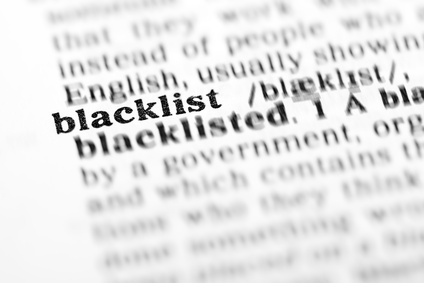
© Lambros Kazan - Fotolia.comHollywood blacklisting was run amuck from 1947 – 1960. It blocked screenwriters, producers and actors who were considered sympathetic to communists from getting jobs. The House Un-American Activities Committee (HUAC) investigated alleged disloyalties, which blocked 151 people from working, even though they were not convicted. The mere investigation based on someone alleging their possibility of being sympathetic was enough to shut the person down – Although the smart ones continued working under an assumed name.

While there is no active HUAC group in Hollywood today, there seems to be a new kind of blacklist running rampant in the media. It is the type that forces major corporations to make decisions based on image, rather than facts or logic. And, instead of being policed by the media, it is being driven by the media.

Last week Paula Deen lost her entire career including multiple book, television and other media deals because she chose not to allow a disgruntled employee to blackmail her. Since the employee did not receive her long sought after settlement, she released information on June 26th that 26 years earlier Deen had used the “N” word, which today is considered a racial slur.

Since that word is politically incorrect, the media used it to generate enough negative press against Deen that all of her sponsors walked away from her, blacklisting the entertainer from any future in the entertainment business.

Also last week, Facebook “accidentally” removed several “politically incorrect” entries by conservatives including Todd Starnes who had posted:

“I’m about as politically incorrect as you can get. I’m wearing an NRA ball cap, eating a Chick-fil-A sandwich, reading a Paula Deen cookbook, and sipping on a 20-ounce sweet tea while sitting in my Cracker Barrel rocking chair with the Gaither Vocal Band singing “Jesus Saves” on the stereo and a Gideon Bible in my pocket. Yessir, I’m politically incorrect – and happy as a june bug.”

When I was a child, everyone was able to say whatever suited his or her fancy. Freedom of speech meant that a person could voice or publish any thoughts without filtering. Everyone could easily understand all the positions on an issue and respect each view, while choosing the one they would stand behind.

Today, it seems that if you aren’t on the side of the media, whether a person or corporation, you might be shunned by the masses as the media instructs them to judge you as being politically incorrect.

I find it disturbing that Deen lost her career based on something she said 26 years earlier. And worse yet, she used a word that our society didn’t understand was hurtful at the time. Thankfully our society got smarter and stopped using the “N” word, but I’m sad to learn that our past can be used out of context against us.

Last week’s issues made me think about words I used years ago like “G.I. Joe.” Today there are movies by the same title, which suggests it’s an acceptable word to use “today.” But, what would happen 20 years from now if that term became politically incorrect because women in the military took offence to it? Could I lose my career because I used the word as a small child playing with my G.I. Joe action figures?

I preferred the time in America when you could say whatever you felt was important without people blacklisting you. It was a time when freedom of speech meant we were free to voice all of our views, whether positive or negative. It was a time when Journalists sought after the truth and shared both sides of every issue equally, so their audience could draw their own conclusion.

So you tell me, has media blacklisting returned?