The Left-Handed Monkey Wrench

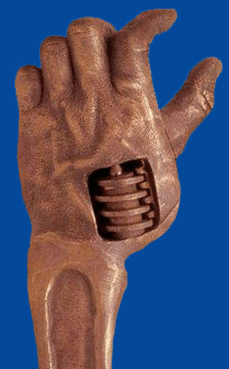
LH_Monkey_WrenchBack when I was a rookie, I was asked to chase down a left-handed monkey wrench. The AD said it was critical for the next scene and I had to find one at all cost. He was adamant about it and made it clear that he trusted me to get the job done. He told me not to bother coming back if I couldn’t get one into the hands of the Gaffer within the hour.

I hustled toward the car with several perplexing thoughts. My dad was left-handed and he never used a left-handed wrench of any kind. In fact, every wrench he owned could be used in either hand. I became suspicious in that moment and wondered if I was being targeted with a test.

Taking a left before I got to the parking lot, I snuck around to the generator and asked the Best Boy if he had ever heard about a left-handed monkey wrench. He chuckled and asked if I had overheard someone being initiated. I told him a couple people were talking about it and I knew no such tool existed, but I wanted to make sure. He said, “It’s an initiation, which means we’ll have a light day. If I were you, I’d change departments for the rest of the day and find someone to serve.”

I headed over to the props truck and told them that I heard they needed help. “Yes,” shouted the Property Master. “Today’s a light day, which will allow us to catch up and organize the truck for the next few heavy days we’re about to hit.” I dove in and worked hard.

Later that afternoon I bumped into the AD. He switched his smile to a firm, piercing look. “I told you not to come back unless you found a left-handed monkey wrench.”

“On my way to the parking lot I bumped into the Property Master. She was struggling to organize the truck for fear of not keeping up with weekly schedule. Knowing that your success is critical to this picture, I volunteered to help make sure the props department would meet with your requirements. I knew your success was more important than finding a left-handed monkey wrench, especially since our Gaffer is capable of getting the job done with just about any wrench.”

The AD smiled at me and nodded his approval. “I’ll see you back on my team tomorrow,” he shouted as he strolled away.

My initiation was over and I wouldn’t be tested for the remainder of the picture. Unfortunately several people walked off of the film because they feared being controlled like a child controls a toy or plaything. They didn’t understand the difference between a one time test to see what a person is made of versus a controlling personality that continually chokes life out of a project.

Since most people’s next meal ticket is based on the strength of their last picture, it’s important for all members of the production team to develop good boundaries so they do not succumb to a real controller. Unfortunately the person with the control problem is sometimes a department head, an investor-producer that doesn’t understand the filmmaking process, or worse yet, a rookie director who never learned how the creative process works.

What Real Controllers Want

The controller wants what you have because he or she lacks those valuable qualities. The most sought after quality is being able to feel good about yourself without having to receive a pat on the back from someone else. Controllers also hunt down those who are secure in their skin, accomplishments, and overall position in life.

And, if your attention makes others feel good, the controller will be all over you. In fact, if you can feel good about other people and aren’t intimidated by their successes, you’ll have a control target placed on your back.

Controllers find it easier to put others down in order to feel good about who they are. The higher the position held by a controller, the more likely he or she will carry fear, having been promoted to the level of incompetence or the unknown.

The only way to alleviate a disaster during a film production is to set healthy boundaries and use the established hierarchy protocols that allow all departments to function properly.

What Not To Sacrifice

All too often we let go of things that are important to us in order to survive the constant attacks from a controller. This forces us out of the life we were meant to lead and we slowly become something that no longer looks like us. It therefore becomes critical that we set healthy boundaries to protect our hearts and our future. And yes, that might require you walking away from or avoiding certain people while on set.

Some elements worth protecting include the understanding that your ideas and contributions matter. Another consideration to keep yourself strong is to stop others from pushing your buttons, belittling your accomplishments, or talking down to you. But most importantly it’s prudent to make sure you never become a doormat by allowing others to push your needs below theirs.

Oh, it’s okay for you to choose to put others above yourself, but it’s not okay to allow others to force you down to make sure their needs are met. Choosing to serve others from your heart works very differently than having someone guilt you or coerce you into meeting their needs.

The controller must not be allowed to manipulate you and put your career at stake. You must fight to maintain who you are regardless of what they do. It’s not easy, especially when the controller gets others to “help” prepare you for your next level. Those well-meaning people buy into the controller’s manipulation and do his or her dirty work to take you down a few notches in the name of preparing or strengthening you.

Unfortunately you might have to walk away from the well-meaning people to protect your heart and career. Once they realize that their help actually hindered or hurt you, they will try to appeal to your good graces, but it might not be prudent to allow them back into your life—a difficult decision that only you can make.

The next time someone asks you for help that pulls you from your path in life, make a mental note that they might be a controller or a controller’s enabler. Set your boundaries and make sure your valuable, creative assets are well protected. Then get on being the best you that you can be, while having a lot of fun in life.

Copyright © 2018 by CJ Powers


Facing the Light

Sunset

The man’s eyes struggled to focus. He cocked his head to compensate for his blurred, bottle induced vision. His breath reeked of whiskey and his slurred speech revealed that his alcohol levels were near toxic. The security officer slowly finagled the man’s car keys from his clenched hand.

The drunk relinquished the keys with little effort when he noticed the boss’s wife. He was on a mission and became a prowling tiger. He stepped behind the table, inside of the festival booth, and opened his arms to welcome Jennifer with a hug. His stubbled face slipped to her side, as he planted a moist, dripping kiss on her neck.

He held the hug long enough for Jennifer to push back, turning her head away from the fumes escaping his mouth. Her eyes filled with fear and gave me a look, a visual cue for help. My hand clenched into a fist and I stepped toward the man who hovered a good four inches above me.

“Derrick,” Jennifer said with a mix of slurred words. “You remember my close friend of the family, Carl.”

Carl closed his eyes, lightly shook his head, and turned toward me. His eyelids opened revealing his veiny eyes, half glossed over. “Good to see you again, Derrick.”
He extended his hand.

I glanced at Jennifer who leaned into her friend and wrapped her arms around his lanky, yet oversized bicep. They looked like lovers who had just finished a quarl and were considering if there was time for make-up sex.

I cringed at the thought and reached my hand forward to shake his. The squeeze around my hand suggested he had turned wrenches thousands of times before his retirement. His arm slipped around Jennifer and she leaned into his chest. Their eyes revealed matching desires to get a room, while mine closed in disgust.

The moment of chivalrous thought quickly turned to sorrow as I considered that the boss had been cheated on by his friend and wife. My demeanor shifted with a repugnant taste creeping into my soul from the experience. I looked above for hope and saw a setting sun tossing out beautiful orange and purple colors.

Turning back to preparing the booth for the eminent crowd, I scanned my memory for anything that might be of cheer. Helen Keller’s noted words rose to the forefront of my thoughts. “Keep your face to the sunshine and you cannot see the shadows.” The simple words brought a sense of hope back into my life.

Her phrase was naturally accurate and held a spiritual truth worth remembering. I needed to keep my focus on the good in life and live as an example for anyone in need of hope. My choice to follow the light might even draw others into a warmth worth embracing. A smile stretched across my face as the festival guests entered the park.

I noticed the security officer walking Carl toward the medical tent, as Jennifer stepped next to me. “You know, I hate having to pretend I’m something that I’m not around him,” she said. “I hate having to pretend we’re close because he’s my husband’s friend.”

“I don’t understand. Why would you need to pretend at all?”

“Listen, you don’t know what it’s like living with my husband,” she said. “I’d be punished for days if I snubbed one of his friends.”

“I’m sorry you have to indulge in his antics to keep your relationship at home intact.”

“Thank you. You’re the first person who understands.” Jennifer turned and set up the brochures.

The topic was finally over, but I was trapped in my head wondering what it was that I supposedly understood. I shook it off, turned toward the sunset and pondered how the difficulties of life’s shadows disappear when we look to the light.

It was going to be a good evening.

© 2018 by CJ Powers

Beirut — Review

BER_156_M2_0V3_1_rgb“Thinking films” are far and few between, mostly because a small percentage of people take in a movie to be mentally challenged. However, those who kept their mind active during Dunkirk were well rewarded. And, with a bit less effort, many enjoyed Gary Oldman’s brilliant Oscar winning performance in The Darkest Hour.
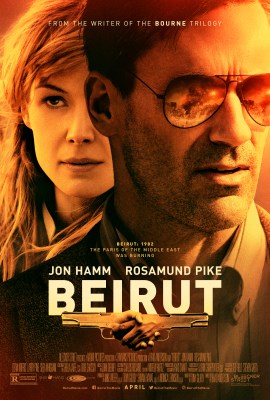
The next installment of thinking films has arrived for this weekend in the movie Beirut. It’s a fascinating historical picture about several different countries and factions leveraging people and circumstances. They all share common goals of leaning the outcome of the war in their favor, not for justice or humanitarian ideals, but for selfish reasons that include revenge and the control of power.

The simple event is so entangled in the quagmire of jargon and hard-to-follow gibberish that the story seems far more complex than it is. If you’re able to follow the key plot points, you’ll realize that there wasn’t much of a story worth telling. On the other hand, if you were not able to sort through the bad accents and the dingy sets that all looked alike, the picture would seem far more complex.

The compelling situations that brought shock and awe to the American public during the Reagan years were not well captured in the film. The political intrigue was also left out, with the exception of a couple of interesting scenes suggesting how allies might have taken advantage of each other for their own gain.

But the interesting chess-like battle for information between the Palestinians, Israelis, and Americans was not handled well. Nor did the film reference or make use of additional political intrigue surrounding the multinational troops from France and Italy.

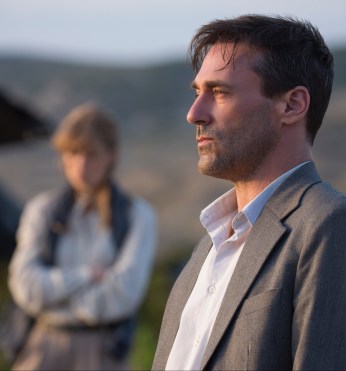
beirut_02415_r_rgb.jpgThe story focuses on a former U.S. diplomat (Jon Hamm of Mad Men and Baby Driver) being sucked in by CIA operatives (Rosamund Pike of Gone Girl and Hostiles, and Dean Norris of Breaking Bad and Under the Dome) to return to Beirut and negotiate for the life of a friend he left behind.

The quasi-historical story was written by Tony Gilroy (The Bourne Identity, Michael Clayton). “At the time, Beirut was a hot topic because Tom Friedman’s book From Beirut to Jerusalem had just come out,” said Gilroy. “We wanted to put a negotiator in a historical setting where it could feel true to life without actually being a true story.”

Most of Gilroy’s fictional script was built around the 1984 kidnapping of CIA Station Chief William Buckley. “For me, that was very much the model for what would happen if a high-level CIA officer were kidnapped,” Gilroy said. “Buckley’s body actually turned up just as I was finishing the script, and there was a lot of reporting about that case that I drew on. It was all very garish and gothic and horrifying and dramatic.”

Unfortunately, Director Brad Anderson (The Machinist, Transsiberian) didn’t understand the realities of the horrifying, dramatic historical events, and it shows. “I was very taken by the world of Tony’s story. I frankly didn’t know very much about Beirut, so for me it was more the character elements that drew me in,” Anderson said. “I was fascinated with Mason (Jon Hamm) as this tortured soul who’s trying to redeem himself by saving his friend.”

beirut_03881_r_crop_rgb.jpgNot all veteran indie film writer-directors are able to express reality-based stories in a way that helps the audience experience or relive the historical moments. Anderson failed miserably at visualizing Gilroy’s fictional account, boring the veteran sitting one row in front of me. He actually pulled out his cell phone and engaged in 5-10 minutes of texting.

As for being spellbound by the characters that Anderson suggested drove the film, I found Hamm’s character to be flat and one dimensional. While Pike gave a great performance, her character was also limited, mostly by too little screen time.

For those who love political intrigue and deep thinking films, this one is a pass in my book. Even with thin character development, Hamm and Pike fans will not be disappointed in their performances, but they’ll have to keep in mind that the script and director tied their hands.

Copyright © 2018 by CJ powers