
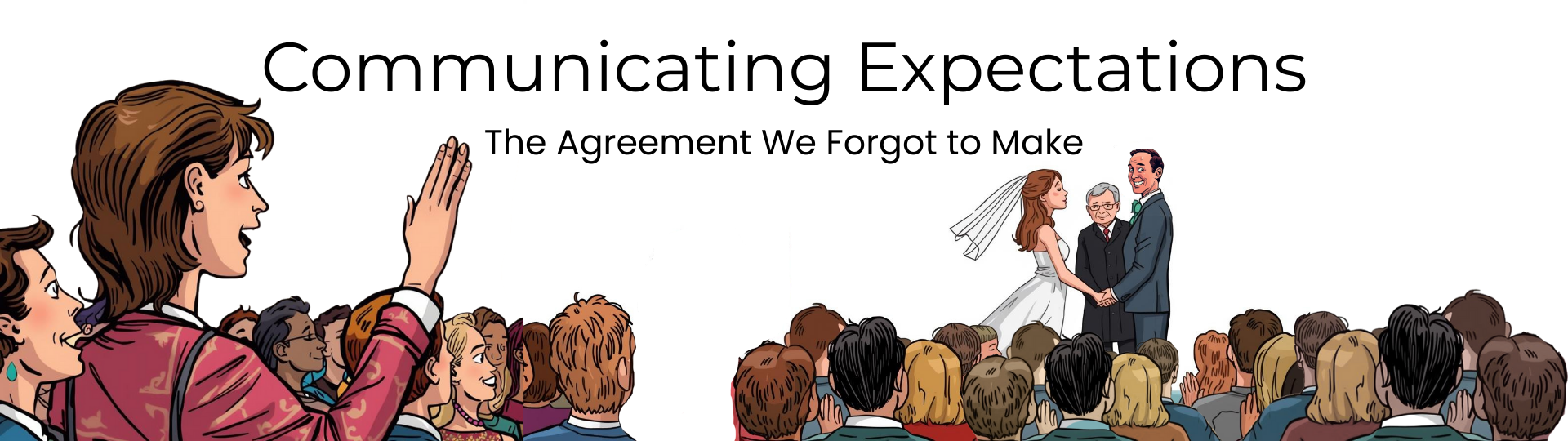
It took time and distance for me to understand what I was really witnessing.
When I first noticed Mike walking toward me, I sensed something was off. His smile looked practiced, almost manufactured, as if confidence were being worn rather than felt. There was a tension in his eyes that didn’t match his enthusiasm. I remember thinking, whatever he was about to ask would carry consequences.
I was a co-leader of a Divorce Care recovery group at the time. Mike attended after a marriage that had gone rapidly south, largely due to unspoken expectations. He was doing the work—or at least appearing to.
“CJ, I’m getting married,” he said.
I paused. “To Sarah?” I asked. “From the group?”
He nodded. “We’ve been helping each other through the program. We talk every night. We eat dinner together. We’re in love.”
I reminded him that they had known each other for only seven weeks and that we encouraged people not to start new relationships for twelve months so they could fully recover. He listened—but didn’t slow down.
“We’ve been recovering together,” he said. “It’s working for us.”
Then he leaned in and asked if I would stand up for them at the wedding.
I was surprised. I cared about Mike and wanted the best for him. At the same time, I sensed he was trying to outrun his grief rather than heal from it.
I agreed—but with one condition. I told him that if, in six months, he realized the marriage was a mistake, he would come back to me and allow me to help him work toward reconciliation instead of divorce. He agreed without hesitation. He even said it was why I would make the perfect best man.
Six months later, Mike approached me again. He told me he was getting divorced.
I suggested we talk through reconciliation. He declined. He had already filed. He explained that if he divorced quickly, the marriage could be annulled—no child support, no alimony. The court date was set. He simply wanted me to know.
Then he walked away, adjusting his path toward a woman who had caught his eye. I turned and walked in the opposite direction.
At the time, I wasn’t angry. What stayed with me was something quieter—clarity.
Mike hadn’t forgotten our agreement. He had simply stopped honoring it once it no longer served him.
That realization lingered. And over time, I began to notice a pattern.
The Silent Contracts We Live By
As I reflected on that experience, I began seeing the same dynamic everywhere—at home, at work, in leadership, and in partnerships.
There are few things more exhausting than trying to live up to expectations you never agreed to. It isn’t just frustrating, it’s unfair. And it becomes even more painful when those expectations were never spoken, yet somehow we’re judged for failing to meet them.
This happens when we live under silent contracts.
One person operates from a mental checklist:
- “I thought you’d handle that.”
- “I assumed you knew the deadline mattered.”
- “I expected more initiative.”
- “I thought you cared.”
The other person operates from a different script:
- “No one told me.”
- “That was never discussed.”
- “I would have done it differently if I’d known.”
- “I didn’t realize that was the priority.”
Both people may be sincere. Both may be committed. But without shared expectations, commitment alone isn’t enough. Resentment begins quietly, long before anyone names it.
Efficiency and Effectiveness: Competing Desires
As my curiosity deepened, I noticed that many expectations are formed by one of two desires: efficiency or effectiveness.
Efficiency values speed, output, and momentum. Effectiveness values quality, care, and impact. Both matter. Both are necessary. Yet they pull in opposite directions.
When efficiency dominates, things move quickly. Boxes get checked. Progress looks good on paper. But nuance fades. Communication shortens. People begin to feel like tools rather than partners.
When effectiveness dominates, care increases. Empathy deepens. Quality improves. But time slips away. Deadlines drift. Momentum slows. Frustration builds—especially for those responsible for results.
Neither approach is wrong.
The problem arises when one person expects efficiency while another is pursuing effectiveness—and no one talks about it.
Without conversation, disappointment is almost inevitable.
Agreement Changes Everything
What became increasingly clear to me was this: balance doesn’t happen by accident. It has to be negotiated.
Healthy relationships, personal or professional, depend on three shared understandings:
- What is expected
- What a win looks like
- What failure looks like
Without these, people can be fully committed and still completely misaligned.
In business, this shows up as missed deadlines, rework, and frustration that seems to come out of nowhere. In personal relationships, it shows up as emotional distance, recurring arguments, and the phrase, “You should just know.”
No one should have to decode expectations like a puzzle. Clear expectations aren’t controlling. They’re kind.
Expectations as Agreements, Not Demands
A year after Mike’s second divorce, he invited me to speak with his leadership team during a major business expansion. He believed the communication challenges he experienced personally might apply professionally.
In the room, as expectations were openly discussed and negotiated, the atmosphere shifted. Tension gave way to understanding. People realized that no one’s expectations were born from bad intentions—only from different pressures and priorities.
But when Mike stepped back in, his expectations stopped sounding like agreements and started sounding like conclusions. He wasn’t looking for alignment. He wanted endorsement.
That moment clarified something else for me: expectations stop working the moment they stop being shared. When expectations become demands, collaboration collapses.
Over time, I learned that Mike’s business didn’t survive the expansion. Decisions were made that no one felt ownership of. Trust eroded. The company failed. I also learned he divorced again, blaming circumstances and other people.
The pattern was hard to ignore.
The Simple Truth
Unspoken expectations don’t just damage relationships. They drain trust. They erode collaboration. They quietly undermine everything they touch.
People don’t usually leave marriages, teams, or companies because expectations were too clear. They leave because expectations were never agreed to—or worse, rewritten after the fact.
What I’ve learned, and continue to explore, is this: Clear expectations don’t limit people. They liberate them. They replace guessing with confidence, resentment with alignment, and frustration with forward movement.
The question I now ask myself, personally and professionally, is simple: Where am I expecting something that I’ve never actually agreed upon with the other person?
A conversation doesn’t guarantee agreement. But without one, we almost guarantee disappointment—Because it isn’t fair in business or in life to expect someone to live up to standards they never agreed to.
Copyright © 2026 by CJ Powers





 CJ's Corner