
Redemptive Leadership Style

Leadership styles have always amazed me. Some leaders I’ve admired have executed their style flawlessly and others have miserably failed at the style they’ve attempted to emulate. Both the excellent and the terrible leaders were permanently etched into my mind. The good news is that I know exactly what not to do and what to strive to achieve.

However, I never knew what leadership style I emulated naturally until this past weekend. For the first time, I heard about the Redemptive leadership style, which rang true in my heart and mind. The style is designed for leaders who need to meet the challenge of drawing a person in from the outer fringes, help them to get well connected, and then draw them further into the core or the heart of the ministry or business.

The redemptive leader has four key qualities that help him or her to encourage others to their next level in life, business, or ministry. None of these elements can be easily taught, but are extremely valuable in leading others. The four qualities include: Competence, Principles, Character, and Transformation.

1. Competence – This is all about a person’s skills. While it might take into consideration natural inborn talent, it’s focused more on the cumulative effect of the leader’s education, life experiences, practical skills that bring opportunity, and intuition. It’s all about that inner drive or call in a person’s life being matched to a strong desire to learn whatever it takes to get to the next level. However, having just the desire is not enough. It must be proactive and proven out through life’s natural struggles and circumstances.

2. Principles – This is the core element that drives who we are. It is the underlying truth that transcends situations. Regardless of what we face, we find ourselves locked into living according to our deepest principles. It is the very reason we do what it is that we do.

3. Character – This is far more than knowing right and wrong. It’s about knowing who we actually are. The real you and me. It’s about being able to accept our strengths and weaknesses, and then choose to discipline ourselves to live in a positive heart changed manner. If a self-help book were written on this topic it would include chapters on self-awareness, self-management, and self-development.

4. Transformation – This is where the rubber meets the road. The leader’s life has to display actual change and growth. There is no faking it until you make it. Being able to see actual heart changes in yourself and watching yourself become what you’re meant to be is critical to achieving the final elements of this leadership style. It is also the one thing that will allow the leader to directly relate to the people that he or she might influence.

Unfortunately, transforming moments can only come out of pain or insight. Those of us who went through the school of hard knocks, felt the heat of the situation and then changed. A few people were fortunate enough to have an inspired “ah, ha” moment that led to change. Either way, the leader gains the final elements that bring success through this leadership style.

Most of the leaders I know, who lead with the redemptive leadership style, gained their ability after facing great tragedy in their life. They were good people who had to work through significant pain by gaining the skills that would get them back to some sense of normalcy. During the struggle back, their metal was tested. They also learned who they were and the bottom line of their principles. As they emerged from the ashes of their devastating circumstances, they stepped up with strong character and the skills necessary to lead others through anything.

If there were a 5th element that these leaders share, it’s their ongoing commitment to speak hope and healing into the lives of others. They have tasted some semblance of death and renewal, and they all have the passion to share what they’ve gained.

Copyright © 2011 By CJ Powers
Photo © kabliczech – Fotolia.com

Stability to Embrace Change

We love changes that we initiate, but few of us appreciate changes that happen to us or around us. We wholeheartedly dive into that which we inspire, without any thought for the numerous adjustments needed to facilitate our dream, but we find it hard to adjust to the things we didn’t ask for or desire.

It’s hard to be happy for someone whose positive change impacts our lives negatively. We want to support them, but we don’t like the sacrifice we have to endure. Some times we can more easily accept the changes if we’re given consideration or say in the matter. Not that we need to have a say, since we’d probably support the same choice for change, but we would have felt more prepared for the things we would face.

Not knowing what is coming is unsettling for all of us. Oh, some like the adrenaline rush they get when the roller coaster shoots around a blind corner into a sudden loop, but most of us want to see where we’re headed. We want to have a sense of being prepared, or feel some sense of control – A feeling of being grounded.

The unsettling fact is that we can no longer trust having advanced notice of change in order to feel stable. We can no longer bank on the fact that earthquakes will only happen in California. We can’t count on our job being at one company for 30-40 years. Even the institution of marriage for many people has lost its life long stability. According to one poster, the only thing we can count on is change.

The unrest we feel can only be stabilized by something or someone who is stable. After all, a moving object can’t stabilize another moving object. A firm foundation is needed in our lives to give us a strong sense of perspective, understanding, and stability. It has to come from someone who is sovereign and is strong enough to generate providence.

The answer is certain: We must get to know our creator. He made us for a purpose before the foundation of the earth. He created everything we need to accomplish that purpose and gives us opportunity to talk and listen to him daily for instruction, guidance and to receive true stability in the middle of crisis.

My dad was a cop and found himself running into blazing buildings, shooting at gunmen, and evacuating people from poisonous gases. There was one question I asked numerous times because it was difficult to understand. How can two people be in the same harms way and one is confidently helping the other out of the circumstances, while the other is petrified for their life? He said one was stable and the other was not.

One Sunday afternoon when I was a kid, we were watching the FBI show on TV. During the chase scene we suddenly heard a crash and felt the house shake. It wasn’t cool 3D sound, but rather a car had crashed into the neighbor’s house. I ran to the car and saw blood everywhere. The passenger was unconscious and the driver barely able to speak.

The neighbor lady who was a trained nurse ran over to the car to stop the passenger’s bleeding. Unfortunately, the sight of all the blood in her neighborhood was more than she could handle. She passed out. I took over until my mom arrived. My dad explained that the nurse was never expecting such a serious accident in her own neighborhood and was shocked by the devastating circumstances. He said that my ability to handle the crisis that day came from my adrenaline rush watching and enjoying the car chase scene.

Perspective gives us stability and God’s viewpoint on life helps us understand all types of stability in varying situations. The only stability we have in life that never changes comes from the one who is the same yesterday, today and tomorrow. He knows all things and freely allows us to ask him for wisdom. How cool is that? We can ask him daily for wisdom and every time he gives it liberally. We don’t have to be stuck or caught off guard for any length of time, as we can just chat with him about our circumstances.

Instability can just be a calling card for a chat with our Creator. It’s a chance to gain more wisdom, a better perspective, and sound stability in life. It is the only thing I know of that allows us to embrace change regardless of how it comes upon us.

Copyright © 2011 By CJ Powers
Photo © Dreef – Fotolia.com

Shaky Camera Technique

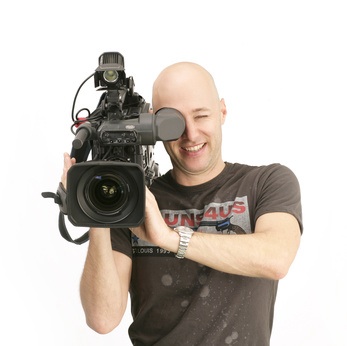
Audiences have complained for years about some camera shaking to be a distraction rather than artistic. They can tell when the device pulls them out of the story, making them very cognizant of sitting in a theater our staring at the HD screen that accentuates the movement. The artistic value has been questioned for years due to the equal number of successes and failures the technique achieved.

I believe that the key to its success is directly related to the emotions of the storyline. It typically won’t be effective if a first time filmmaker wants to use the technique because it’s cool, rather than knowing if it fits the story. Even the experts struggle with when to use the device, but those who have mastered it are the ones that understand how to build emotions within an image.

My dad shot film before I was ever born and by my Jr. high years he suggested how I could improve my filmmaking. He told me the simplest thing: Motion pictures is all about motion. He further explained that if the actors aren’t moving, the camera should be.

If we take this simple lesson to it’s obvious conclusion, we must determine what will be happening in the shot and to what degree or level the added movement must be at. In stage shows the actor moving toward the audience is comparable to a close up, just as the actor moving up stage is similar to a long shot. Each relative position sets a different parameter of emotional values.

When an actor gently whispers in a close up, the audience feels pulled into intimacy. And, obviously stated, the actor shouting across the room demands a wider shot to capture the space needed for the appropriate volume.

Camera movement is similar. If the handheld is shooting an intimate scene, having the camera bouncing more vigorously makes no sense. Likewise, if the scene is fast paced with lots of movement, keeping the camera moving at the same tempo increases the emotional pull on the audience.

Picture a man and a woman sharing an intimate conversation. The camera is in close and the words are just above a whisper. Having the camera off of the tripod but barely moving gives the audience a sense of freedom and love.

Suddenly the man wakes up from his dream. He jolts to look around the room with the camera following the same intense pattern. Then he sees him – the antagonist with exposed bombs strapped to his chest. The whacko raises the detonator button and laughs. The camera jerks around from the laughter, to the bombs, to the detonator, to our hero who scrambles down the hallway to get away from the lunatic.

The key is to fit the handheld movement to the emotional level, in conjunction with the pacing of the scene. What makes it difficult is the fine line of error that pulls the audience out of the story if it isn’t executed properly. For instance, what if the camera suggests intimacy, but the actor fails to draw the audience into the intimate moment. Or, in a chase scene the actor isn’t running at full speed and the audience can tell, but the camera is frantically moving to preserve some form of tension – It will look silly.

The test to the handheld’s movement success is directly correlated to the audience being pulled deeper into story or noticing the camera movement and losing track of the story in any specific moment.

I’ve seen shows where the camera movement is so well articulated around the emotions of the scene that I found myself physically leaning, subconsciously trying to shift the camera’s perspective without being pulled out of the story. I was shifting with the camera, as if I could somehow help the hero make his way through the perplexing situation unharmed. I’ve also seen films where the camera movements made me feel sick and I willingly turned from the film.

It takes great communication between the director, cinematographer and actor to pull off the shaky camera effect and when done properly it saves time, budget and builds great emotions into a scene.

Copyright © 2011 By CJ Powers
Photo – © Peter Atkins – Fotolia.com