Telling A Story that Inspires Faith and Action

Many faith and values films are actually religious films in disguise. They are typically written, directed and produced by a person who has a specific message to get across. He typically desires to use film rather than a pulpit, and isn’t well versed in the craft of story telling.

Christian MoviesIn mid July, I will be teaching two workshops at Karitos 2012 on developing story for film, to a faith and values audience. The number one thing I will attempt to share is how to integrate a message into a great story, rather than trying to attach a story to a message.

The first rule is to make sure the main plot line is filled with some form of a protagonist or hero taking some proactive action. This plotline is called the Action Plotline. The second rule is that the message can NEVER be a part of the Action Plotline, but MUST be a part of the “B” Plotline.

The typical argument I get is that the message is very important and therefore needs to be in the Action Plotline instead of a secondary plotline. However, while a book might be able to succeed in this manner, films typically fail. The reason for this consistency of failure is due to messages being good or wholesome and Action Plotlines needing conflict and consequences to survive and progress.

Rarely will an author risk his key message in a sea of conflict. It is much easier for the hero to learn it during a lull in the Action Plotline. In this way the hero can find a unique application for it in order to save the day by the end of the film, making the storyline and climax of the film more valuable.

By applying the message in this way through the “B” Plotline, the audience gets a glimpse on how to translate the message into their lives. It becomes a perfect demonstration for multiple types of applications based on each viewer’s life experience. The message instantly becomes a tool for use in life.

However, many Christian filmmakers put the message into the Action Plotline, which slows down the story and causes the audience to feel preached at. And, few people will accept a message that is preached at them rather than shared with them.

We all like to feel close to our pastor and listen to him share his message as a good friend or a person of wisdom who wants the best for us. But, the hero or main character isn’t our friend unless he is specifically crafted to connect with us.

This skillful style of writing requires subtext and no preaching, relegating the message to the “B” Plotline. This combination will not only inspire faith, but it will energize the viewer to consider some form of action in their own life – Making the story and the message a great experience.
Copyright © 2012 By CJ Powers
Photo © determined – Fotolia.com

Review: For Greater Glory

Most poor films die in the second act, but this little known religious war film has a very strong second act. Its first act is a bit confusing and its third act doesn’t give the pay-off hoped for by the audience, but its ride during the second act is worth watching the film.

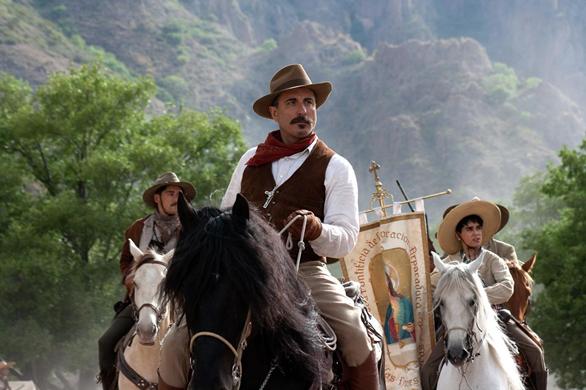
For Greater GloryThis film is a finely crafted Mexican movie that stars Andy Garcia, and believe it or not, is shot completely in English – A bit odd for a foreign film. The film did rather well in Mexico with a box office of $4.1MM under the title of “Cristiada.” Fox released the picture this past weekend on 757 screens and brought in $1.8MM in its first two days.

This true life western doesn’t fit the typical Hollywood fare, as the gunplay is missing a grand Hollywood budget. However, it seems to be very true to the Cristero War that broke out in 1926 when the Mexican government persecuted Catholics and band their religious practices. The uprising formulated into a rebel army, whose clashes with the government left 90,000 people dead.

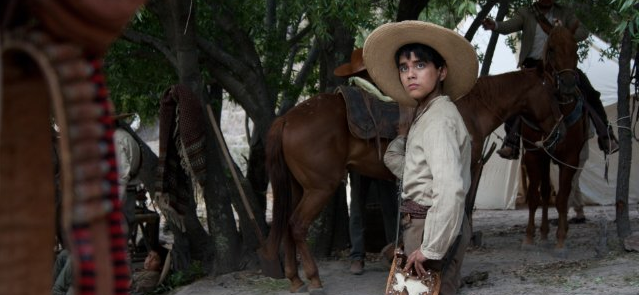
The story focuses on General Gorostieta (Andy Garcia), a retired military strategist who takes up the cause, an aging Priest (Peter O’Toole), who is killed in the first act, and a young boy (Mauricio Kuri), who joins the rebel army after watching his priest get shot down by a firing squad for conducting religious services.

The film explores the loss of freedom of religion and the various forms of apathy, compromise, and unorganized uprisings requiring unity to be effective. The film hits a little too close to home when it comes to the unbridled apathy and willingness to compromise our freedoms in the name of security here in the states.

For Greater GloryFirst time feature director Dean Wright, known mostly for his special effects work, wasn’t able to keep the intensity of the second act in the first or third acts. This coupled with its length, gave little room for strong emotional connections with the exception of the little boy who was martyred in front of his godless father and silent mother.

Screenwriter Michael Love didn’t create characters of great depth, but their situations helped to overcome that downfall. However, he did handle the religious aspects of the film with great care, making sure the story’s religious backdrop was handled both subtly and respectfully, to the degree possible based on the true-life tragedy.

This film was one of the best low budget films I’ve seen in years, but it is still a low budget film. If you enjoy history or have a passion for our freedoms, it is well worth your time to watch. And, I’d suggest seeing it in the theater for the sake of the grand vistas, although much of the film is in dark cramped quarters.

Telling a Cinematic Party-Like Story

I was looking at the cool glass award statue that was delivered yesterday. It was for winning “Best Story” at a recent film festival. Since I’m always interested in how the award winners achieved recognition, I thought I’d share a few thoughts about creating a good story for film.

Cinematic Story TellingEisenstein was the first to play with film story. He stated that film story should be told through cuts or the juxtaposition of uninflected images.

If you listen to how a guy tells a story at your next party, you’ll hear him share it cinematically. This is partially due to the times we’re in, but it’s more than that. We tend to jump from one thing to another as we share our thoughts. We piece together a series of individual things we noticed and share it in a like fashion.

Maybe he told it like this…

“The sun was really bright. I could barely see through the glare on my windshield. All of a sudden this guy bounced off of the hood of my car. He rolled into the other lane. The woman in the oncoming car slammed on her brakes and stopped within inches of hitting the guy. Then the man got up and walked away. I had no clue who he was or where he came from.”

This story was put together by taking different shots or things noticed, and stringing them together so the juxtaposition of the elements told a story. In fact, if the story were broken a part, you could create a cinematic shot list:

        • Bright sun
        • Glare on windshield
        • Guy bouncing off hood of car
        • Guy rolls into oncoming traffic
        • Woman in oncoming car
        • Brakes being slammed on
        • Car stopping inches from guy
        • Guy stands
        • Guy walks away

There can certainly be additional shots added to the list depending on the director’s desire to show cutaways or reaction shots. He can also be creative in the angles of the shots or in the equipment used to capture the shots. However, the most important element is that the story was visual or cinematic.

By creating a cinematic story, we are telling it in a way that anyone can understand, as they would have told the story in the same way at a party. This film language is key to writing good film story, unfortunately, most screenwriters write stories that require narration and dialog, rather than stories that stand on their own.

The ideal film is the silent one that has been enhanced by some dialog. This allows the story to be understood regardless of the regional language of those watching it. They can fully understand the story, even if they can’t pick up on the nuances of sparingly salted in dialog.

The original screenplay for “Family Law” was 40% longer than it needed to be, so I cut it dramatically. The goal was to be able to understand the point of the story with the sound off. I believe it was accomplished.

However, since its release, I realized that the story could have been better served with more time analyzing and rewriting the scenes. After all, writing a story in one week and then filming it, probably wouldn’t allow the story to be at its best – But in this case, it was strong enough to be recognized at a film festival.

Copyright © 2012 By CJ Powers