I wanted to reprint the Guest Blog I wrote for JourneyCraft in case my readers hadn’t seen it…
 An article on screenwriting from a director’s perspective might seem self-serving, but what I’m sharing quickly differentiates great writers from the really good ones.
These finer points can easily be overlooked by an experienced writer who sees a familiar term and doesn’t take time to understand it from the director’s perspective.
Since the director owns the vision of the film, it’s prudent to understand his expectations for a given scene.
The below tips should help the writer step it up.
1. Improve the Scene, Don’t Change it.
It’s frustrating for a director to read a scene that is just shy of being perfect. Not because the writer missed the mark, but because the director typically gets back significant changes instead of the minor modifications he requests. I’ve seen stories needing a slight tweak go through such major revisions that it changed a comedy into a drama.
Major changes are typical for writers who love creating story and don’t take time to understand what the director was planning to do with a given scene. Before making any changes, writers need to find out what the director likes about the scene and how he perceives it – So they know what not to change. The writer’s focus must facilitate the director’s vision, not keep her favorite scene intact or create something that could be really cool in a different film.
2. Understand the Point of the Story.
Every writer knows that each scene must move the story forward or be cut from the film. Scenes that are near and dear to the writer’s heart, but don’t move the audience toward the point of the film, leads to the deterioration of the story. I’m amazed at how many professional writers lose track of the story’s point during their creative process and write something that doesn’t belong in the film.
It’s prudent for the writer to reduce the point of the story to paper and compare it to every scene, making sure it belongs in the film. She might also reconsider arguing with the director about keeping the “unique” scene, as it will weaken the core story and make both of them look bad.
3. Develop Subtext.
If I had a dollar for every time a writer is told to write subtext… So why are so few scenes built on subtext? I co-wrote a love story that had a scene with the woman helping the man learn about abductive reasoning while packing for a trip to meet her folks. The original scene was flat and written on the nose, like many first drafts. By having the main character decide about taking or not taking a sweater based on possible weather conditions, we were able to create subtext about how warmly he may or may not be received by her parents.
Creating subtext is an art all unto itself and is welcomed by all directors. One of the easiest ways to create subtext is for the writer to build an honest scene
from a situation she would normally avoid in life at all costs. By forcing the character through the situation with as much tact as possible, while being honest, the writer will generate a layer of subtext that the director and actors can ignite.
4. Create Clear Story Beats.
The term “beats” is hard to explain since there are beats in the three-act structure, beats within a scene, and action beats for actors, not to mention when an actor takes a beat or pauses. Every scene has a beginning, middle and end, which accounts for a minimum of 3 beats. Within each scene are shifts of power between characters that are also called beats.
The key beats that directors look for are the exchanges of power between actors through dialog or physical movement. These beats set up a rhythm for the scene and bring interest to the viewer. Without the beats, the scene is flat and can lose the audience’s attention. Writers who proactively create beats within each scene to capture and recapture the audience’s attention are always in high demand.
5. Set the Scene’s Rhythm.
Story ebbs and flows like an ocean. Each character takes on a life of its own and his or her interaction drive scenes in new directions, while the writer maintains the point and direction of the overall story. Every conflict or surprise gives rise to another shift or turning point within the story and takes the audience down a path they’ve never visited before.
There is a natural rhythm that rises from the characters that needs to be found and clarified. If forced, the scene becomes stilted and cliché. The writer
is required to bring clarity to these strong and weak patterns to enhance the storytelling process. When its done properly, the audience feels good about having witnessed the actions within the scene and are drawn further into the story.
6. Shift Power in Every Scene.
Numerous techniques exist that alter the control of power within a given scene. This can be done with blocking, camera position and most importantly dialog. The writer through a handful of expressed words can take the power owned by one character and quickly pass it to another. In a moment of conflict, the exchange can happen several times and raise the interest of the audience.
The easiest way to shift power from one character to another is by having the one in power ask a question, followed by the other avoiding an answer and talking about another topic. This immediately transitions the power within the scene. Another example is having the person in power make a statement and having the other person immediately accuse the first person.
7. Add More Conflict.
Stories are boring without conflict. It doesn’t matter if the conflict rises from the internal, nature, or another character. What does matter is that the story must be laced with plenty of it. Too many writers don’t want their good character to come across in a nasty way, so they avoid creating moments of conflict. However, great drama is built on conflict and great characters learn how to work through conflict.
The easiest way to overcome a character looking bad for a moment is to focus on the choice and outcome of the conflict. Audiences are intelligent enough to focus on what the writer declares important and avoid going down rabbit trails that don’t exist. By establishing a choice or a forced decision, the writer can demonstrate the character of the protagonist as he walks through the difficulties and finds success.
Focusing on these 7 tips will bring peace of mind to most directors and save his efforts from having to tactfully hire another writer to improve your story for a strong transition to the screen.
Copyright © 2013 by CJ Powers

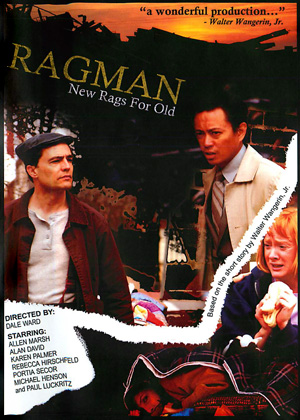 Great literary works of this kind seldom translate well to the screen, yet Director Dale Ward took on the challenge with his 2009 film version. While the film doesn’t stir the emotions as powerfully as Wangerin’s written work, it’s a close rendition of what was written. For those not having ever seen one of the Ragman films, I recommend you share Ward’s work with your family and take advantage of his study guide. Or at least get a copy of the book.

 CJ's Corner