Creating the Hero: A Look at Avatar

The most successful stories are those where the main character becomes the hero by the climax of the film. The hero walks through a path of change and growth that the audience can follow. The process itself creates a bond between the character and the audience, which develops into emotional support through the second act and emerges with some form of the audience cheering on the rising hero by the climax.

Avatar’s simple hero story structure was key in integrating the incredible effects and new technologies into a motion picture worthy of $2.78B (at the time this article was written) in box office receipts. Due to its huge success and the rising buzz of Avatar 2 due out next year, I thought I’d review the hero portion of the film’s story structure.

The hero starts out as a non-hero who lives a straightforward innocent life. He lives in a mundane world where he functions in a typical fashion that might make the average person yawn. This soon to be hero has a desire to be or experience something more, but continues to live his mundane day-to-day life.

In Avatar, Jake lives a non-adventurous life due to a spinal injury that restricts him to a wheel chair. His legs were well atrophied, yet the desire of his heart was for adventure.

AvatarToss in a Catalyst: Before the audience gets too turned off by the non-hero’s life, the writer adds a catalyst to the mix. This ingredient can come in many forms, but always pushes the hero into an extraordinary adventure. It breaks the mold of the mundane and sets the hero on a path that will continue to escalate until the climax.

Jake learns that his identical twin brother Tommy, who was set to be an avatar user, was murdered for the paper in his wallet. Since avatars are based on exact DNA matches, Tommy’s avatar becomes available for use by Jake.

AvatarReveals His Hesitation: Many films die during the second act because the audience doesn’t understand the growth the hero must accomplish in order to face his adversary in act three. To set up the contrast in act one, the writer reveals the hero’s uncertainty, fears, or any other form of reluctance that could hold him back.

Jake finds himself in a terrifying set of circumstances during his first visit to the rainforest. He encounters many new and weird creatures, but all fear breaks lose when he finds himself in between a six-legged Hammerhead Titanothere and a Thanator with an ear splitting roar. Within a few minutes, Jake realizes that he is not cut out for the adventure and wants out.

AvatarIntroduce the Mentor: The Archetype or hero’s mentor is introduced to share a few wise words, give perspective or a little nudge to get the hero moving into the adventure. The initial movement sends the hero into a sort of training that develops what he will need to win or overcome by the climax of the film.

In Avatar, this role is split up between Grace and Neytiri. Grace helps Jake to appreciate the scientific perspective on the Na’vi culture and Neytiri teaches him the ways of her people.
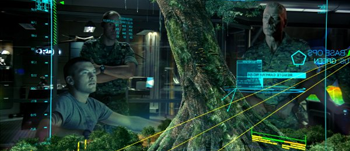
AvatarTurning Point Sends Hero into Obstacles: At the end of act one, the hero is catapulted into act two through a twist in the plot that sends him in a new and unexpected direction from his goals. He finds himself in a new world that is the antithesis of his mundane world. This transition kicks off the hero’s transformation into whom he needs to become in order to fight the eminent battle in act three.

Jake is captured by the Na’vi and is brought to Mo’at who wants to observe him. She determines that Neytiri will train him in their ways. Colonel Quaritch agrees to Jake participating in the program in hopes of learning how to control the natives. Jake finds himself with numerous obstacles to overcome in learning how to live like a Na’vi.
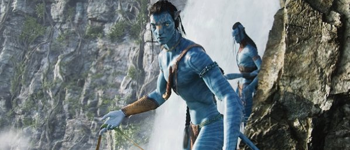
AvatarPlagued by Obstacles: The hero is inundated by a series of obstacles that get worse with each mini-victory and forces the hero to step up to another level, eventually bringing him to a place of confidence with the higher skills needed for the final battle just before the climax.

Jake must learn archery, tracking, riding, language skills and how to bond and tame a banshee. Jake must fulfill the Na’vi warrior’s required right of passage – Bonding with a banshee and becoming an Ikran Makto (One who rides mountain banshees).

AvatarA Night of Despair: The obstacles rise to the point where the hero faces a dark night of the soul and desires to give up – All hope seems lost.

By the time Jake’s love interest grows with Neytiri and he has been accepted into the tribe after accomplishing his right of passage, he plays a unique role that brings death and destruction to the people he learned to love. He loses everything and is not welcome among the humans or the Na’vi.

Resurrected Hope: The third act kicks off with a redemptive moment, as the hero’s soul rises to the ultimate challenge. He decides to step up to seize the moment and capture the prize. He enters battle with a cheering audience spurring him on.

Jake turns to Grace and his other human friends to help him get back to the Na’vi in his Avatar. They mobilize the chambers and take one up into the heights where radio signals and tracking devices won’t work. Jake gets another chance and warns the Na’vi of the pending battle. To get their attention, Jake realizes that he will have to do something that only a few Na’vi had ever attempted throughout history; capturing and bonding with the Leonopteryx, the king of the mountain banshees.

AvatarThe Enemy Rises: The moment the hero’s enemy realizes that he is stepping up, the chase begins and the enemy sets out to destroy the hero in a full out battle.

Colonel Quaritch deems Jake as a traitor and orders a full out attack on the Na’vi and their sacred grounds.

AvatarThe Hero Wins: The hero uses all he learned in act two to overcome the enemy and win the prize. The enemy is destroyed or sent away until the sequel and the hero returns home to his once mundane life, but no longer as a frustrated person – He is now a full fledged hero.

Jake leads the army of the Na’vi and several other clans into battle against the humans. He uses his knowledge of both cultures and tools to win the battle.


Content Copyright © 2010 by CJ Powers. All rights Reserved.
Photo Copyright © 2009 Fox and its related entities. All Rights Reserved.

Rewriting the Rewrite in 5 Steps

Rewriting the short film Family Law consumed my time a few years back, but it was worth the effort once the film festival season began. The film took home numerous awards including: Best Screenplay and Best Actress. I therefore decided it would make for good examples in my sharing of the rewriting process.

The premise of the film is:

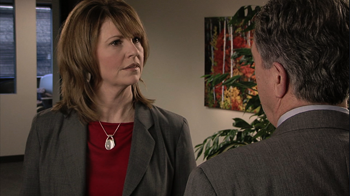
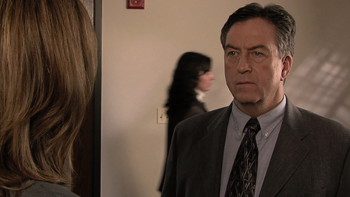
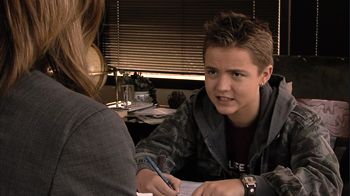
Law firm partner Carol Peters fights to keep the legal sharks away from a teenage boy who wants emancipation from his oppressive home life. Cornered by the boy’s choice, Carol risks disbarment unless she can find the deal-changing answer in a gentle whisper.

During the rewriting process I had numerous conversations with a copy editor and the film’s star, Francine Locke. Both were experts in their field, but neither fully comprehended the rewriting process. In fact, while Francine loved the over all story, she felt the dialog was too “in her face and wordy,” which it was in the draft she read.

I explained the process and pointed out how in the first draft I tend to write the dialog “on the nose” to make sure I understand what information needs to be presented to the audience. It’s not until a later draft, when I deal with subtext, that I rewrite the dialog. This explanation made me realize that there are many beginners in the industry that may not have a handle on the rewriting process, so I decided to share a few thoughts.

Here are five steps that will help the rewriting process.

1. Rewrite for Excellence

CarsI haven’t met a writer who didn’t love their first draft. This is a byproduct of a writer’s attempt at reducing their great story ideas to writing. However, as a script doctor, I’ve had to inform many writers that their job wasn’t done after the first few drafts. It takes several attempts to get the writer to realize that he only placed the foundation of the story on the page and not the fully envisioned movie.

Through self-examination of my emotions and a second objective look at my story, I found that my first draft scripts aren’t close to what they’re meant to be. The reality is that while my story concept starts to surface in the first draft, the rest of the story needs to be fleshed out through additional rewrites.

A few years back, I was invited to an awards ceremony at the Beverly Hills Hotel, which gave me an opportunity to chat with two of the Oscar winning writers of the movie Cars. They shared how it took them three years to rewrite the story with some scenes having as many as 22 rewrites, winning them an Oscar and sequel.

2. Throw Away the First Draft

Star Trek: The Wrath of KhanAfter my final rewrite of Family Law, I realized there were no sentences from my first draft that survived and there were only a few sentences from my second draft that were unchanged. I could have easily thrown out the first draft and started over with a better chance of achieving my story goals.

Unfortunately, most writers fight to keep as much of their original writing in tact. This lowers the quality of their story and blinds them from an opportunity of telling the story from a better perspective or from another character’s point of view, which is sometimes better than where we start. My first draft of Family Law was about the teenage boy, but I found a stronger story by shifting the perspective to the female lawyer.

Jack B. Sowards, known for his television Emmy winning scripts, wrote Star Trek: The Wrath of Khan. Until the J.J. Abrams Star Trek reboot, Jack’s story about Khan was considered by fans as the best Star Trek story out of the dozen features released. Jack is a man dedicated to quality and as a matter of practice, he literally gets up out of his chair, walks over to the wastebasket and drops his first draft in.

3. Rewrite the Good to make it Great

Family LawThe main reason actress Francine Locke decided to produce Family Law was a desire to find a creative vehicle that could feature her talents at festivals. This type of pressure might typically cause a writer to make only slight adjustments to a script, missing an opportunity of making it great. I’ve personally learned that greatness can only happen when the writer is willing to scrap what is good to make room for what is great.

Just about everyone wanted me to change the climax in Family Law to make it bigger, but they missed the important fact that it needed to be realistic, plausible and lead into the resolve. While I accepted some rewrite recommendations, I chose to hold to my third draft version of the climax. The result during sneak previews, I watched every person tear up during the climax, proving that a writer should only rewrite what he or she agrees would improve the story, not just change it.

4. Be Clear, Not Obvious

Family LawEvery rewrite should help clarify the story and main character. It’s important to keep the audience in the emotional flow of the story and not bog them down with huge backstory or “in your face” dialog. The writer’s focus should be on bringing out the characters and plot, rather than muddying the waters with attempts at iconic phrases like “I’ll be back.” French writer Gustave Flaubert suggested that the “artist should be felt everywhere and seen nowhere.”

In Family Law I found myself writing what I perceived as a perfect climax and resolution, but some people were concerned that the audience might not catch the visual nuances that turn the story into a grand slam. Francine even asked if I should write a more obvious ending. However, with me being a person who always understands a film well before the writer hits me over the head so I “get” his film, I decided to trust that my audience would be more visually intelligent, than not. I kept my ending.

5. Take Time for another Rewrite

Family LawGoing into a film project with a goal of seven plus rewrites helps me to depersonalize the story and see it objectively. While I’m not suggesting that my passion drops, I am being realistic about the numerous drafts that lead to a successful story. Many screenwriting consultants have been quoted saying, “Screenwriting is not about writing, but rewriting.”

The Script Supervisor from Family Law asked her screenwriting professor about the number of rewrites it takes to make a good script great. The professor cited a student who did two rewrites, and then sold the script to a production company, who then did two more rewrites before production. While the professor suggested that four rewrites was all that was necessary, the Script Supervisor couldn’t help but wonder what the minimum number of rewrites would be to guarantee a strong and tight story.

For me, Family Law, a six-minute short film, took five rewrites in order to pull on the heartstrings of the audience and deliver the theme to their heart. Had it been a feature, I’m sure the rewrites would have been well over a dozen or two.

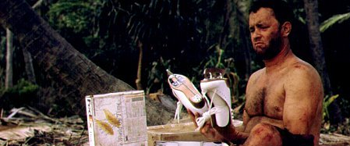
Cast AwayI learned a long time ago that rewrites are not something to avoid, especially since the WGA makes sure you get paid well for rewrites. Instead, it is a tool to double check the tightness of your characters, plots and subplots, emotional patterns, dialog, etc. If each rewrite focuses in on just one area of a script like format, continuity, visualization, etc. it would take a minimum of a dozen rewrites to make sure every aspect of a script is excellent.

The script writing process is all about rewriting. The fear of having too many rewrites is only held by beginners, as the professional counts on polishing each aspect of his story through the rewriting process. When you have a powerhouse actor on your film project like Tom Hanks, you plan on lots of extra rewrites to live up to his excellence in performance. Tom Hanks’ Cast Away saw 250 rewrites over five years before he was ready to film, leading to 22 nominations and 11 awards.

Copyright © 2013 by CJ Powers

Forget the Master Scene

Master SceneMaster filmmakers have been touting the importance of shooting a master scene for decades, but in today’s visual society it’s no longer necessary. Now that we’re in the third generation of film viewers, the audience has learned how to read films and no longer need things explained to them. The 1977 release of Star Wars demonstrated that proof with its use of time compression and fast cuts.

Prior to Star Wars, a scene might unfold like this:

A car stops alongside of a curb in a residential area. The key turns off and is removed from the steering column. The car door opens and a reporter steps out. He reaches back into the car for a pen and notebook. The reporter closes the door and locks it. Walking around the car, he moves up the sidewalk toward the house. His winged tip shoes move quickly up the staircase. He pushes the doorbell. The reporter readies his notebook and pen.  The door slowly opens revealing a nervous woman who doesn’t want her story published.

After Star Wars, a scene might unfold like this:

A car stops alongside of a curb in a residential area. The doorbell ring echoes within the house, as a nervous woman opens the door to find a reporter standing with pen and paper in hand.

Both presentations get across the important story elements of a reporter after a story and a nervous woman who doesn’t want it published. The first one was typically shot as a master scene and then reshot with potential close-ups, over the shoulder shots, and other types of shots that might include a crane or dolly. This type of shooting would require a good four hours to rehearse and shoot on location.

Today, the scene would open with a moving crane shot of the car parking along the curb. The interior shot might use a dolly to follow the woman to the door and a jib arm might move it into an over the shoulder shot as the door opens to reveal the reporter. The exterior shot would be filmed within an hour by the second unit team, which would keep costs down. The interior would be shot on the sound stage in less than an hour.

The cost of creating the master scene is high for independent budgets and its benefits are no longer relevant for today’s filmmakers. The odds of more than 4 seconds of a master shot being used is slim; let alone using it in its entirety. If the scene is really long, there might be a reason to use a master shot to break the scene in two, but most of the time filmmakers will only use the first or last 3-4 seconds of the shot – Making the remainder a very costly unusable piece of film.

Today’s directors plan ahead for the visual and emotional impact they want their audience to receive. The director requires only the shots that truly move the story forward and the rest are no longer filmed, thanks to an audience who can now read a series of images as a story. This new ability of the mind filling in the visual gaps will soon make film the most prolific story telling device for years to come. Thanks to YouTube and other online services, that day is well on its way.

The only remaining reason for a master shot is to cover for an unprepared director or one who isn’t able to visualize the film in his head. The master scene would capture how the actors play out the scene in order for the director to figure out what camera angles and shots he might need to tell the story. Today, however, storyboards, animatics and previs (previsualization) can easily replace this technique, while saving a significant amount of money and time.

Copyright © 2013 by CJ Powers
Illustration/Photo © Illustrart, James Steidl – Fotolia.com