Directing a Great Audition

In the day and age of uploads, many actors find themselves performing to a camera in their living room and uploading their interpretation of the character. The better the camera, lighting and the actor’s understanding of the character, the better chance of he or she has of making the cut, or not.

auditionsReal auditions and screen tests are in person with the director. In fact, I’d say that the audition process is more about the director than about the actor. Auditions are not performances. It is a process that helps the director determine if the actor has the faith, patience and trust required to build the character according to his vision. The audition is a tool for the director to see if the actor has the elements that make the character who and what they are.

Inexperienced directors, who are unsure of the rehearsal and audition process, often settle for actors who have learned certain skills that present a superficial reality, rather than properly develop a character that captures the hearts of the audience. When this occurs, the director typically gets whatever they see in the audition in their film, rather than a truth based, believable character.

Instead, the director should focus on 3 key audition elements:

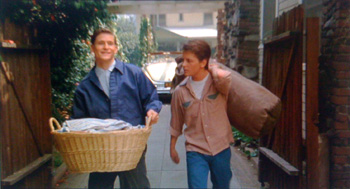
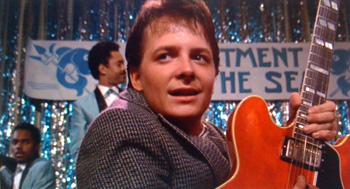
The Right Actor for the Right Role. The Back To The Future trilogy made box office history because Michael J. Fox was the perfect person to play the role of Marty. His timing was impeccable and his actions were an ideal fit for the character’s adventure. However, Eric Stoltz was first hired to play Marty and three weeks into production, Director Robert Zemeckis realized he had hired the wrong actor. He immediately let Stoltz go and hired Fox.

The director’s job in the audition is to make sure he is getting what he thinks he is getting. He needs to work with the auditioning actors and explore the development of the character using sides. While working with the actor, the director should be asking himself the following questions:

      • Do you see the character in the actor?
      • If you see a version of the character, is it a version that will work?
      • Is the actor interesting to watch?
      • Does the actor surprise you with various readings against the original line?
      • Do you get drawn into the character or do you see the actor?

If several of the above questions get a positive response from the director, it is a signal that further exploration should take place. However, if most of the above items aren’t checked off, the director has one of two choices to make: Shoot a film that doesn’t match his vision; or, Search for another actor.

A Truthful Performance. Many independent films have good performances, but lack great performances. This is due largely to the fact that middle range actors are readily available and have memorized certain actions, looks or gestures that work on screen, but are superficial. Seldom do independent film budgets allow the director and actor to develop a character that is captivating. Most settle for the memorized gimmicks and quick cuts.

Experienced directors know to look for key abilities in their actors by asking themselves the following questions:

      • Does the actor work in the moment?
      • Does the actor listen to the director?
      • Does the actor listen to the other actors in the scene?
      • Does the actor anticipate the line, or allow the circumstances in the moment to prompt it?
      • Is the actor teachable?

Directors struggle when faced with a name actor that won’t take direction. Not only does the performance lack truthfulness and believability, but it also falls short of the director’s vision.

A Great Working Relationship. On one project I have in development, the producer suggested we use Al Pacino as one of the three main characters. After reviewing his work, I realized his performance was either hot or cold, depending on the film. I asked the producer to do some research and we soon learned that when he has a great working relationship with a director his performance is award winning, and when he doesn’t have a strong relationship, his work suffers – A risk I wasn’t willing to take.

Directors know there is a balance between getting an actor’s performance to perfectly match his vision, and drawing from the creativity that a talent brings to the set. This collaborative process is key to the film’s success.

It reminds me of Tom Cruise’s collaboration. You will never see Cruise running down steps in an action movie. He learned from several productions early in his career that he looks awkward, not macho, running down steps. Whenever he’s in a good collaborative mode with his director, they reposition action to improve his macho look.

Directors keep their eyes open during the audition for the following:

      • Does the actor listen to you?
      • Does the actor collaborate well?
      • Does the actor accept an atmosphere of open and free exchange?
      • Is the actor willing to explore playing what they hint at in a bigger way?
      • Is the actor willing to turn overt play into something subtler?
      • Do you and the actor work as a team to attain, change, and surpass the expectations you have for the character?

Anything shy of learning the answers to the above 16 questions makes auditions a complete waste of time.  The trend of seeking audition reels is no better than receiving headshots, as none of the above critical questions can be answered by watching a series of clips – It’s all about the collaborative process that builds a great relationship between the director and actor.


Copyright © 2013 by CJ Powers
Photo © Innovated Captures – Fotolia.com


Drive the Plot with Jeopardy

For years, screenwriters searched for new ways to put the protagonist or hero into jeopardy to drive the plot forward. It’s so common that many writers lost track of the one key element that makes it effective – Making sure the audience cares about the hero first.

People will flock to see Will Smith’s latest action and adventure film, After Earth, because his films consistently bond the audience to the main character. This bonding technique helps the audience to care about the character to the point of being emotionally invested in his outcome — An overflow of a well developed character.

Back to the Future, a Michael J. Fox vehicle, endeared the audience to the main character enough to drive a trilogy. In fact, it was the first Sci-Fi film I remember seeing that made the audience care deeply about the hero and raised the stakes to the point where the audience was emotionally invested in the story.

Once this bond is set in place, the screenwriter can use the same seven ways to raise the stakes in their movie, which I discovered while studying Back to the Future: Instinct to Survive, Need for Safety/Security, Desire to Love and Belong, Lifting Self-Esteem, Desire to Quench Insatiable Curiosity, Need for Balance in Life, and Expression of Self-Realization.

Instinct to Survive

Life against death is the baseline for the survival scenario. While most films don’t push the extreme, many find a way to put the hero in a form of jeopardy that would dramatically change their life to a point where they might not survive. In Back to the Future, the mere sending of Marty back in time was sufficient. He found himself not relating to the things we take for granted.

Jeopardy0When Marty found himself in the diner needing to order a drink, he asked for a TAB. The server pointed out that he couldn’t have a tab (or bill) until he ordered something. Marty then asked for a Pepsi Free, but was met with resistance when the server stated that if he were going to order something he’d have to pay for it. Reluctant to ask for anything else specific, Marty asked for something without sugar and received a cup of coffee.

It didn’t take long for Marty to realize that he needed to be careful about his comments and what he shared with others in order to survive his stay in 1955. Most of those mistakes were based on common practices of the audience’s day in 1985, causing them to bond with him all the more. They understood how easy it would be to make the same errors.

Jeopardy1However, a stronger survival mechanism was put in place to drive the action plot. It was demonstrated with a picture of Marty’s family slowly being erased because his time travel caused his mom and dad to never meet or kiss for the first time, bringing an end to him and his sibling’s existence. Marty had to get his future mom and dad to meet and kiss the night of the dance or his very existence would disappear – A powerful point of jeopardy driving the film.

Desire to Love and Belong

Jeopardy2Another universal point of jeopardy is associated with our longing to be loved and accepted. We will go to great lengths to secure our love for another and we’ll fight anything that tears us away from belonging to something important or someone special. This can be in the form of a sense of community, team spirit, romantic interests, or traditional family.

The key is to paint a picture that others can also hope for or have sampled at some point in their life. Marty experienced this sense of family while bringing together his mom and dad, working on time travel with Doc Brown and his love interest with Jennifer.

Lifting Self-Esteem

Jeopardy3Most individuals want to be looked up to by somebody. They want to be recognized and respected among their peers. There is an ingrown desire for us to be recognized for our skills, talents and contributions in life. We want to be somebody.

A healthy form of self-respect or self-esteem would allow George to win the love of Lorraine regardless of what Biff might attempt. This innate drive is significantly different than our need to belong or be loved. It is the inertia that causes us to take action for something we desire or believe in. Putting the very essence of this gut felt understanding of whom we are in jeopardy, drives the hero into action in order to protect himself or the one he loves.

In Back to the Future, Marty had to work diligently with George to raise his self-esteem in order for him to ask Lorraine to the dance, saving his life from being erased from existence. He had no choice but to work with George, even though he seemed beyond help.

Desire to Quench Insatiable Curiosity

Jeopardy4No matter how often we try to stuff it or coax it, some form of curiosity always drives us. We have an unending need to know and understand who we are and how we fit together with others. Deep within us is a natural instinct to figure out how things work and to comprehend how things piece together in our lives. We need to make sure all the pieces of our life fit harmoniously together in who we are.

Doc Brown found watching himself on television enticing. It drove a secondary plotline that allowed him to save his own life in 1985 after reading a letter written by Marty in 1955. His curiosity drove him to risk messing up the timeline continuum and ended up altering history. This form of jeopardy brought a surprise finish to the film and set up several comedic situations.

Need for Balance in Life

Jeopardy5Balance is found in the people who are secure, confident, and experience love. They hold a sense of balance in their lives and are connected to someone greater than himself such as a mentor, wise counselor or God. When this line of connection is broken, the main character feels a dramatic sense of foolish unbalance in his life, ripe for shifting the plotline at a moments notice.

In act 1 of Back to the Future, we find that Marty is a kid who seems to be misplaced in the wrong home. This cool kid is living among a negative family who seems to be from another planet. The family is out of balance or dysfunctional at best. It sets up many plot points for exploration, as Marty struggles to find harmony within his life. By the end of the film and after a few history-changing events, Marty finds himself in a home with a cool, affirming and positive family.

Expression of Self-Realization

Jeopardy6Everyone wants to know ourselves and be who we are. This inner spirit plays out through self-expression and the actualization of our talents and abilities. We find our lives filled with moments where we can hone our skills to match who it is we see our self to be. A comedian has to be funny and entertaining. A doctor has to be logical and methodical. A musician or actor needs to excel at their craft and please their audience.

In act 1 we learn that deep within Marty’s soul is a musician waiting to come out. When this form of self-expression is put in jeopardy, the story takes some interesting turns. Marty finds himself delaying his return to 1985 so he can play one more song in 1955. He had to do it because of who he was. This escalates the risk factor of him being able to get home and drives the film to its climax.

Raising the Stakes

Jeopardy7Any of the above areas will raise the stakes of the show, but it will only grip the audience if they can relate or bond with the character in those moments. Hooking the audience with a more universal stake, gives a greater opportunity for driving the plot forward. This can also be accomplished by keeping the character’s goal just barely out of his reach, causing the audience to strain on his behalf in hopes of subconsciously helping him achieve it.

The more the audience experiences the main character’s goal, the more they will connect with him and the easier it will be to drive the plot forward with interesting twists. Playing with the related emotions of the character then allows you to play with the audience’s emotions as well. Both will find themselves on the same journey. Pulling on these emotional strings will then heighten the jeopardy or raise the stakes for the audience, making the pay-off at the end of the climax of greater value.

Article Copyright © 2009 by CJ Powers
Photo Copyright © 1985, 2005 Universal Studios

Cinematographers Drop the Golden Rule

Since Kodak released the first consumer camera, they have promoted the use of the Golden Rule of Thirds to improve amateur photography, thereby selling more film. Millions of novices took to the streets with their newest compact cameras and shot to their hearts content, only to realize that they either had no taste in composition or that there was still a huge difference between their attempts compared to that of professionals.

What most would be photographers didn’t realize was that professionals didn’t use the Golden Rule, but instead used the Golden Mean or the Golden Ratio. The main reason for this difference was due to the complexity involved that amateurs had no passion to learn. The professionals on the other hand were now competing with a slew of amateurs and needed to distinguish their work through excellent composition.

Kodak promoted the Golden Rule because it was fast and easy to learn, especially on a camera using a 4:3 format ratio. The Photographer looks through the viewfinder, imagines that it’s divided equally into 9 boxes (3 across and 3 down) and aligns the picture so the most important element is at one of the intersections.

Golden Rule of Thirds

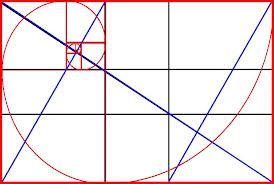
The Golden Mean is more difficult to understand and allows the photographer to use it with any format ratio. It is not only mathematical, but also very present in nature – The natural spire of a seashell, the rectangular layering of triangles perpendicular to each angle, or the rotated rectangles inside of rectangles. This divine composition mathematically works out to a 1:1. 618… ratio.

Here is the formula…

Golden Mean Formula

Cinematographers choose the Golden Mean over the Rule of Thirds, but seldom have time during a shoot to address the math in order to frame and capture the perfect composition. Instead, they get a feel for what looks good by practicing the proper framing so often that their eye goes right to the Golden Mean points without any calculation.

Triangle, Spiral & Rectangle Golden Mean

Golden Mean

I was first taught the Golden Mean when I was shooting a documentary for CBS back in my early 20s. I struggled with the math until a more experienced pro took me under his wings and shared his secret to capturing the right composition on the fly. His trick was so easy and effective, that I won several awards for composition. I was also able to use the technique for still work and won prestigious composition awards from Kodak and Polaroid.

Instead of attempting the math, the pro told me to divide the screen by 5 units followed by 8 units, or 8 units followed by 5 units, both vertically and horizontally. This meant that the entire frame had 13 vertical units and 13 horizontal units. The place where the two ratios intersected was the golden composition point. This allowed me to memorize the placement of the composition points based on the size and shape of the frame.

If I was shooting at 1:2.35, I could find the composition point just as fast as I did shooting at 1:1.85 or any other frame size. With this new form of composition, the sizing of the frame did not matter, nor did the perf pull down system. It no longer mattered if the frame was single perf, 4 perf or even 8 perf. This also meant it transitioned quickly to HD regardless of the sizes or dimensions of the digital censors or the 16X9 relative fields from RED, SONY, ARRI, etc..

Golden Mean

The Director of Photography is always concerned about the format, lense, lights and composition. Each element helps capture the director’s vision onto the media of choice. And, because movies are pictures in motion, the other factor that concerns DPs is the camera movement.

The good news is that the Golden Mean can quickly be reset during dolly, crane, or steadicam shots. A well-practiced camera movement that ties in with the actor’s blocking might have a series of focus changes and shifts in composition. Using the Golden Mean allows for the constant changing of the composition on the fly and looks great on screen.

Copyright © 2013 by CJ Powers