Paganini’s Great Success Story

Nicoló PaganiniI was given a unique opportunity as an inspirational/motivational speaker last Sunday night. I spoke to 200 professional and accredited investors on my experiences with film investing. The opportunity allowed me to not only share my projects, but also allowed me to speak into the investor’s lives.

During my talk, I shared about how most great success stories come from people who aren’t passionate about making money, but rather are passionate about bringing change to their community, leaving a living legacy, and baring their soul through the arts. This awareness came after I learned about Nicoló Paganini and how his passion, not his investments, gave him a prominent place in history.

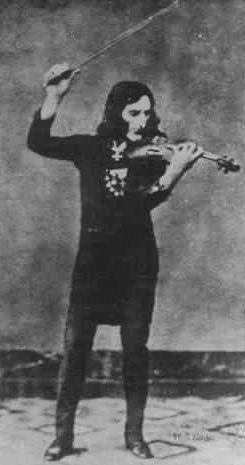
Paganini was a master violinist who played multiple string instruments. He started with the violin at age five and played his first public performance at age twelve. His passion for the art focused his training to the point where he could accomplish certain techniques that no one else could.

He was the first violinist who could play an entire octave without moving his hand position. He was also the first to play with a vigorous staccato. And, he eventually became known as the father of modern violin techniques.

These unbelievable techniques during the early 1800s caused his peers to rumor about him having sold his soul to the devil in order to accomplish what was not considered humanly possible.

While he had massive skill, it wasn’t the reason he excelled. His passion for his community, creating a legacy that would out live him, and for the art drove his success. This was proven out on numerous occasions, but one specific night went down in history.

His concert was moving along very well, but by the end of the second to last piece, one of his violin strings snapped as he played the final climatic note. The concert host was concerned and suggested that the concert come to a close since there was only one piece left. Paganini would not hear of it and before the host could suggest anything else to the contrary, Paganini started playing the last piece without having restrung his instrument.

The audience marveled as he sped up his fingering to compensate for the missing string. Awe filled each face as the music became more vigorous. The complexity of the music eventually overwhelmed the strings, causing the audience to gasp when a second string broke during the piece.

Paganini recalculated his fingering positions and continued without missing a single note. During the final crescendo that he played with great staccato, the third string broke. Without a moment of concern, Paganini played out the last few notes and bowed to a thunderous ovation.

After five minutes of applause, the host quieted the crowd and thanked the master violinist for his superb playing. But Paganini wasn’t ready to leave the stage. He stepped forward to the audience and reminded the fans that it was customary to play an encore for such a supportive audience. He then lifted his violin to his chin and played the most incredible piece of his career with one string.

Paganini’s passion for his community, his one concert that went down in history as a great legacy, and his passion for the art altered music. Historians share how Paganini’s performance was the turning point in music history that changed the way violins are played. There is a distinct difference in the lullaby type performance techniques prior to Paganini and the vigorous style that he introduced, making cinematic music like Indiana Jones and Star Wars possible.

His success was found within his passion and I encouraged each investor to not only consider how they manage their money, but to consider investing in the things that touch their passion as Paganini did. By doing so we are bound to touch those in our communities, leave behind a living legacy, and express our passion through the arts in a way that brings greater fulfillment into our lives.

Copyright © 2013 by CJ Powers

Chicago Filmmakers Get Busy

Master SceneThe 49th Annual International Film Festival (Oct. 10-24) is in full swing. Yesterday was the Chicago Film and Media Summit & Expo at the Cultural Center. Tonight is the Chicago Showbiz Networking gathering at Chicago’s Laugh Factory. And, there are several other gatherings this month by multiple Chicago film organizations.

October seems to be the key month when Chicago filmmakers find a new mix of talent and spin great creative projects. Some get fleshed out and produced, while others find no traction. In either case, networking opportunities rise to a new high as well.

Last Friday night, I met with a group of up coming actors who have a great idea for a television series. After reviewing their first draft script, we made alterations to the story structure that would make it ideal for HBO. The energy in the room from all the creative input was tremendous.

I’m not sure if all these networking opportunities play a role in the process, but several film grants are made available in October for Chicago filmmakers. This year one organization has increased their grants to $100,000 with the hope of seeing more films made.

Many times the grants will cover equipment costs. Typically the actors, crew and filmmakers will donate their time to leverage the project for greater visibility with gaining full funding from investors or a studio’s attention. There are also small film projects that are sometimes funded in full by the grants.

Some years back, I won a grant for a documentary that I produced on female barbershop quartets. The grant provided a lot of equipment and film stock, but at the time I was in need of finishing funds. The timing was off due to the quartet’s competitive schedule. They participated in the national competition that took place in the EnergySolution arena – Home of the Utah Jazz.

The timing of networking, festivals and grant applications never perfectly match any green lit film project. Seldom do you sign your entire ideal list of actors, crew and locations. There are few people locked to each project that can determine the timing of the shoot. Most have to find a way to adapt if they want to participate in the project.

November and December will soon follow – The two biggest months for attracting investors due to their need for tax write offs. These last two months will also see several single days of shooting for many companies, as they try to grandfather in their tax incentive program for carry over in 2014.

Copyright © 2013 by CJ Powers

Quest #003 – Lunch with Don Furr

Don_FurrQuest of the Nail Prints author, Don Furr, flew to Chicago last week to discuss the film and his second book Peter’s Quest. After discussing the differences between the original story and the movie version, we talked about the possibilities of combining efforts to restructure the sequel.

While this would tie the two storylines into one, versus maintaining parallel stories, it would require about a 50% rewrite for Don, who is on deadline for his sequel. There are several benefits that can surface if both storylines follow the same premise, but there are also a few negatives as well.

Creating the same storyline, allows for joint promotional dollars to expand the audience for both products, but the flip side would require Don to let go of a few creative ideas during a collaborative brainstorming session. This issue of letting go of one’s original work can be one of the most difficult things for an author to face.

Don’s storytelling abilities in the literary world have worked well for him, as he continues to receive unrequested endorsements from visible people and celebrities. However, Don has also caught on to the fact that film is a very different medium and he has loved most of the changes we’ve made in the screenplay.

A person reading both the book and the screenplay would recognize how much more visual the story became. Don’s book allows more exploration into the subtle nuances found in relationships, while the movie takes the audience on an exciting adventure of unexpected revelations.

The best part of the collaboration process is that Don and I hit it off well. We appreciated each other’s creativity and admired our shared ideas. I have no doubt that a great merging of the minds could take place for the sequel, but Don must first decide how much of his future plans he’s willing to alter to make the alignment possible.

This is not an issue of ego, as some might assume. It is all about how the two different media can tell the story. The greatest difference is that books can place the reader inside of the main character’s head, which is handled by a weaker process in film — A character thinking out loud or dialoging with another person .

On the other hand, film can quickly show subtle nuances that might take a book too long to explain, causing the pace of the story to waver. This delay might drop the reader out of the adventure. The key is figuring out what story to tell and what medium allows it to be told in the best possible way. And, what elements will work in both media.

The decision will be made within the next two weeks. In the meantime, we have plans to talk with a distributor in advance of production, and we will meet with a major retailer who wants to participate in a large promotional campaign for the DVD/Blu-Ray, book and soundtrack. This joint promotion will create 200,000,000 impressions – A very successful ad campaign. To help you with perspective, the average independent film generates 1,200,000 impressions.

Copyright © 2013 by CJ Powers