 Our love affair with social media has forced society into a new form of isolation where “truth” is determined by the number of people we convince to believe our tale, rather than being about proven or substantiated facts. The social platforms have empowered the media to drive crowds in how to think and respond. The users are becoming judge and jury to the detriment of society.
In the past, we waited to learn if something alleged was proven to be true or false. During lengthy trials, people waited with anticipation of the outcome to know how to proceed concerning the circumstances or the person. But today, if you allegedly did something 30 years ago that is now a hot point of discussion, you’re immediately fired and blocked from making any future income.
Our society seems to be fine with this new politically correct judgment system. But not everyone wants to see his or her future disappear based on an allegation that has no merit.
I recently read an article about a woman who accused former President H.W. Bush of assaulting her. The woman posed for pictures with several political figures and was blocking President Bush. He called out to get her attention, but she didn’t respond. He then reached forward from his wheelchair and gave her a little tap. She quickly stepped to the side and all was well.
Several years later, after the reporting of harassment was politically correct and popular in the media, she reported that he assaulted her. She said he touched her backside and told her dirty jokes, which was never substantiated by any of the dozen people at the photo shoot. But the media published the assault story.
Tom Cruise’s “Minority Report” is about a society where empaths have people arrested for thinking about committing a crime, sparing society from the pain caused by an actual crime. People are judged, based not on what they did, but what they allegedly were about to do.
The number of people losing their jobs based not on facts, but allegations is staggering. What’s worse are the number of people losing their jobs because of someone else’s allegations. The Netflix series “House of Cards” was cancelled due to Kevin Spacey’s allegations from decades earlier, putting the 300 cast and crew members out of work.
The number of people leaving social media is also astonishing and telling. When asked, most say they are dropping social media because it’s become the breeding ground of false news. Some mention they want to protect their future by avoiding a misunderstanding in social media that could negatively impact their jobs.
In the past few years, I’ve asked numerous employers if they ever used social media to vet a person before hiring them. Everyone said, “Yes.” One person made sure she didn’t accidentally hire a heavy drinker. Another person avoided extremists like “Christians.” Still another person said, “If I like their social life and they agree with my political views, I’ll hire them.”
Society is no longer growing from people listening to both sides of every issue and thinking through its consequences. Instead, we’ve become a people who gather in groups of like-minded folks that judge others on the number of allegations that they’ve received, rather than on documented facts.
Before we get judged based on a regrettable choice made during our less intelligent years, we might want to drop our opportunity to judge others and instead learn how to give grace. That doesn’t mean we ever condone their unhealthy mistakes, but it does mean we focus on ourself, making sure we live out the best version of our lives.
Copyright © 2017 by CJ Powers

 National Novel Writing Month is about a half a million authors writing novels during the month of November worldwide. The organization provided numerous “write-in” locations for the competition. Some provided incentives, while others provided food and caffeine.
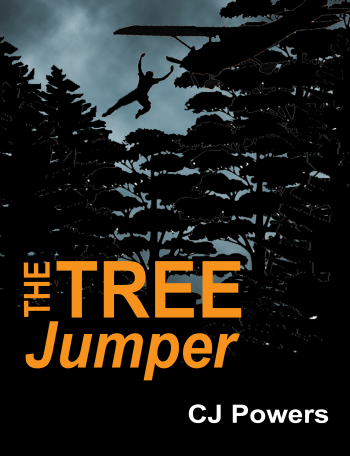 BOOM! The explosion and raging flames licked up toward the crashed Cessna dangling in the tall trees over the level six rapids … A few guys might enjoy the action scenes. Oops, am I saying too much?
 This month I decided to participate in NaNoWriMo along with over 400,000 other creative people across the world. Within a 10-15 mile radius of where I live 4,068 people are participating in National Novel Writing Month. Each writer is committed to pen a 50,000 word first draft novel by the end of November.
