Being the Human AI Can’t Replace

Daniel Lucas, the host of Book 101 Review, invited me to be a guest on his podcast. The show’s format spends more time on the guest than on the book they review. So while I spoke about Will Guidara’s “Unreasonable Hospitality,” Daniel asked me lots of questions about AI.

If I were to summarize the interview, I’d say that Daniel dove into a timely question: What does it mean to be human in the age of AI?

For decades, I’ve worked in communications—helping corporations, entrepreneurs, and small businesses clarify their message, connect with their audience, and collaborate effectively. And today, with AI entering every corner of our lives, I see the same question surfacing again and again: Will AI replace us?

The short answer: No. But only if we choose to be fully human.

Driving AI Instead of Being Dragged by It

On the show, I used a simple analogy. AI is like a car. You can either grab the wheel and drive it, or you can be dragged behind it.

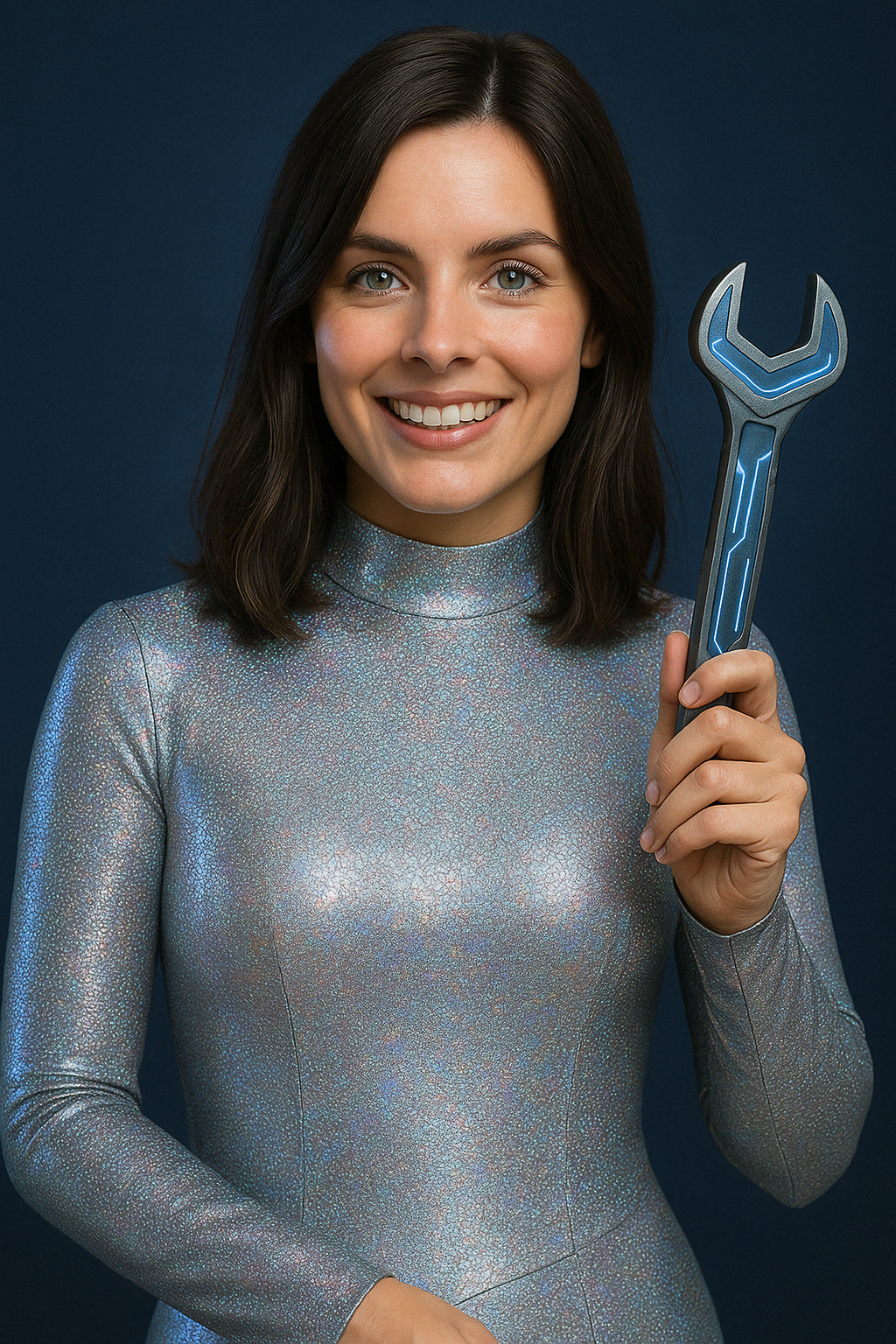
(I created the elements in the picture above with ChatGPT and built it with Canva.)

Too many people fear AI because of what they’ve seen in movies—machines taking over, robots replacing people. But AI is a tool, nothing more. And like any tool, it can either empower you or run you over, depending on how you use it.

If you want to stay in the driver’s seat, there are three keys I always come back to: Communication, Connection, and Collaboration.

The 3C Framework

  • Communication – Knowing not just what you want to say, but how to say it clearly to both people and AI.
  • Connection – Engaging authentically. People crave genuineness. They don’t want polished perfection; they want honesty, vulnerability, and someone who really listens.
  • Collaboration – Working productively with others and with AI. Collaboration is where we build things greater than ourselves.

If you master those three areas, you’ll always be more valuable than the technology around you.

The Power of Authenticity

One theme that came up repeatedly in the conversation was authenticity. It’s become a buzzword, but what it really means is this: I bring my full self, flaws and all, into the room—and I give you permission to do the same.

Our imperfections make us human. They make us trustworthy. They make us irreplaceable.

AI may simulate compassion or generate words that look empathetic, but at the end of the day, it’s mimicry. It can’t truly connect at a heart level. And when we show up with vulnerability and honesty, we offer something AI can’t touch.

Productivity Redefined

For years, productivity has been defined by speed and efficiency. But people don’t just want faster anymore—they want better. They want something that feels personal.

In the podcast, I shared how I worked with a global laboratory that reduced a 14-hour reporting process to just four minutes using AI automation. That freed up time for people to focus on relationships, innovation, and creative work. That’s the real win.

Productivity in the future won’t just be about doing more, faster. It will be about depth over speed—quality over quantity—human over machine.

Why Human Art Still Matters

Art gave us another window into the conversation. AI-generated art and music may look impressive on the surface, but true art always contains something AI can’t replicate: mistakes.

Every brushstroke, every lyric, every twist in a story carries the weight of human imperfection—and that’s what makes it resonate. AI’s attempts at mistakes feel artificial. Our mistakes, on the other hand, make our work feel genuine and alive.

Daily Practices for Staying Human

So how do we practice being more human in our work and life? I suggest three steps:

  1. Clarify – Be clear about your purpose and your message.
  2. Simplify – Speak at a level where both people and AI can follow. (Think sixth-grade clarity.)
  3. Amplify – Let your passion and purpose shine through, whether you’re speaking to one person or an audience of thousands.

If something can be done the exact same way three times in a row, hand it to AI. Then use your freed-up time for creativity, problem-solving, and relationships.

A Book Worth Reading

Toward the end of the interview, I recommended Unreasonable Hospitality by Will Guidara. His insights align perfectly with what we discussed:

  • Be fully present.
  • Take your work seriously.
  • Treat people as unique treasures.

That book, like this conversation, reminded me that no matter how advanced technology becomes, our human touch remains the deciding factor in business and in life.

A Final Thought

If there’s one takeaway from my conversation with Daniel, it’s this: lean into your humanity.

Experiment with AI. Automate repetitive tasks. Use the tools available. But never forget that what makes you irreplaceable isn’t efficiency—it’s authenticity.

AI can copy, simulate, and predict. But it cannot create wisdom. It cannot make genuine connections. It cannot replace the art, purpose, and relationships that define us.

So let’s stop asking if AI will take our jobs. Instead, let’s ask: Am I being fully human in the way I communicate, connect, and collaborate?

Because that’s the one thing AI can never replace.

Here is the full show…

Copyright 2025 by CJ Powers

A Journey Through AI and Reality – Helping Tweens Discern the Difference

As a tech-savvy person, I started exploring AI several years before most people knew it had entered our world. Maybe it was my appreciation for sci-fi that drove my play, or even my time writing computer programs back in the day, but in reality, it was my concern for a group of tweens I met who weren’t sure if they should engage or avoid AI.

Over the past few months, I’ve chatted with middle schoolers about their hopes and fears surrounding AI. As someone passionate about storytelling, I wanted to channel what I learned into a project that could both engage and empower them. That’s where my short film AI KNOWS comes in.

As I listened to tweens share their thoughts, I was struck by their mix of excitement and apprehension. Many of them see AI as an exciting tool—something that can make their lives easier, help them with homework, or even create fun videos. But there’s also an underlying fear of the unknown.

What does AI mean for their futures? Will it take away their future jobs? Will it even understand their creativity or emotion?

The AI Dilemma for the Next Generation

In AI KNOWS, Davis, the young shuttle pilot, faces a critical decision: Does he trust the AI, or does he listen to the wisdom of Jet, an older, more experienced aviation mechanic? This dilemma isn’t just fictional—it’s the same dilemma that today’s tweens face when they come across fake images, deepfake videos, or voice recordings that sound real but aren’t. Just like Davis learns, AI can’t always be trusted to make the right call.

Through AI KNOWS, I wanted to provide families with a tool to help them facilitate a meaningful conversation. I firmly believe that how we face AI and determine our use of this tool must be defined in the family, not in schools or the government. Once common ground is developed within our families, the schools and government should support the family’s decisions.

To that end, I wanted families to explore Davis’ journey from blindly trusting AI to realizing it’s not infallible. This evolution is something every family can reflect on as they navigate their own relationship with technology. I hope this film serves as a jumping-off point for parents and tweens to discuss how to approach AI with discernment in their daily lives.


So, how can teens discern the real from the fake in an AI-driven world? Here are three steps to help navigate this new reality:


1. Question the Source
Every piece of information or media comes from a source. Tweens should be taught to check who created the content and whether that source is trustworthy. Is it from a verified news outlet? Is it a brand or influencer they recognize? In AI KNOWS, Davis’ blind faith in AI prevents him from questioning the source of the information he’s receiving. Just like in the real world, AI may not always provide the full truth—sometimes even creating “hallucinations,” or false information that wasn’t intended. Tweens should be encouraged to ask, “Who’s behind this?” and whether the source is verified and reliable.

2. Use Technology to Verify
In the world of AI KNOWS, Davis learns that technology can also be used to find the truth. Just as AI can create fake content, there are tools that can help reveal it. Encourage tweens to use tools like reverse image search engines, apps to detect deepfakes, or software to analyze videos and images for inconsistencies. In the same way that Davis uses his resources to verify the AI’s integrity, kids should learn to use technology to verify what they encounter online.

3. Understand the Consequences of Fake Content
Fake content can have serious consequences. Tweens must know that misleading or altered content spreads quickly and can damage reputations, distort events, or worse, cause harm. By teaching them about the ripple effects of fake content, they can better understand the weight of their responsibility when sharing information. Like Davis realizes that his blind trust in AI led to a dangerous situation, tweens need to understand that sharing fake content can hurt people and impact society.

A Family Conversation Starter

As AI KNOWS moves from storyboard to screen, I’m excited about its potential as a tool to help families start conversations. How can we, as adults, help our kids understand that while AI can be a powerful tool, it’s essential to approach it with a discerning eye? How can we teach them the value of questioning, verifying, and understanding the consequences of what they share online?

The ultimate goal isn’t just to raise awareness about AI’s limitations, but to teach kids that AI is only a tool. Wisdom, on the other hand, is something that can be cherished, something that endures, and something that will stand the test of time. While AI can assist and enhance our lives, it cannot replace the timeless value of human experience and judgment.

I hope that AI KNOWS isn’t just a movie. I hope it’s a gateway for families to discuss what it means to navigate a world increasingly dominated by AI. It’s not about scaring our kids; it’s about equipping them with the skills they need to thrive in a digital world. By using the film as a discussion starter, families can explore the importance of being critical of the tools we use and understand how AI fits into the broader context of communication, creativity, and human wisdom.

Kids need to understand that while AI can be incredibly helpful, true guidance is provided by the wisdom passed down through generations of families. This understanding empowers them to use AI responsibly while still holding on to the wisdom that shapes their decisions, actions, and values.

Copyright © 2025 by CJ Powers

A Sneak Peek Into 2060’s Wardrobe in AI KNOWS

For those of you who haven’t heard about my upcoming short film, AI KNOWS, it’s set in 2060, a world where artificial intelligence is deeply embedded in everyday life. The story follows a young rookie officer, tasked with escorting a 45-year-old man to his forced retirement at a space station. As their journey unfolds, the officer must choose between the wisdom of the old man and the ever-advancing AI that guides them. However, all is not as it seems, and the AI may be concealing or ignorant of a deadly malfunction.

AI is being integrated into everything, whether we want it there or not. Chances are, your phone already utilizes AI, and most email programs now summarize messages for you, saving you the effort of reading certain emails. Change is coming fast, and by 2060, AI will likely be woven into the fabric of our clothes.

Imagine a tag on your shirt that tells you how many times it’s been washed, how old it is, and whether it’s still in style. It might even suggest which items in your closet pair best with it, streamlining your decision-making. With these ideas in mind, I had to design outfits for AI KNOWS that always look sharp, reflect each character’s unique style, and function in a world where technology is an ever-present companion.

My goal for AI KNOWS wasn’t to craft a utopian or dystopian world but to create something that feels grounded in the present while still accommodating space travel. I wanted the setting—and the clothing—to be plausible enough that viewers wouldn’t be distracted by the future. Instead, I wanted them to quickly get in sync with the world I’ve built, allowing the story to take center stage.

Davis: The Young Rookie Shuttle Pilot

Davis is the main character in AI Knows, and he undergoes the most significant transformation. As a 14-year-old shuttle pilot, he has been taught to believe that AI knows best, people over 45 are irrelevant, and that AI holds the answers to everything. However, as the story unfolds, Davis is compelled to confront the limitations of AI and the value of human wisdom.

When designing Davis’s outfit, I wanted to ensure it reflected his role as a young pilot while also highlighting his discomfort with the rigid, AI-driven world he inhabits. His uniform needed to be formal enough to pilot a space shuttle but simple enough to allow for ease and comfort, reflecting his youth and inexperience. The design had to embody his journey—initially stiff and structured, mirroring his blind faith in AI, but gradually becoming more relaxed as he begins to question everything he has been taught.

Jet Carlson: The Aviator Mechanic

Jet Carlson’s life as an aviator mechanic has shaped his every move, and his outfit reflects the grounded, no-nonsense personality that comes with it. In a world where clothes constantly notify their owners when they need cleaning or care, Jet is one of the few who doesn’t mind getting a little grease on his elbows. His outfit consists of earthy tones—muted greens, browns, and tans—matching his practical, steady nature. But there’s one item he’ll never part with: his bomber jacket. It’s a symbol of his past, a worn piece of clothing that still holds its own style, even in the face of an AI-dominated world.

Despite his quiet demeanor, Jet is a man who knows when to push back. He maintains a calm exterior but isn’t afraid to make others uncomfortable if it means standing his ground. Once he’s done pushing, however, he lets go—accepting that not everyone is ready for the help he offers, and sometimes, that’s okay.

Elara Carlson: The Creative Spirit

Elara Carlson, Jet’s 12-year-old daughter, is the embodiment of creative flair. Unlike her grounded father, Elara embraces a playful, artistic spirit that spills into every aspect of her life—even her outfits. She’s the type of person who can mix and match items in her closet to create a look that feels fresh and new every day. No matter the circumstance, Elara’s outfits are always perfectly put together, each one a reflection of her personality, with the exception of her school uniform.

While her creativity shines through in her clothing choices, Elara’s fun-loving nature ensures she never takes herself too seriously. She holds everyone in high regard, always finding joy in connecting with others. When Jet tells her about Davis’ impending doom, she demands action, showing a level of maturity that surprises him. But once she’s confident things are in motion, she quickly returns to her playful self, telling him she’ll visit once she’s got her shuttle license. Accessories are Elara’s signature—whether it’s a fun pair of pink glasses or a custom necklace, she ensures every detail of her look is on point.

Fashion as a Reflection of the World

As Davis escorts Jet to his new room, they pass a billboard that reads Jet’s presence and immediately advertises the latest tech-wrench for his consideration. This subtle moment quietly reveals that the AI hasn’t been updated since Jet’s forced retirement. After all, he no longer needs tools.

But the real eye-catcher is the woman on the billboard, displaying the wrench in a sparkling one-piece suit—a glamorous worker’s outfit designed to catch the eye of the intended audience. It’s the kind of futuristic material I recall being shown back in sixth grade, an innovation that, at the time, seemed poised to revolutionize the fashion industry. Of course, it never took off.

It’s funny how companies constantly push the latest trends, but only a few clothing styles per decade truly capture the public’s imagination. Most fade away as quickly as the next season’s releases, leaving behind only a faint trace of what might have been.

The key to speculating on sci-fi fashion isn’t about trying to predict what could be, but about making sure everything fits seamlessly into the world I’ve created. After all, we all remember the future vision from Back to the Future II, released in the 1980s—flying cars were supposed to be everywhere by 2015, and the Cubs winning the World Series? Well, that seemed like a total joke at the time, and yet it actually happened, just one year later than in the movie.

That’s the beauty of world-building: it’s not about predicting the impossible, but creating a world so plausible that it feels natural.

In AI KNOWS, the fashion I design won’t be about futuristic outfits for the sake of spectacle, but about ensuring every piece fits into the everyday lives of my characters. The clothing needs to make sense in the context of the world I’ve built, from the sleek uniforms of the young officers to the retro-inspired attire of characters like Jet. If the audience doesn’t notice the clothes because they fit so naturally into the world, then I know I’ve done my job. After all, the focus should always be on the story.

A Life-Changing Story

For me to truly speak into the hearts and lives of teens and tweens about the importance of data-driven AI and the irreplaceable value of experiential wisdom—something AI can’t develop—I need to create a world that focuses the viewer on the core elements of the story. The quality of the production will help ensure that the audience is drawn into the world, allowing them to fully engage with the choices the characters make and the lessons they learn.

When Davis faces a life-changing decision, the audience will be right there with him, exploring the same considerations for their own lives. No one will tell them how to think; instead, they’ll be invited to make their own discoveries as the story unfolds. That’s what makes a truly life-changing story—one that can be watched again and again, each time offering something new.

So, keep following my journey, and let’s see if we can bring this vision to life together. In the meantime, I need to find costume experts to bring this vision to life.

© 2025 by CJ Powers