Building Differential Strengths as Communicators, Networkers, and Team Players

Three key skills will define the most successful professionals in 2025: communication, connection, and collaboration. While these skills may seem fundamental, they have evolved into essential tools for navigating complex work environments, building relationships, and driving success.

To thrive in our dynamic world, we need to consider these skills from the perspective of the types of people who have built a strength while focusing on a single part of it: communicators, networkers, and team players.

The Strengths of Communicators, Networkers, and Team Players

Strengths are an intricate blend of innate talent, acquired knowledge, honed skills, an experiences gained from facing challenges. At the highest level, the finest communicators, networkers, and team players have mastered their craft, consistently refining their abilities through experience, learning, and mentorship.

Communicators

Communicators are the architects of understanding. They shape how information flows, ensuring clarity and engagement.

Talent: A communicator’s most essential talent is effectively conveying ideas—painting a picture everyone quickly understands. They possess natural eloquence and an innate understanding of tailoring messages to diverse audiences. They are also strategic thinkers, deliberate in crafting messages that resonate.

Knowledge and Skills: To excel, communicators master not only language and rhetoric but also the nuances of storytelling, persuasion, and emotional intelligence. They must be well-versed in the various communication channels, whether digital or in-person, and understand the role of technology in enhancing or hindering their message.

Experience: Effective communicators often learn through failures, such as missed opportunities, misunderstood messages, or poorly received content. These experiences teach them the importance of timing, tone, and context in their communication.

Craft: The highest level of communication strength involves predicting how messages will be received and adjusting them accordingly. This skill is often developed through mentorship, where communicators learn the delicate art of crafting persuasive, authentic, and clear messages that create lasting impact.

Networkers

Networkers are connectors who build and maintain relationships across diverse sectors, industries, and distances. They thrive on creating mutual value through connections that go beyond transactional needs.

Talent: Networkers excel at building rapport. Their key talent is empathy, which enables them to understand the needs and desires of others. They are naturally curious and possess an uncanny ability to make people feel heard and valued.

Knowledge and Skills: To be effective, networkers must develop a deep understanding of their industry and the industries they connect with. They should be proficient in reading people, understanding social dynamics, and maintaining professionalism while forming personal bonds. Networking skills also include strategic thinking, as successful networkers can leverage connections to create value for others.

Experience: A seasoned networker has made mistakes, such as misreading signals or overpromising. These experiences teach the importance of authenticity, follow-through, and timing in building long-lasting relationships.

Craft: The highest level of networking involves connecting people in ways that spark collaboration and innovation. Great networkers often learn this by working closely with mentors who teach them the subtleties of relationship management and help them build an extensive network of trusted contacts.

Team Players

Team players are the backbone of successful collaboration. They bring energy, enthusiasm, and support to group efforts, helping to turn individual contributions into collective achievements.

Talent: A team player’s innate talent lies in collaborating and contributing meaningfully in a dynamic group. They’re often skilled at fostering cooperation, managing conflict, and ensuring everyone’s voice is heard.

Knowledge and Skills: Team players must understand group dynamics, leadership principles, and how to manage conflict constructively. Their skills include active listening, giving and receiving feedback, and contributing to the group’s goals without seeking the spotlight.

Experience: Experienced team players have learned to navigate challenges like interpersonal conflicts, misunderstandings, or missed deadlines. They’ve gained wisdom from seeing how their actions, or lack thereof, affect the group’s success or failure.

Craft: The highest level of strength as a team player involves building a culture of collaboration that empowers others. Great team players learn this craft through direct experience, often observing and apprenticing with strong leaders who create environments of trust and mutual respect.

Why Communication, Connection, and Collaboration Matter in 2025

The rapid pace of change in 2025 means that traditional methods of working and leading are no longer enough. The ability to communicate clearly, connect with others meaningfully, and collaborate effectively will determine who thrives in an increasingly complex, interconnected, and fast-moving environment.

  • Communication enables individuals to express their ideas, needs, and feedback in a way that resonates with others. In an age of information overload, communicators who can cut through the noise and convey essential messages are highly valued. They clarify, simplify, and amplify their content to create the ideal message.
  • Connection is the key to building networks of trust and mutual benefit. In an increasingly remote and digital world, networkers who can forge and maintain strong relationships are the linchpins of personal and professional success. Their focus is to engage, relate, and build their relationships for the future.
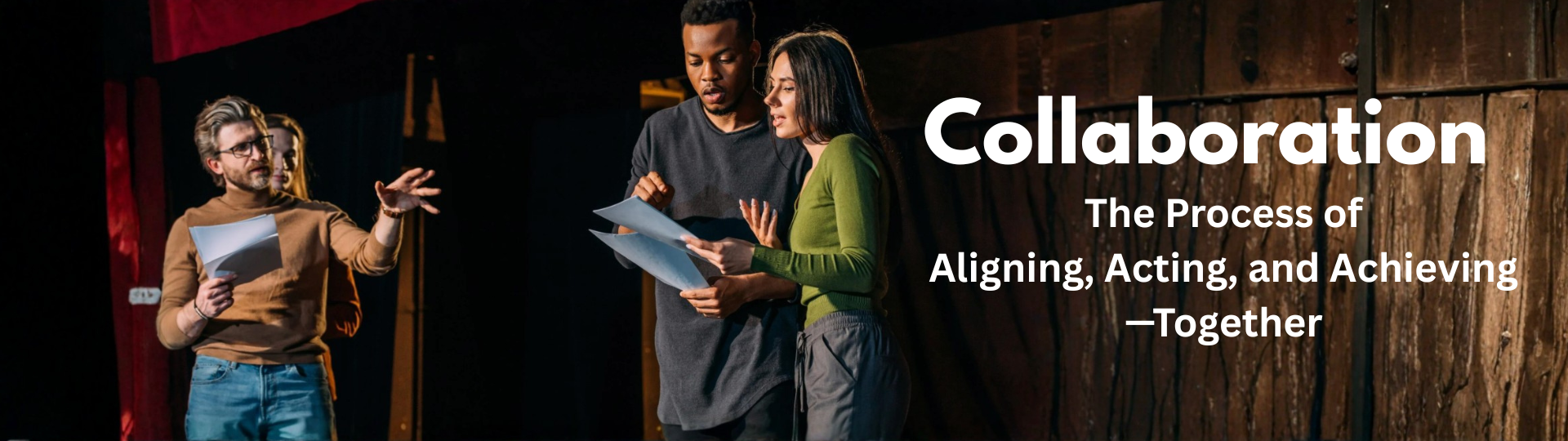
  • Collaboration allows teams to achieve results greater than the sum of their parts. As organizations grow more cross-functional and global, team players who can work across diverse groups and bring people together will be crucial to achieving success. They focus on aligning, acting, and achieving goals as a team.

How to Develop Your Strengths as a Communicator, Networker, and Team Player

We must practice self-awareness and commit to continuous learning to build differential strengths in these areas. Start by identifying where your strengths lie and where there is room for growth.

  1. For communicators: Focus on refining your ability to adapt your message to different audiences and contexts. Practice active listening and learn to read nonverbal cues. Seek feedback on your communication style and aim to be more concise and impactful.
  2. For networkers: Invest in building genuine relationships rather than merely expanding your contact list. Be present, offer value, and seek to understand others’ goals and challenges. Build your personal brand through authenticity and integrity.
  3. For team players: Work on being adaptable in team settings. Focus on being supportive, cooperative, and solution-oriented. Learn to resolve conflicts constructively and encourage diverse perspectives in group discussions.

In 2025, the most successful professionals will excel as communicators, networkers, and team players. By recognizing the importance of each role and continuously refining the strengths associated with these key skills, individuals can thrive in an increasingly complex and fast-paced world. As you build your career or lead others, remember that true success lies in what you know and how well you connect, communicate, and collaborate with those around you.

Copyright © 2025 by CJ Powers

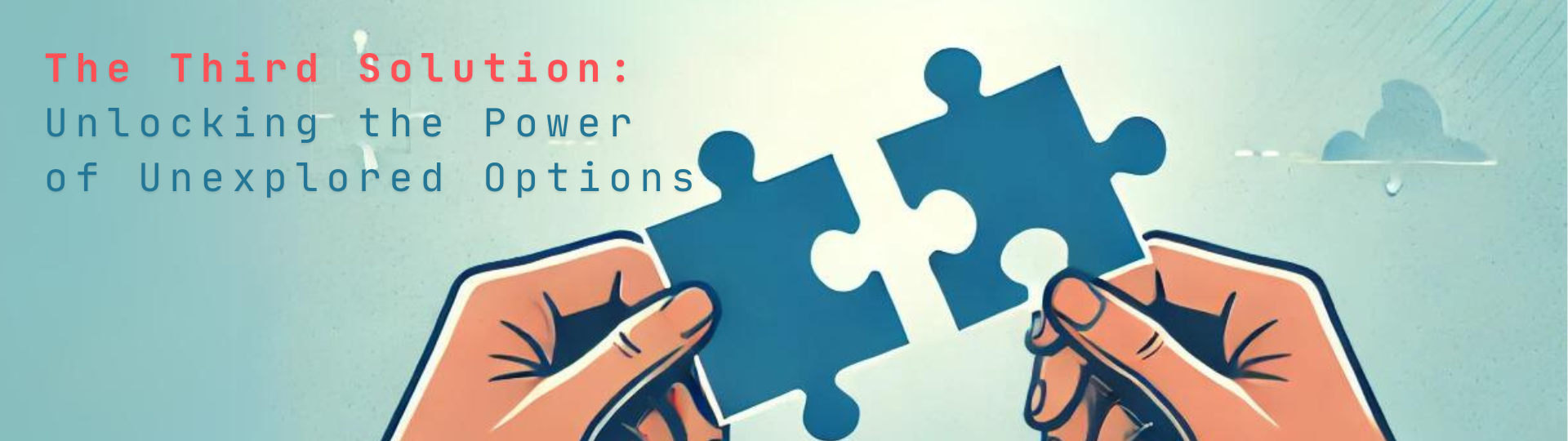
The Third Solution: Unlocking the Power of Unexplored Options

Have you ever run out of options, or so you thought, only to realize there were unexplored possibilities just beyond your perspective?

I remember a time during my marriage when we found ourselves in a stalemate over an important decision. We were both convinced that we were right, and it seemed like there was no way forward. It was in that moment of frustration that we discovered something important—each of us held just one small piece of the puzzle, a one-percent perspective that could lead us to a solution. It wasn’t much, but it was a start.

We made a commitment to each other that whenever we were at an impasse, we would set aside our need to be right and instead work together to find a third solution—or maybe even more. We decided to search out as many unexplored options as we could in a short period of time, allowing new insights to emerge that would help us move forward.

This simple decision became a powerful tool that transformed the way we approached disagreements.

What we learned along the way was that there were three essential steps to finding unbiased answers: communication, connection, and collaboration.

Communication: The Foundation of Understanding

The first step was communication. But it wasn’t just about talking—it was about truly listening to each other. We had to move beyond merely exchanging words and instead focus on understanding the deeper reasons behind each other’s perspectives. This kind of communication required patience, empathy, and a willingness to be vulnerable.

I remember one particular disagreement where I was convinced that my solution was the only viable option. It wasn’t until I paused and really listened to my partner that I began to understand the “why” behind their point of view. They weren’t just disagreeing for the sake of it; they had real concerns and motivations that I hadn’t fully appreciated. By listening without judgment, I was able to see things from their perspective, and suddenly, new possibilities emerged.

Communication became the cornerstone of our solution-seeking process. It created a space where we could share ideas openly, without fear of dismissal or criticism. By building a foundation of trust, we were able to move past our initial positions and explore options that we never would have considered on our own.

Connection: Bonding Through the Exploration Process

The next step was connection. As we communicated more effectively, we found ourselves growing closer. The process of exploring different perspectives wasn’t just about finding a solution—it was also about understanding each other on a deeper level. We began to see each other’s values, motivations, and desires more clearly, and this understanding brought us closer together.

I remember how, during one particularly difficult decision, we spent hours talking through different possibilities. It wasn’t easy, and there were moments when we both wanted to give up. But as we kept pushing forward, something unexpected happened—we began to feel more connected. The act of working together to find a solution became a bonding experience.

It wasn’t just about resolving the disagreement; it was about building a stronger relationship in the process.

This kind of connection can happen in any relationship, whether it’s with a partner, a friend, or a colleague. When you approach challenges with openness and a willingness to connect, you invite others into a meaningful partnership. The journey of finding unexplored options becomes an opportunity to foster trust, empathy, and genuine camaraderie.

Collaboration: Focusing on Each Other’s Needs

The final step was collaboration. True collaboration required us to set aside our personal biases and focus on each other’s needs. This was often the hardest part because it meant letting go of our own agendas and prioritizing the well-being of the other person. But when we did this—when we genuinely focused on giving each other the gift of seeing their needs met in the final decision—something amazing happened.

By prioritizing each other’s needs, we created a more balanced and empathetic approach to problem-solving. It wasn’t about winning or losing; it was about finding a solution that worked for both of us. This selfless focus prevented our biases from resurfacing and allowed us to work towards a mutually satisfying outcome.

I remember one discussion that gave us a spin. The more we focused on each other’s ideas, the more we realized our personal ideas were off the mark. We learned that when we collaborated with the intention of meeting each other’s needs, we unlocked creative solutions that neither of us could have come up with on our own.

One of the most powerful lessons we learned was that the best answers often didn’t look anything like our initial ideas. Our first choices were limited by our narrow perspectives, but by working together, we were able to discover unexplored options that were far better than anything we had considered before. It was a reminder that we could achieve far more together than we could alone.

Simple Steps—Hard Execution—Rewarding Solution

I don’t want to give the impression that this process was easy—it wasn’t. Both of us had to purpose in our hearts that we truly wanted the best for each other, even when it was difficult. There were times when we said we were willing to explore new possibilities, but deep down, we were still holding onto our own agendas. It was only when we were honest with ourselves and each other that we were able to move forward.

But when we did the work—when we communicated openly, connected deeply, and collaborated selflessly—we always ended up far happier with the results than we ever would have been with our original solutions.

The journey of exploring communication, connection, and collaboration is one that requires dedication and a genuine willingness to grow together. It’s about opening up to new ideas, valuing the needs of others, and working side by side to create solutions that elevate everyone involved.

When we approach challenges with this mindset, we not only find better answers—we build stronger relationships and discover the true power of partnership.

Copyright © 2024 by CJ Powers

The Power of Connection, Communication, and Collaboration

I was chatting with a man recently whose Dad was a good friend of one of my Dad’s friends. We suddenly had a connection. This connection engaged us in an effortless conversation where we were encouraged and had fun. Our laughter and shared stories got us thinking about exploring some form of future collaboration.

That perfect 20-minute moment lifted our spirits. I realized our ability to connect, communicate, and collaborate with those around us has never been more crucial. Whether you’re leading a team, navigating relationships, or building a personal brand, these three pillars form the foundation for success.

Connection: Empowers Communication

Connection is the first step in any meaningful relationship. It’s about finding common ground, understanding others, and fostering trust. A genuine connection breaks barriers, drops assumptions, and allows for open communication and deeper collaboration.

As Brené Brown put it: 

Connection is why we’re here; it is what gives purpose and meaning to our lives.”

Without connection, we’re left with shallow interactions, and we watch our opportunities to grow personally and professionally slip through our fingers. Worse yet, without continuous growth in this area, we disconnect from the community and become lonely while surrounded by many people with valuable experiences and life-rich stories.

Communication: Brings People Together

Once a connection is established, communication is the tool that keeps the relationship alive. Good communication involves active listening, expressing ideas clearly, and ensuring that both parties are on the same page. Without this clarity, misunderstandings arise, leading to frustration and missed opportunities.

George Bernard Shaw wisely said: 

“The single biggest problem in communication is the illusion that it has taken place.”

In a recent speaking engagement, I discussed my definition of inadequate communication. Simply put, bad communication is a disconnect in understanding while we believe we are understood.

Effective communication is the bridge between confusion and clarity. It ensures that everyone involved understands the expectations and outcomes. It’s a two-way street, not a one-way road.

Collaboration: The Power of Collective Effort

Collaboration is where connection and communication come together to create powerful results. It’s the understanding that two heads are better than one. When people pool their resources, skills, and ideas, they can achieve more than any individual could.

People have always been able to do more in groups than individually. Even Taylor Swift will tell you that stars are only as good as their fans drive them to be. Without her fans, Swift would be another sweet girl enjoying her music under a star-filled sky on a breezy summer night with a few friends.

However, collaborating with her fans has changed the music and movie industries.

Swift has frequently spoken about her fans’ vital role in her career, often crediting them for empowering her to make significant changes in the music industry. One notable example is her Eras Tour, which became a powerful demonstration of how music can unite people and create a shared experience.

Swift has used her platform to advocate for better artist rights, empowered by her fanbase. This collaboration between Swift and her fans played a vital role in her fight for artists to own their work, as seen in her decision to re-record her albums.

This mutual support has allowed her to challenge the status quo and shape the music industry. True success lies in working with others.

Why These Three Elements Matter

No matter what aspect of our life (work, home, or community life), connection, communication, and collaboration create a foundation for stronger relationships and better outcomes. By mastering these skills, we set ourselves up for success in every area of life.

So, the next time you find yourself navigating a challenge or an opportunity, ask yourself: 

— Am I truly connecting with those around me?

— Am I communicating clearly and openly?

— Am I fostering collaboration to achieve the best possible results?

Master these three elements, and you’ll be on your way to unlocking new levels of personal and professional growth.

Copyright © 2024 by CJ Powers