

Star Trek vs. Faith-Based Canon

barco-escape-star-trek-beyond-2

Star Trek is one of the most revered science fiction franchises that hold tightly to its canon. The 13 motion pictures and 6 television series all follow the production bibles that have painstakingly been kept corruption free for 50 years. Even the independent fan films have focused on excruciating details to honor the canon.

A recent copyright infringement suit sped its first part of judgment thanks to the accuracy of the canon and the many production companies that continued adhering to the rules of the franchise world without exception. Many Star Trek bible elements have been released and highly supported by the fans, forcing production companies to scrutinize every aspect of their production in order to stay true to its canon.

But in the faith-based films that include stories based on the Bible, a canon of 66 books, few production companies adhere to it. The Young Messiah was released last March and was touted as one of the best faith-based films of 2016, but it broke canon with little repercussions.

The film is a story about Jesus at age seven and his family’s departure from Egypt to return back to Nazareth. This fresh childhood perspective gave audiences an explorative glimpse into how their future Savior grew into his religious identity.

Breaking canon in the name of “creative license” is something that Star Trek storytellers would never do. But, the makers of The Young Messiah had no problems stepping away from canon. According to the book of John, one of the 66 books within the Christian canon, Jesus performed his first “sign” or miracle at the wedding in Cana of Galilee. But, in the film, which takes place years earlier, he brought a dead bird back to life, healed his sick uncle and restored sight to a Rabbi.

While the director intended these signs to reveal the humanity of Jesus, which it did, it broke canon and distorted the truth for its viewers. This creates conflict between those defending faith-based films and those who teach from the canon in real life. And it doesn’t end there.

Back in the 1960’s a group of historical revisionists decided to adjust the thinking of the church through the media. They created a story that Jesus’ hands weren’t actually pierced when he was put on the cross because the Greek word for hand also included the wrist. They also stated that Jesus’ hands would’ve torn open due to his weight, and therefore, he was actually pierced in his wrists when they crucified him.

This notion broke canon, but evangelists liked the “new revelation” and spread the word throughout the world. Today, most pastors who weren’t around for the origin of this story teach that Jesus was pierced in his forearms, albeit close to the wrist. They shifted to the forearm because the wrist is just a series of bones that couldn’t be pierced, and the canon said not a bone in his body was broken, which piercing his wrist would have done. These further adjustments took congregations even farther away from the purity of the canon.

By the way, a couple years ago I interviewed a nurse who worked for an orthopedic hand surgeon. She said that Jesus could easily have been pierced in his hands because of the vast network of ligaments that crisscross like a web inside of the hand, which is also strong enough to hold the body’s weight without tearing.

This Easter a new faith-based film that has broken canon will be released by the title of The Shack. The most obvious departure from canon is that God the Father shows up as God the Mother. Canon states that God wanted to be called the Heavenly Father, but historical revisionists are pushing for God being able to show himself as anything he wants, which meets the canon of the Hindus and Universalists, not the Christians.

What I don’t understand is how Christians, whose lives depend on its writings, are so willing to break canon in the name of creative license, but Star Trek will do everything in its power to maintain their sacred canon. Even J. J. Abrams during the filming of Star Trek 2009 talked about the difficulty in maintaining canon, but how it was well rewarded by the audience’s appreciation.

So, why do faith-based films not follow canon? I’d love to hear your thoughts on the matter, especially since Star Trek is make believe (suggesting that canon doesn’t matter) and Christianity is reality (suggesting canon is critical).
Copyright © 2017 by CJ Powers

10 Most Significant Films in 2016

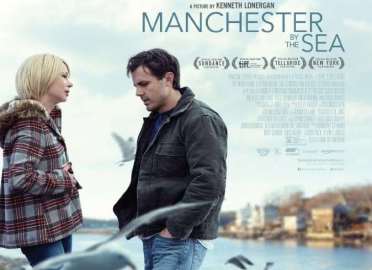
manchesterSophisticated audiences and new filmmakers eventually learn that they need to know how to “read” a film. It’s a technique used by artists that understand the significance of cinema—not TV, video or streaming, but CINEMA.

Some say it’s a lost art form that faded once the marketing boys took over Hollywood and tried to capitalize on sequels over art. However, many who watch art house films or participate in the industry have held onto the techniques. In fact, I’d say that everyone who is truly serious about the art of cinema knows how to “read” a film or they’re trying to learn as fast as they can.

The top most significant films of 2016 that reveals and strengthens that art of cinema are listed below. I tried to put them in order of their significance to the industry, although my personal biases would want to tweak the list order ever so slightly.

1. Manchester by the Sea
2. La La Land
3. Moonlight
4. Hell or High Water
5. Sully
6. Fences
7. The Jungle Book
8. Deadpool
9. Hacksaw Ridge
10. Captain America: Civil War

If you’re a super fan, you’ve already seen these films. And, if you’re a filmmaker you’ve already chatted up other filmmakers on the significance of the films. But, if you call yourself a filmmaker and haven’t seen any of these films, I’ve got to question how you define filmmaker. Maybe you’re just a video guy that shoots up concepts and releases coolness, rather than being an advocate of the cinema.

I don’t mean to sound snooty about it, but there is a big difference between the person who understands that art of cinema and its significance in the molding of our societal norms verses the guy who’s just out to watch a flick after dinner.

Copyright © 2017 by CJ Powers

Film: A Redemptive Argument

Three Secrets to Box Office SuccessFilm is an argument and the exploration of the human condition. Take for instance a story about a husband and wife who both hold perspectives of the truth: his view; and, her view.

Each holds a precious and important opinion that has the right to be expressed. The expression of their heartfelt view creates conflict and a soulful stand for what is right or of value. The person and their ideas are a treasure waiting to be explored, which is the role of film story.

The conflict drives curiosity that must be satisfied within the audience. They cling to every word expressed and action taken, as they try to unravel the conflict and learn how it impacts their personal life. But from the dueling of ideals or assertions also comes the acknowledgment that not all answers to life are black and white.

In the words of philosopher Jacob Needleman, “There is always something more than two opposing truths. The whole truth always includes a third part, which is the reconciliation.”

When my family was young and my wife and I were locked in a decision making tie, we always considered that we each held only a portion or a degree of the full truth and God held the vantage point we were unable to see. By seeking his views together, we found new insights that brought all of our views into perspective.

The turning point in film accomplishes the revelation of that third perspective, bringing the two opposing viewpoints into a clear light. This gives way to a new vantage point that resolves the third act, while reconciling the husband and wife to a new world view filled with redemptive qualities. This climatic moment raises both the husband and wife to a new understanding and a better life than they could ever anticipate.

By scrutinizing the issues as they worked through the struggle, the husband and wife realized their flaws and the blessings of the other. Their passion for their outlook in life shifted into a mutual drive for the best right answer, which bonded the two during their journey. When the new perspective was finally revealed, they were both able to embrace it, reconcile with each other and agree on their next steps together in life. Their story had been redeemed.

Films that are not made as an argument ever reveal the truth about the human condition and our need for redemption. Nor do they show the struggle of opposing truths that can be resolved from that third perspective, while reconciling the characters to each other and their new world view.

Audiences are unable to pull real fixes for their personal walk in life from films that don’t start with the human condition, argue through important issues to a resolve, and come to a point of reconciliation that redeems their relationship and circumstances.

An example of a film that is out of touch with reality might be about prayer always being answered. It wouldn’t cover the other truth that not all prayers are answered. Instead of struggling through conflict created by the human condition in a search to understand how prayer works, it would fall short. The audience might go home and pray vigorously for a couple weeks, but the first sign of unanswered prayer might send them into a tailspin, or cause them to think they aren’t good enough for God to answer their prayers.

A redemptive story shows what happens when a prayer is answered and unanswered. It reveals the struggle humans go through in trying to figure out how to get their prayers “to work.” The second act is filled with emotional battles of people trying to get God onto their side, which spins the characters into a mix of opposing prayers.

It’s kind of like the last World Series Championship Game. Some people prayed for the Cubs and others prayed for the Indians. The characters in the film would have to face their feelings about their prayer being answered or unanswered, and what it was that “caused” the outcome.

But then, the third act turning point would reveal that not only was there a third perspective, but the final game in the World Series Championship turned out to be the most entertaining baseball game in the audiences lifetime. The climax of the film would show that the Cubs were redeemed from the goat curse and audiences would have to consider what they explored about prayer during the feature length journey.

As the credits rolled, the audience would better understand that prayer isn’t a connection to a catalog house waiting to deliver our next desire, but instead is a communication line to chat with the one who wrote our owners manual. The one who can help us get the right and third view on life, so we can be reconciled to live and love to the fullest.

The audience leaves the theater with hope in their hearts and a desire to better know their creator. They also leave knowing that prayer is not necessarily a quick fix, but a relational tool for understanding and expression of our needs. They might even pick up The Book to learn more. But one thing is for certain; the audience is less likely to treat prayer as a lottery ticket for life.

When done right, film is definitely an argument and the exploration of the human condition.

Copyright © 2016 by CJ Powers