
This Easter season will once again bring an influx of faith-based films to a theater near you. Several of the films will gear up with tremendous hype and false marketing, not out of choice, but rather out of ignorance—blind to the promotional materials not matching their films.
Since I’ve already endured the bad films, there’s no reason why you should find yourself suffering, too. Here are a few tips of what to watch and avoid.
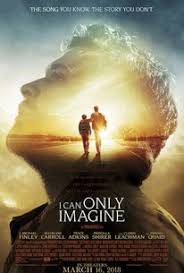 I Can Only Imagine—WATCH
(March 16, 2018—I’ll give it 4 out of 5 stars)
Out of all the faith-based films being released this season, I Can Only Imagine is the one worth seeing. The film tells the true life story of how the band Mercy Me got started and how the title song became the number one Contemporary Christian hit single of all time.
The best part of the film was watching Dennis Quaid (The Rookie; The Parent Trap; Yours, Mine and Ours), known for happy protagonist roles, play the antagonist—showing off his true acting chops. In fact, his performance was so good that I bought into his creepiness and got a little weirded out, wondering what in his life he might have drawn from to pull off such a nasty character. Quaid’s performance alone is worth the ticket price.
That’s not to say the entire film was great. The story had a hard time getting started and the director clearly struggled with how to end the film, resulting in three back-to-back endings. The standard practice for creating a clean ending is done by making sure all of the subplots resolve prior to the start of the ending sequence. If you only have time to see one Easter movie, pick this one.
 Paul Apostle of Christ—AVOID
(March 23, 2018—I’ll give it 2.5 out of 5 stars)
All of the eggs were placed in this big budget Easter basket and stars Jim Caviezel (The Passion of the Christ, Person of Interest) who plays Luke. With so much at risk, there will be a lot of promotional money thrown at the public to launch this costly production. Unfortunately, the funds didn’t show up on the screen. And the story… you’ll be confused during the first 30-40 minutes as you try to figure out what the film is about.
The secret… the film is a story about Luke, but it’s being promoted as a story about Paul. The main character that interacts with the supporting characters is Luke, and Paul is only used as the archetype or the wise counsellor—the Obi-Wan Kenobi, if you will. The story takes place in Paul’s last week before his beheading, a time when he has Luke write his final letters.
There is a tremendous amount of artistic license taken in the film, so don’t expect to drink in the moments as if you’re watching the reenactment of Scripture. The reality of Christian suffering is softened with all the bad scenes taking place off camera. And, the number of people nodding off during the screening I attended was massive. Can you say boring and confusing? Don’t waste your time on this one.
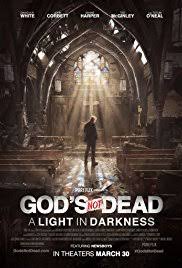 God’s Not Dead 3—AVOID
(March 29, 2018—I’ll give it a generous 3 out of 5 stars)
God’s Not Dead: A Light in Darkness never gets the audience to care about the main character. Nor does the audience know why the film is supposed to be important. In other words, this is a TV movie that’s been placed on the silver screen in hopes of it becoming an event film for Easter. Or, the producers are trying to force the trilogy to become a franchise, even though it’s not trending in social media or at the box office (Film 1 $60MM, Film 2 $20MM, Film 3 TBD).
The film gets close to touching on some important issues, but it never takes the time to explore any of it in a depth useful for the audience.
While the budget is supposed to be bigger than its freshman and sophomore counterparts, the story wasn’t properly crafted for the big screen. The film used small screen story structure and stereotypical character development. Within the first five minutes of the film you know how the story will end. In a case like that, the director must get the audience desiring to see how it will unfold, but he didn’t.
 Non-Religious Films Competing for Audiences
The films with the greatest chance of drawing in families, regardless of controversy, are the following:
- Tomb Raider—March 16, 2018
- A Wrinkle in Time—March 23, 2018
- Ready Player One—March 30, 2018
These movies are all being promoted as event films for the entire family, but be careful to discuss the stories after watching, so no one accepts the liberal messages without due consideration. The studios know that making high quality, popular films is ideal for delivering their agenda and changing the culture, so expect an attempt for clear, easy to swallow messages being salted into the movies.
Please consider supporting the costs of a new, free webinar designed to help filmmakers craft strong stories, fill in story gaps, and strengthen their story structure—giving them a shot at creating a 5-star film. Click the button below to donate!

Copyright © 2018 by CJ Powers
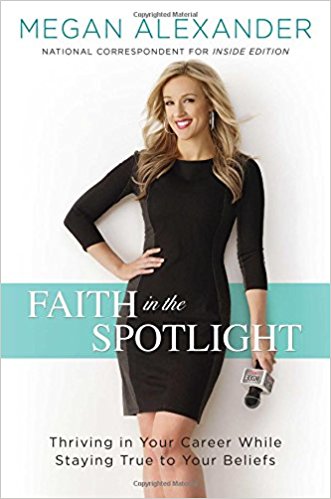 I met CBS’ national correspondent for Inside Edition, Megan Alexander, last week. She was a speaker at a film and television conference I attended and had a signing for her latest book Faith in the Spotlight. Between the pages are applicable suggestions designed for the person that wants to honor their faith, while thriving in the professional workplace.
 The Shape of Water took home the Best Picture Oscar® and was the perfect choice in reflecting the media’s interpretation of who we as a country have become. The picture presented the LGBTQ community in a positive light and as the new norm of society, even though it makes up less than 2% of the population. The story also focused those with a liberal we/they political mindset to a new enemy and quickly divided the audience.
 CJ's Corner