The Basics of Screenplay Conflict

Every great film is steeped in conflict. Every bad film lacks conflict. The difference is easy to spot, as the only way to move a story forward in film is through conflict. Or more simply put, conflict is to film what sound is to music. Without it, there is no story worth watching.

When a film uses conflict to grab our thoughts and emotions, we lose track of time during the journey that we’ve been placed in through story. When conflict is not present, it doesn’t take long to realize we’re sitting in a theater and waiting for the movie to revive itself.

Writer Robert McKee once said, “Story is metaphor for life, and to be alive is to be in seemingly perpetual conflict.” For a film to demonstrate an honest moment between characters, it must reflect that basic element of being alive. Conflict must be present to some extent in order for the characters to banter about their topic, or dive more deeply into the unspoken or sub-textual topics presented.

There are three main levels of conflict within a character’s life: Inner, personal, and extra-personal.

INNER CONFLICT – This conflict is built within the character’s consciousness. The battle takes place in the mind or the spiritual realm. It can be motivated by love or pain, and it must drive visible actions for the viewing audience to understand the character’s plight.

INTRA-CONFLICT – This conflict is more dramatic and resides within the relationships of each character and how he or she plays off of the protagonist. It is born out of the inner circle of the protagonist’s relationships. The focus rests on the more outward expressions of the relationships and how they unfold within the story.

INTER-CONFLICT – This conflict is made up of everything that is outside of the character’s soul and relationships. It encompasses the entire world surrounding the character including circumstances and outward interference.

Based on the three above forms of conflict, every scene can explore one or more of the categories. Each conflict can include shifts in power, which might play out as a change in attitude or an exchange of which character is driving the conversation. In the case of inner conflict, the power exchange may show up in the character’s actions not matching up with his words – Saying one thing, while doing another.

It’s my belief that the stronger the conflict, the more interested the viewer is in finding out what the ramifications are of the exchange. This drive to understand how it will resolve builds the desire within the audience to watch the next scene in hopes of learning the answer. Therefore, the greater the conflict the greater the need for resolve, causing the viewer to be engaged in the story, losing track of time.

Stories that do not have good conflict are dead and tend to bore the audience during the second act. Those who have watched such films and voiced their like for the story are typically individuals who actually tolerated the poor story in the name of a cause or something higher than themselves. They are typically speaking to the concept or the idea the film held, not the quality of the production or performance.

Conflict is a must in every great story. Without it the stories lack honesty and integrity. For instance, a story of redemption will not work if the protagonist is a good person who gets better. It is only an honest portrayal of redemption if the protagonist starts out marred by his bad choices, which would be demonstrated on screen.

Unfortunately, many Christian moviegoers have adverse reactions to films with a flawed protagonist, which thereby forces Christian filmmakers to tell weaker stories. The opposite is also true. The secular or general moviegoer can’t stand films that are about good people who get better because it is not natural or realistic in life. They see it as a false appearance of life and every message within those films are immediately discounted for lack of an honest portrayal.

The only course a Christian filmmaker has to get a healthy message to a general audience is to make a secular film with an honest moral message at the heart of it. However, it would be very hard to find investors for such a story, as the film would feel foreign to believing investors and questionable to secular investors. But, it would make for the best crossover film.

What type of film would you want to see, or make?

© 2012 By CJ Powers
Photo © auremar – Fotolia.com


The Latest War Films: Red Dawn & Lincoln – Review

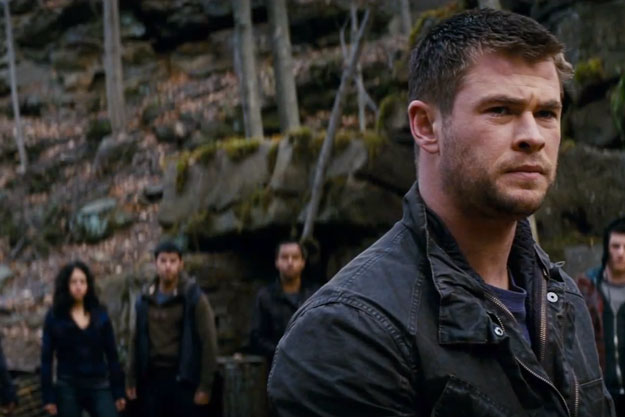
Red Dawn is a remake that failed to reboot the original for a new generation. The film was created for release in 2010, but was shelved in order to replace the invading troops of Chinese with North Koreans. The decision was made to maintain access to the China box office. The original film was based on the Russians invading.

The story is about a small group of northwestern teens somewhere between Seattle and Spokane, who enter into gorilla warfare to take back their town from the invading army. The original took place in the midwest.

Chris Hemsworth (The Avengers, Thor, Snow White and the Huntsman) played the lead role of Jed Eckert who heads up the band of teens called Wolverine. Josh Peck of Nickelodeon fame played the younger brother who learns a hard lesson about team work and eventually steps up to become a great leader in the shadow of his brother’s training.

While the original would gain 4 out of 5 stars from most moviegoers, this remake lands some where around 3-3.5 stars. If you are a war film enthusiast that hasn’t seen the original, you might bump it up to a solid 4. However, if you prefer war-based films with more finesse and fewer explosions, I’d recommend you watch Lincoln.

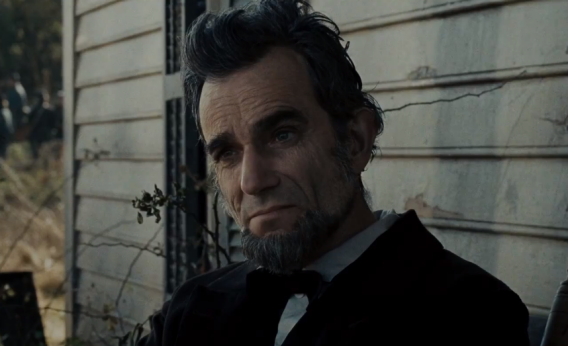
Stephen Spielberg’s (Saving Private Ryan, Schindler’s List) Lincoln will obtain critical acclaim at the Oscars®. Daniel Day-Lewis’ (My Left Foot, There Will Be Blood) performance of Lincoln was well executed and endearing to the audience. Sally Field (Places in the Heart, Norma Rae) was incredible as Mary Todd Lincoln. Both actors are sure to receive Oscar® nominations.

The story is about America’s president struggling with the continued carnage on the Civil War battlefield and his fight with many inside of his cabinet on the decision to emancipate slaves. While history tells us the focus was more centered on the economics of the times, the film only referenced it once – focusing more on the passing of the 13th Amendment.

The film was steeped in dialog of yesteryear, salted in with a handful of contemporary obscenities that jolted me out of the story a few times.  Aside from those poor choices, the film had my full attention and the 150 minutes went buy faster than many of the shorter films I’ve watched over the past few weeks.

If you appreciate the artistry of film and the incredible banter of earlier times in movies, you won’t want to miss this feature. The performances are excellent, but the cinematic production values are far more intimate than a blockbuster film. Spielberg kept his budget low in keeping with box office expectations for such a film, but he amped up the level of intimacy within the film’s characters to compensate.

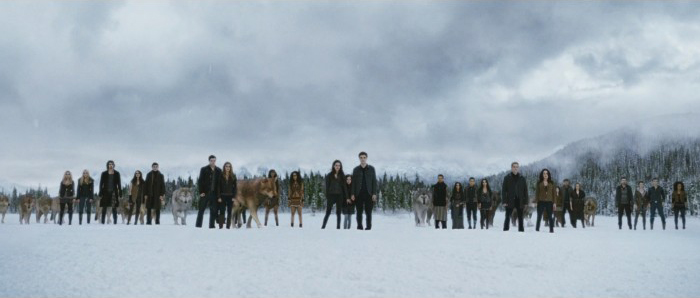
The Twilight Saga: Breaking Dawn Part 2 – Review

I’m always fascinated to sit with fans when reviewing a movie. They can give me the core elements that are missing or clarify what’s on target. The fan I sat next to was more impressed with the book than the movie. The heartfelt details were left out in order to build the film into an event with a battle scene that would draw a larger audience.

The idea of going more universal in its appeal was successful, as the theater was filled with a lot of men and people over 35 years of age. The Hollywood reporter announced that 21% of the audience was male, which was significantly higher than previous installments of The Twilight Saga. This drove the box office to exceed $140MM its opening weekend.

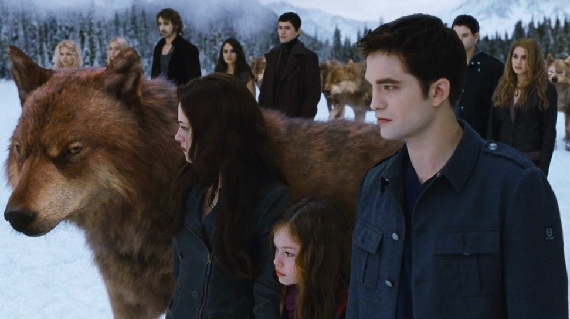
The franchise came a long way in four films. The first seemed to be put together with duct tape, bad acting and production values that barely rivals a vlog. Thanks to the millions of screaming teen and tween girls that watched it, the box office dollars suggested that the franchise needed to step up and become an event film. After practicing with the next two films, the team was able to get it right for its finale.

That is not to say everyone should run out and see the film, especially if you don’t like watching numerous decapitations by vampires ripping heads off of people. I’m merely suggesting that the production company finally put some of its box office dollars onto the screen, raising it to an “A” level film experience.

The film is still aimed at teen girls, although I’m a bit disturbed that parents would allow their young girls to watch such gruesome battle scenes. The good news of course, not that its really good news, is that there is no bloodshed in the movie since all of the warriors are already dead. When a head is torn off of a body, it just disables them until they can be burned alive.

What ever happened to the trend of teens and tweens watching princess stories? When did our society shift to girls watching vampire decapitations in The Twilight Saga, and kids killing kids in The Hunger Games? Have parents fallen asleep or are there no wholesome and moral filmmakers left to make uplifting stories that edify?

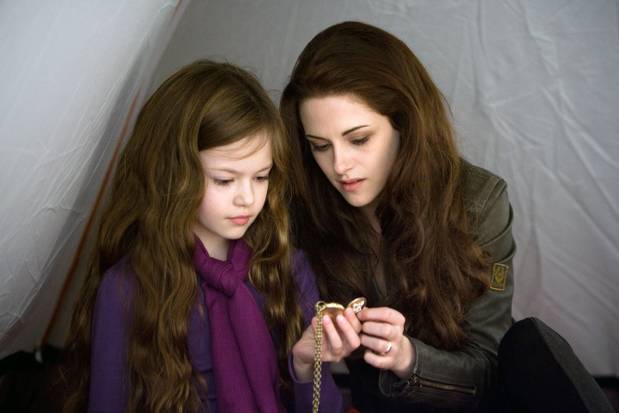
I don’t recommend this film for anyone. There is too many decapitations for kids to watch and too little of the thinned out, cutesy story for adults to watch. Yet, it was entertaining for those who have never scene wolves and vampires duke it out, not to mention the vampire child who grows to full maturity in seven years. Hmm, I wonder how she’ll turn out since her mother was more of a warrior than the nurturing type.

If I were you, I’d save my money unless you are a die-hard fan needing a fix. Then again, true fans prefer the book. For the rest, I’d save my money for the release of The Hobbit and Les Mis – Both will be strong Oscar® contenders.