Battleship Sunday

The kids wiped down the dinning room table as my wife started the dishwasher. I plopped a stack of newspapers on the table where we had finished our family dinner. The kids looked at the stack, curious of what our Sunday afternoon activity might be.

paper boats“It’s Battleship Sunday!” I announced. “The rules are simple. We’ll divide into two teams, girls against boys. You’re team will have a half hour to build a battleship and ammunition out of newspaper.”

I grabbed a page from the Tribune and crumpled it into a ball. I stepped into the living room.

“The girls will place their ship on the floor by the couch and the boys’ ship will be closer to the dining room. The first team to flatten the other’s ship will be the winner.”

I mimicked the game by tossing the paper wad as hard as I could where a ship would soon stand. The wad bounced up off of the carpeting and the kids shouted in unison, “Cool!”

I headed back to the dining room table and added, “Build your ship so it doesn’t collapse and make sure you have enough ammo to pelt the other ship. We’ll have two minutes for each battle, and five minutes for minor repairs and gathering more ammo. You’ll have to keep your ship on the water during all repairs.”

Newspapers were yanked from the piles. My wife had little Caitlyn crumple and amass a pile of ammunition, while she and Carolyn designed the ship.

I turned to Chris, “You’re the designer. I’ll make the ammo until you need my help building.”

“Is it better to have a big ship or a small one,” asked Chris.

“The bigger it is, the easier it will be to hit, but the more hits it will take to destroy.”

Chris went to work folding paper, while I tried to pack the crumpled paper tight enough to do real damage.

At the end of the half hour, the girls moved their ship into position. It looked more like a giant newspaper hat than a ship, but it was also narrow enough that our aim would have to be deadly accurate.

Chris placed the boys ship, which looked more like a destroyer with multiple levels, decks and compartments. It was about twice the size of the girls and had a wide base making it virtually impossible to knock over or flatten.

I gave the first signal and the battle ensued. Carolyn tightened her smile into a clenched grin as she whipped the paper wad with full strength. It hit with perfect accuracy and the top level of the boys ship splattered against a nearby chair. The large antenna mast flipped up in the air and landed on the bow of the ship. The girls cheered their first victory.

Chris tossed his ammo, with mine streaking alongside of it. The wads of paper missed the target, flanking on opposite sides of the ship. The ammo bounced off of the couch behind the girls and Caitlyn added it to their stash.

She then tossed her crumpled paper with as much strength as she could muster. It hit the bow of the boy’s ship and shifted its direction by a few degrees, but no damage was sustained.

My wife tossed a curve ball that cut back and scrapped the hull of the ship, denting its structure on the starboard side. Carolyn followed with another pitch and watched her ammo clip the rail and take out the captain’s bridge.

Chris got wise to the girl’s narrow target and shifted as far to his right as possible. He released his ammo and sent it into the port side, denting the ship, but not budging it. I joined him and pelted the port side, but to no avail.

Both ships withstood numerous attacks through the afternoon and the kids’ enthusiasm didn’t wane. Strategies were quickly built and altered, as each situation changed from the outcome of direct hits. The boy’s ship was leveled to the point of looking like a giant canoe, while the girl’s ship, though heavily dented, stood tall.

Chris suddenly got an idea, “Hey dad,” he whispered. “If we keep hitting the seam of their ship, it might break.”

I acknowledge his idea and handed him another wad of ammunition. He tossed it hard, but missed the ship. I gave him another and then gathered up a pile for him. He relentlessly bombarded the seam.

The girls got worried and decided to aim at one spot on the boy’s ship. Two and sometimes three wads of ammo hit their targeted spot at the same time. Suddenly one section of the boy’s ship flattened and the girls cheered. They quickly gathered more ammo and aimed for another section.

“On, three…two…one!” shouted Carolyn. In unison, a barrage of ammo wads slammed into the boy’s ship, flattening another section.

Chris turned to me with concern flooding his face. I gave him a nod and handed him more crumpled paper. He carefully took aim, then released the ammo, sending it soaring right at the base of the ship’s seam. It hit with a pop, springing the ship a few inches into the air, while releasing its fold that was held in place by the side of the ship.

Everyone watched as the ship landed with the seam wide open. Chris grabbed another wad and tossed it directly into the side of the ship, flattening the entire ship into a wrinkled mat. The boy’s won. Everyone laughed and cheered. The girls flopped back onto the couch. Chris and I landed in the chairs.

The game was over and everyone felt great after experiencing another family adventure.

Copyright © 2013 by CJ Powers
Photo © aleksangel – Fotolia.com

7 Elements Help Direct a Storyboard Artist

There are times when a director needs to pre-visualize a scene. It might be to speed the camera set-up during a shoot, help the FX team choreograph a difficult series of moves, or help an investor better understand the visual elements of a story they are backing. In every case, there are 7 key elements a director can use to help a storyboard artist.

Tried & True StoryboardLegend of the Lightstone was the first picture I worked on that required storyboards for the FX team. It was used to determine gear, equipment and background plates needed to capture my vision. Since ILM was to produce the effects, I had the privilege of working with their staff storyboard artist who gave me a few pointers.

Here are the key elements that a director can use to help their storyboard artist:

1)   PREDETERMINE THE ASPECT RATIO: Inform the artist what ratio he should use for his frame. Films are shot with various aspect ratios depending on its initial release format. The following is a list of board formats and its corresponding dimensions (length:height):

  • Anamorphic film is 2.35:1
  • Standard theatrical format is 1.85:1
  • HD Video or 16X9 is 1.78:1
  • Super 16mm or European theatrical is 1.66:1
  • The old TV standard was 1.33:1

2)   DESCRIBE THE SHOT CHOICE: The shot is made up of a location, set-up or angle, lighting, composition, and lens length. The position of the camera and its distance from the subject can be referred to by using common shot types:

  • EWS (Extreme Wide Shot)
  • WS or LS (Wide Shot or Long Shot)
  • FS (Full Shot – Entire person)
  • Cowboy Shot (Framed from head to mid thigh)
  • MS (Medium Shot – Framed head to hips)
  • CU (Close Up Shot – Framed top of head to base of neck)
  • Choker Shot (Framed forehead to chin)
  • ECU (Extreme Close Up – Framed eyebrows to bottom of lips)
  • OTS (Over the Shoulder Shot – Camera looks over shoulder of one character at the other character as a CU or MS)
  • POV (Point of View – Follows a CU of the character whose view will be shown and is a MS or WS, but can be a CU of what he’s focused on)
  • Reverse Shot (Shot 180 degrees in the opposite direction of the previous shot)
  • Reaction Shot (Shot of character’s emotional response that is typically a CU or MS)
  • High Angle (Shot from an angle above the characters)
  • Bird’s Eye View (Shot from up where birds fly)
  • Overhead Shot (Shot from directly above the characters)
  • Worm’s Eye View (Low angle shot looking up at the characters)

3)   ESTABLISH EYE LINE BASED ON EMOTIONS: The artist is not able to raise or lower a camera, but he can change the horizon line in his drawing to create a similar effect of changing the camera height. By raising the horizon, the drawing will look like the camera is higher than the character and diminish his power. By lowering the horizon line, the camera appears below the character, making him look more powerful.

In the same way, the artist can draw the character looking into the camera as in a frontal shot, or turned 90 degrees for a profile shot, or create a ¾ shot or ¾ frontal shot. This decision will also impact the emotional flavor of the scene.

4)   SPECIFY CAMERA MOVEMENT: Consideration must be given to camera movement. Common types of movements include: pans, tilts, dolly shots, push in/push out or trucking shots, boom, crane, steadicam, or specialized shots like zolly (pushing in while zooming out), sleeper, corkscrew, or dutch tilt. By describing the use of a long or short lens, or zoom allows the artist to blur foreground or background objects to create a depth of field effect. It would also be prudent to mention other specialty lenses like the fisheye lens if you want the artist to render the frame in a similar fashion as the lens.

5)   CREATE A BLOCKING DIAGRAM: The artist needs to know how many characters are in the shot and their positions within the frame at any given time. This includes their movement and placement. An over the head diagram can be sketched with the camera position to help the artist visualize each characters position relative to the camera and composition. If multiple camera angles are shown in the diagram, it is important to draw in the camera axis line so the artist won’t accidentally flip the character’s POV.

6)   PITCH THE STORY: To give a feel for the scene and the director’s vision, the story can be shared in a similar fashion to a pitch. This is accomplished by sharing with the artist what happens physically, visually and emotionally in the scene. The more the artist understands the tone of the scene and its action, the more the artist’s style will match the vision.

7)   CREATE A THUMBNAIL SKETCH: My explanations to the artist typically generate storyboards to my liking 80% of the time. The remaining 20% need to be reworked or adjusted. If I draw a thumbnail sketch for composition purposes, the artist is able to create a frame that matches my vision.

Tried & True StoryboardKeep in mind that a stagnant storyboard may need to be altered for animatics. If the artist knows that an animatic will be created for a living reel or business purposes, he may chose to draw his boards in layers for various types of output as required. By using a layered approach, he can also save time should only portions of a board need to be altered.

The storyboards in this blog were created by up coming artist Jay Dehlinger. Here’s how he can be reached: jasondehlinger at gmail dot com. (I spelled it out to avoid spiders). He is reasonably priced during his first year as a new storyboard artist and can work over the phone and with scanned thumbnail sketches.

Copyright © 2013 by CJ Powers


Abel’s Field – Review

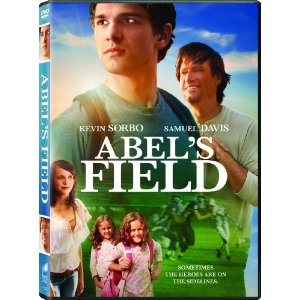
DVD Abel's FieldThe film opens with teen Seth McArdle (Samuel Davis) struggling to make ends meet for him and his two little sisters, while his father is out of town on business. Seth feels he has nowhere to turn for help, as God never answered his prayer for his dying mother. Since he feels like the solution is solely up to him, Seth works 2-3 jobs in an attempt to keep the family home.

It’s hard to feel for Seth in the beginning of the movie, since the story never reveals what he wants in life. While he struggles, one can only assume that he is doing what he desires, which gives the story nowhere to go until more bad news hits.

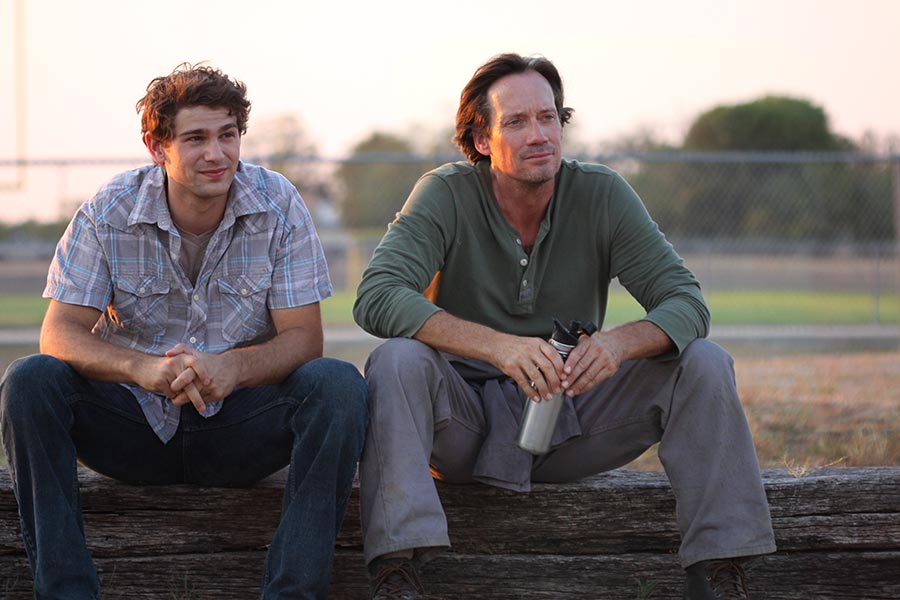
Samuel Davis and Kevin SorboAbel (Kevin Sorbo), gives meaning to Seth’s life and helps the film to finally take off in the second act. Kevin’s performance drove the film, even though it seemed like he had less dialog than any other character. His charisma was held in check within an introspective character who was very careful about opening up to anyone until Seth crossed his path.

The two leads nearly turned the story into a buddy film, as they delivered the better part of their performances. Unfortunately, first time feature director Gordie Haakstad wasn’t able to help the actors maintain that level of energy. Nor was he able to find the right pacing for the story, which could have made it far more entertaining. However, Haakstad did succeed in creating one of the better faith-based films released to date in Abel’s Field.

Disclosure of Material Connection: I received one or more of the products or services mentioned above for free in hopes that I would mention it on my blog. Regardless, I only recommend products or services I use personally and believe will be good for my readers. I am disclosing this in accordance with the Federal Trade Commission’s 16 CFR, Part 255: “Guides Concerning the Use of Endorsements and Testimonials in Advertising.”