
Symbols of Christmas

I was Christmas shopping last week and overheard a family argue about a specific gift purchase. The mother had both of her kids select and try on gym shoes because their current pairs were worn out. The kids were thrilled to have new shoes, but their faces dropped when their mom took the new shoes from their hands. She said that they’d have to wait until they opened their gifts on Christmas morning before they could wear them.

That night I walked the decorated downtown streets where I live and thought about whether their mom did the right thing – Holding back the needed shoes until Christmas Day. I wondered if she had missed the Spirit of Christmas or had determined to do something symbolic with her gifts that would help instill the Spirit of Christmas into her kids for life.

It made me contemplate if I still understood the real meaning of Christmas or if the numerous symbols of the season had faded from my memory. For instance, most of the decorations I saw on my walk were green and red.

If I remember history, Egyptians would bring green palm branches into their houses during the winter festivals. In the Roman Empire, people would exchange evergreen branches during the winter as a sign of good luck.

These common practices took on a new twist when Europeans, during the Middle Ages, put on Paradise plays, which were typically performed on Christmas Eve. These plays included the reading of Bible stories for those who couldn’t read. The Paradise Tree used in the play was a pine tree with red apples hanging on it. The evergreen represented eternal life and the red apples represented the fall of man. The color red also symbolized the blood of Christ and man’s salvation, which is why St. Nick wore red.

The color white at Christmas represents purity and peace in western cultures. In fact, I don’t think there’s anything more peaceful than standing outside on a cold, moon lit night in a freshly fallen snow.

Blue is also a significant Christmas color because it’s associated with the Virgin Mary who gave birth to the baby Jesus. Some say that blue is symbolic of heaven on earth, but during medieval times blue dye was more expensive than gold and only worn by royal families and the rich. Therefore the culture of that day used it to signify Mary’s importance by dressing her in blue.

After shopping, I headed to my car and saw the mother giving the kids their shoes. She shared her concern that they’d be disappointed on Christmas morning because she couldn’t afford to purchase any additional gifts. It was her hope that her act of love through gift giving on Christmas morning would remind them of the greatest gift that God had given man.

While the kids assured their mom that they were mature enough to handle it, I realized that creating, remembering and maintaining symbols of the holiday would help me keep focused on sharing with others what I have freely received – Faith, hope and love.

Copyright © 2013 by CJ Powers

Visuals and Emotions Play Across Cultures

© gloszilla - Fotolia.comI had the privilege of collaborating with screenwriter Anna Aleta A. Nadela last night. She is one of the lead writers on a soap opera in the Philippines. Her successful career in network television took off about seven years ago and she is now expanding into feature films.

She and her producer contacted me to analyze and consult on their feature film’s story structure. Their goal was to develop the film for multiple cultures in the Asia Pacific region and in additional countries that have Filipinos who are working overseas to help their families.

The story is tentatively titled The True Hero and will be filmed in the Philippines and Hong Kong. Aleta’s writing was strong and she created highly dramatic and emotionally charged scenes that worked well, greatly simplifying my job.

Over the past five years, I’ve studied numerous story structures and how each impacts audiences in various cultures and countries. The beats and structural elements that are designed for a universal audience can be integrated across multiple cultures.

The key to a successful integration of the elements into any given story is based on a strong visual and emotional platform – Something that few screenwriters consider. The majority of writers focus on the plot points, character development and dialog. However, to crossover multiple cultures the visuals and emotional elements must take priority.

Thanks to Aleta’s talent and flexibility, we were able to get on the same page quickly. Her mastery of the craft and creativity allowed us to remold the original story using a structure that has made hundreds of millions overseas in the past five years.

Within a short time, Aleta reconfigured several of her key story elements into the new structure and was ready to start typing. In all of the years I’ve consulted, I’ve never seen anyone learn and apply a cross-cultural, universal story structure to his or her existing screenplay so quickly.

Based on our collaboration process, I’m expecting her drama to bring me to tears during my next read. She already hinted at a few true-life character modifications that she’d make to heighten the story. In fact, each of her characters was based on a composite of real people that she interviewed.

It was a thrill to work with Aleta and I’m looking forward to her next draft. I always count it a good day when I get to collaborate with an artist of Aleta’s caliber.

Copyright © 2013 by CJ Powers

Johnny’s Thanksgiving

This Thanksgiving I wanted to give thanks for the inspiration I received for the first story I ever wrote. It was ever so slightly rewritten and I hope it is still a blessing to my readers.

Johnny's ThanksgivingThe snow lightly fell outside of the big picture window where little Johnny leaned against the back of the couch. His eyes sparkled at the small fawn crossing his grandfather’s snow covered lawn in the north woods of Wisconsin.

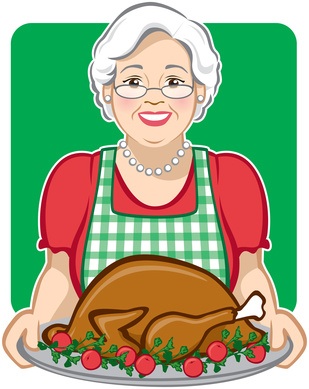
The smell of turkey snuck up behind Johnny, as his grandmother kissed the back of his head on her way to the dinning room table with the platter. Johnny spun around and caught a glimpse of the golden brown turkey, as it was set on the table in between the sweet potato and dressing.

Johnny kicked his feetsy pajama covered feet out and dropped with his seat landing squarely on the couch. He slipped off the edge and took his place at the dinning room table next to grandma.

In place of a traditional prayer, grandpa suggested each person take a moment to thank God for the simple things for which they were thankful.

Grandpa thanked God for his job, new car and having the family over for Thanksgiving. Grandma thanked the Lord for His provisions and the family. Johnny’s mom thanked God for his baby sister who was partially covered by a small blanket, as she enjoyed her dinner.

It was Johnny’s turn and he leaned back in his chair and took pause. The others were curious and wondered what was going on in his little mind. He thought and he thought, bringing smiles of anticipation to each one at the table.

“I wonder what Daddy is thankful for,” questioned Johnny.

A warm smile came over everyone in the old Chicago gym where Johnny’s dad was dishing up turkey for the homeless. A tear of joy rolled down the cheek of a mother holding a small child on her hip. A man with long stringy hair and a stubble face smiled as he received the turkey leg. An old woman reached out her shriveled hand and patted Johnny’s dad on the shoulder, “Thank you for giving up what you’re thankful for, so we might be thankful as well.”

Johnny smiled and said, “I’m thankful for my dad and I’m going to grow up and be just like him.”

And so, that Thanksgiving day everyone found something to be thankful for and shared with each other generously from the depths of their heart.

Copyright © 2005, 2011, 2013 by CJ Powers
Illustration © Kelly Hironaka – Fotolia.com