
 The number of scripts I receive for consideration or review every year is astounding. Each of the major studios receive about 100 scripts a day and 99% of them are not worth reading. The biggest dilemma I face comes from the author. Most of the scripts I receive are from talented literary authors trying to write a screenplay, which seldom goes well.
The first problem that I typically encounter is the author using detailed and flowery words in long-winded descriptions, as if it were lifted right out of a novel. Few authors understand that the screenplay is written in a specific manner for budgeting and creative purposes, and obviously, for the screen. Here is a scene example that I’ll use to discuss the differences:
NOVEL
“Adrenaline pumped through David’s veins as his pace quickened toward the lone grave hidden beneath the canopy of large oak trees deep within the forest. His soiled gym shoes stopped in front of the fresh pile of dirt rounded over like a grave before rain settles the soil. David’s face aged 10 years in that moment and his legs weakened. He dropped to his knees with sorrowful eyes, knowing that he might be facing his daughter’s burial site. His hands looked like gnarled creature paws as he stroked away at the soil, digging deeper and faster with a weak hope of finding an animal in her place.
But he knew the truth. His hands would soon find his kidnapped daughter. He readied himself for the sight, as he plotted a new vision for revenge. His hand snagged a piece of material. The same as the dress his daughter wore at her seventh birthday party, the night she was kidnapped. David’s face flushed and turned stone cold. A fiery revenge welled within his soul forcing him to his feet. “I’m com’n for yah,” he groaned. With more energy than he thought possible, David bolted through the woods focused on his target.”
SCREENPLAY
EXT. FORREST – DAY
Exhausted, David scrambles through the forest. He stops at a fresh grave. Grimacing, David drops to his knees. He paws through the soil. David stops, hardens himself and glances off in the distance.
DAVID
I’m com’n for yah.
David runs from the grave, letting a streak of sunlight hit the floral cloth protruding from the soil.
PRODUCTION TOOL
The same overall action occurs in both depictions of the scene. The screenplay version is measured at 2/8 of a page, which tells the production manager how long the segment will take to film and how much it will cost. The word choices within the screenplay suggest the needed shot list to capture the story. The list includes:
- XLS: David running in forest
- MS: David panting as he runs
- CU: David’s gym shoes stop at the grave
- MS: David drops to his knees
- MLS: David kneels at daughter’s grave
- CU: David
- CU: Hands digging
- MS: David’s dialogue
- LS: David running away from grave
- XCU: Dress protruding from grave
With the scene being 2/8 of a page, the DP and 1st AD know they have to capture the full shot list in an hour to stay on budget. If, however, the scene were written like the novel, it would take 4-6/8 of a page and the team would allow 3-4 hours for the shoot. Unfortunately, the scene will still only take 15-20 seconds on screen, making the novel version far more costly to shoot—forcing the project over budget.
When properly written, a screenplay reveals the shooting schedule, budget, and camera shots.. It also hints at the character arcs and the emotional tonality the actor must consider when developing his character. There are also hints sewn into the script about the editorial pacing and tempo.
A person who knows how to read a professional screenplay can easily spot the above. But the novelist has no clue what information must be laced into the scene or how to concisely interweave it. Most don’t understand how this scene is likely to be shot handheld because of the story’s emotional turmoil and shooting schedule.
Beginning screenplay writers find themselves writing something halfway between the novel and professional screenplay, which inaccurately reflects the shoot requirements with information that cannot be seen on screen. A screenplay improperly written becomes a useless tool for the producer and production team. The better the screenplay writer, the more accurate the budget.
BOOKS ARE NOT FILMS
A second factor I face with authors is their misguided understanding of what makes for a good film versus a book. The original story allows the reader to get inside of the protagonist’s head, while the film can only show what happens, unless you like a lot of narration, which slows a film down and pulls the viewer out of the film story.
Books are about thought and films are about action. They are two different mediums and must be treated according to its own form. While most authors feel disgruntled about having their story altered to better fit the medium, they hate with a greater magnitude films that try to follow the book and end up destroying the story as a result.
The vast majority of great authors have to get used to seeing their “A” plotline become a “B” plotline in a movie, and their “B” plot become the “A” plotline. This inverted plotline structure makes for a far greater motion picture, and opens the story up to a wider audience than what the book was aimed at. Since movies cost a lot more than a book to create, this distinction is significant.
While there are additional factors that authors face when transitioning their work to the screen, I’ve run out of room to mention them in this post. The key is to understand that film and books are very different and require opposing skills to pull off. Flexibility is paramount for the author desiring a shot at the silver screen.
 We’ve all heard that men are visual. We’ve even heard that they are more visual than women. We’ve also been told that this difference is significant. So monumentally different, in fact, that women can’t quite understand what it’s like to live in a man’s visual world.
 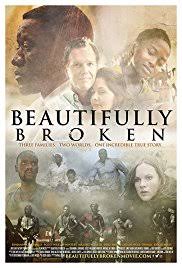 It was an amazing weekend for the box office. Independent film Beautifully Broken exceeded the film distributor’s (ArtAffects) lifetime box office gross (including adjustments for inflation for its previous titles) in its first weekend with just under $500K as a limited release. However, the small ad budget restricting the film’s promotions and the lack of available screens for expansion in this saturated market might kill the picture’s chance to surge this weekend. In other words, this weekend might be its last in theaters.
 Crazy Rich Asians was the biggest winner with a $25MM take at the box office. While most films’ ticket sales drop 35-60% during its sophomore weekend, Crazy Rich Asians fell less than 6%. This is in keeping with the new movement of audiences looking for lighter films with redemptive endings. You can read more about it in my post titled
  In my latest talk,
  CJ's Corner