
7 Great Speech Opening Techniques

Winston_ChurchillLast night I gave a talk to a group of speakers on seven techniques that will help a speaker create a great opening to his or her talk. It was well received and I wanted to share it with you. Please keep in mind that this is not a transcript of the talk, so lasts night’s humor was trimmed out to present the information more succinctly.

1. State the Importance of the Topic

This appears to be a no brainer idea, but its one that is critically important and seldom done. When the audience is told how the topic relates to their life, attention spans are lengthened and interest is peaked to absorb the content with pleasure. People always pay closer attention to topics that will effectively improve their lives.

2. Make a Startling Statement

Attention getting devices are helpful to draw an audience’s focus from their drifting thoughts to your talk. The bigger the wow factor the more alert the audience. Within a short period of time the audience scans their memories to compare what they already know to the factualness of the statement. This practice demands the audience hear you out to fill in the gaps the statement created.

3. Arouse Suspense or Curiosity

Everyone likes a good mystery that pays off with a benefit for his or her life. Our peaked curiosity places our minds into a learning mode that allows us to consider the value of new information. It moves us into the zone of soaking up information.

4. Tell a Story or Anecdote

Storytelling forms our memories and is the vehicle we use to share unforgettable information. The anecdote becomes the demonstrative element of the points we make. It is also the relatable trigger that brings back the shared self-help information we crave.

5. Ask a Rhetorical Statement

When a person asks a question, whether rhetorical or not, our minds engage in a process to find the answer. If one is not quickly found within our memories, our curiosity is peaked and we willingly hear out the messenger. If, however, we have a memory of similarity or contrast, we use the comparison as a filter in our listening process, giving full attention to the speaker.

6. Use a Quotation

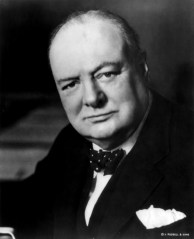
Quotes stand the test of time and cause the listener to think. Winston S. Churchill is one of the most notable people ever quoted and he clarifies what makes for a good speech. “A good speech should be like a woman’s skirt; long enough to cover the subject and short enough to create interest.”

7. Reference the Occasion

Acknowledging the event you speak at helps the audience to immediately correlate your talk with the night’s purpose. The embracing of the content becomes synonymous with the event in the minds of the audience.

A successful opening gets the audience’s attention, introduces the topic, and helps the speaker establish report. These positive opening techniques drive the success factor, but should not take over the talk. Keeping the opening to about 5% of the talk’s length (not exceeding 10% of the talk) guarantees a captivated audience for the presented keynote content.

Copyright © 2016 by CJ Powers

 

Makers vs. Managers: Blocking Out Productivity

timeTime management comes to the forefront of everyone’s mind during the holiday season. Failing to block out enough time for events with friends and family can spin fun time into bouts of shouting. The approaching New Year also gives rise to planners and dreamers that require effective time management to succeed.

I’ve learned, during my tenure in the world of Fortune 50 corporations, small mom and pop type businesses and retail, that there are two primary ways of managing time. The organic processes naturally developed from the functional needs of two types of workers.

Workers who create, build, or produce are “makers.” Those who manage others are “managers.” Both require good time management skills to accomplish their charter, but each requires a very different structure of blocking out time for effectiveness.

THE MAKER
Professional makers need large blocks of time to create their product, content or intellectual property. Time is required to get in the zone, be productive, and document activities enough to pick up where they left off at a future time. Most industries require time blocks of 2 or 4 hours.

Makers tend to use the morning for creative blocks of time and the afternoons for logical endeavors. However, makers also break the rules and might find they are more productive during the wee hours of the night. Only 60% of the top 100 authors of the 20th century followed this pattern of creating in the morning and editing in the afternoon. Most wrote when they were inspired and fixed their writings at more logical times.

THE MANAGER
Professional managers typically oversee the tactical efforts of a team. They tend to block out their time in smaller half-hour increments, allowing some level of flexibility to put out the next “fire” that attempts to erode the team’s progress. The smaller segments allow for faster responses and adjustments to circumstantial changes in the tactical operations of the day.

Strong managers block out empty time slots to shift their mandatory work after a “fire” takes the team off task. In other words, they plan for the proverbial fires each day. Most managers primary goal is to support their team and make sure they continue functioning no matter what surprise issues arise.

Productivity crashes when a manager tries to block out 2-4 hour increments that keeps him or her away from supporting their team. Likewise, makers that try to touch numerous projects in a given day using half-hour increments soon finds their work less provocative, of a lower quality and far less entertaining.

Blocking out time based on function is the only method that supports the type of work the makers and managers face. Constant interruptions of a maker produce little results. Long durations of managers away from their team weaken their process and negatively impacts tactical results.

The right type of time and duration is critical to the success of both the makers and managers. Blocking out time based on function will always facilitate success. This will bring peace to the worker and confidence that his or her workload will be completed on time.

Copyright © 2015 by CJ Powers

Creating a Two-Minute Persuasive Story

The vice president of Sales and Marketing approached me a week before the big trade show. He said he’d be joining me for dinner to meet one of my clients on the first night of the conference. He also made sure I understood the severe consequences if I didn’t set up the meet-and-greet.

Just before we sat down for dinner, I introduced my client to the VP. I was surprised to learn that the president of my division was also invited, along with two other executives and their guests. The dinner for three barely fit at the table now set for eight.

Then came another surprise. The president suggested that I start my presentation before the food arrived. Presentation? What happened to the meet-and-greet? The VP instructed me to begin. I wanted to confront him, but didn’t know how, so I dove into an off-the-cuff presentation.

The client, who agreed to a meet-and-greet, not a presentation, quickly interrupted and clarified what I already knew; He couldn’t do anything until he received his next budget in six months.

It was no surprise that I returned to a pink slip back at the office and was promptly escorted out of the building. I never learned if the dinner was a set-up, but I did wonder how things might have been different had I confronted the VP. What would’ve happened if I took two minutes at the table to persuade the executives to understand that the dinner was scheduled as a meet-and-greet, and nothing more?

The most difficult situations I’ve experienced always came down to a defining moment that was either won or lost during a two minute conversation. Being able to present a persuasive viewpoint in two minutes can separate those who are embraced in business from those who are rejected.

Everyone in business can present a persuasive argument by following four simple steps that can be formulated in the moment.

  1. Define a Specific Problem. The more specific the focus, the more plausible it is to correct or improve the stated problem. General comments allow the mind to wander into various avenues of possibilities and it dilutes the prospects of an actual fix. By establishing a focused issue, the train of thought is easily followed and considered – creating a mental or emotional buy-in on the specific problem being discussed.
  1. Share a Similar Experience. By sharing a similar experience that was methodically fixed, associates can easily extrapolate the same information as a probable fix, or at least agree to a certain line of thinking that has the potential of delivering a similar result. This connection positions the associate to consider a new outcome.
  1. Share the Positive Outcome/Benefit. All ideas must be field tested to determine its potential level of success. When positive results occurred consistently using a similar model or approach, associates are more likely to vote for similar trials within the area of problematic concern. Listing the benefits received from a similar experience helps the associates paint a vision for their own testing in order to speed the possible solution and its estimated benefits.
  1. Suggest Similar Action with Specific Problem. Buy-in is typically reached during a two-minute persuasive talk that matches a similar benefit to a known problem, however, without the actual “ask” to take action, the idea will dissolve into a sea of arbitrary comments that preceded the moment. It’s critical to state the needed action and ask for a consensus to move forward on implementation.

The above steps can be shared in two minutes. Defining the problem and getting a quick buy-in will take about 45 seconds. Sharing a similar experience can take 30 – 45 seconds. The benefits achieved will take 15 – 30 seconds and the call to action only takes 15 seconds.

Using these steps during an unexpected meeting with executives will clearly demonstrate great leadership skills, an understanding of the business, and insights worthy of consideration. It may also get you promoted to the task force for follow through – A chance to demonstrate additional leadership skills.

Copyright © 2015 by CJ Powers