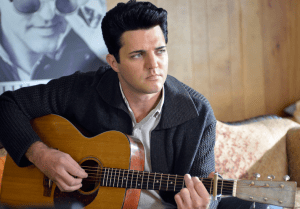
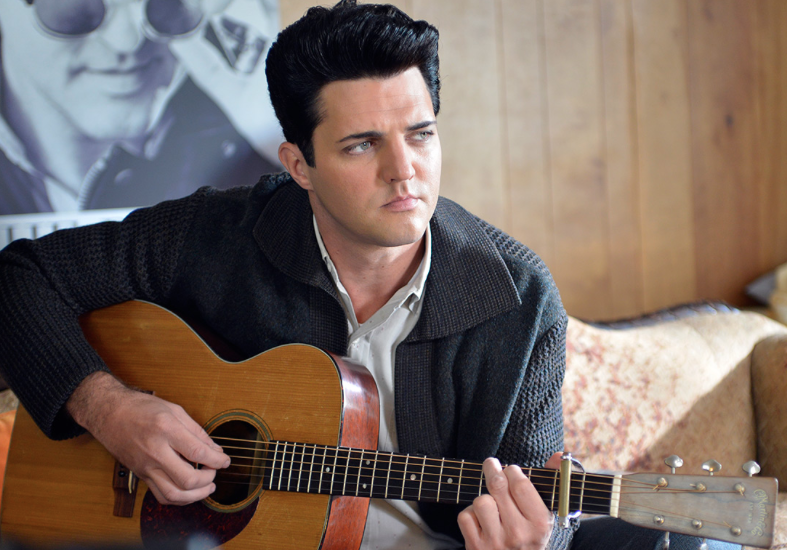
 The Identical (Blu-Ray/DVD release on January 13, 2015) is almost a “what if” story about Elvis and his stillborn twin. It’s almost a concert film. And, it’s almost a historical biopic. But, regardless of the scattered focus, the film delivers a story of an unknown twin that finds his true calling in life rising from the ashes of all that held him back.
But that’s not all.
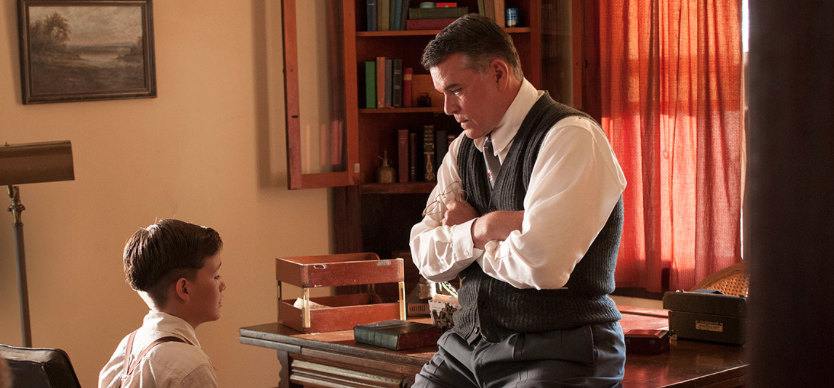
The film is also about the father, an itinerant preacher, who adopts the twin and pushes his son to follow in his footsteps, but later sees the importance of having his son be what is right for him to be.
The story was a little confusing with dual storylines taking turns driving the film, rather than one being the subplot of the other. This directorial choice made me wonder if the film was actually about the father, especially since by the end we see a transformation in the father’s approach to wanting what’s best for his son.
 The character that changes always gets our full attention and the twin never changes. From the beginning of the film he is a part of music and by the end of the film he is a part of music. Even when his father attempts to push him away from music, he secretly stays connected to it. He is always about music and continues to be about music through to the end.
Blake Rayne, a real life Elvis impersonator, is The Identical. But, in real, real life he is Ryan Pelton, as Blake Rayne is a stage name – the name he uses in the film industry. Now, if that isn’t weird enough, Rayne plays Drexel Hemsley (An alternate world Elvis) and Ryan Wade (The alternate world’s living twin of Elvis). Of course, by the climax of the film he learns that he is actually Drexel Ryan Hemsley.
I was also confused by two messages that the audience is left with:
1. It’s a man’s job to learn to stand in his truth.
2. If He (God) is in your dreams, nothing can stand against them.
The first theme is the most powerful, as the story follows Ryan’s struggle to learn who he is and his purpose in life. As for the second theme, it seemed to be added to help attract the faith-based market.
Instead of Ryan chasing a specific dream, he works hard to clear his confusion in life, surrounds himself with music, and attempts to figure out who he is – A great singer who’s not in it for the money. But, this storyline is greatly overshadowed by Ray Liotta’s (Goodfellas, Hannibal) performance as the father/itinerant preacher.
Once you get past the muddiness of who the picture is about, there are a lot of positive things in the movie worth enjoying.
The picture spans five decades and was well crafted by Production Designer, Keith Brian Burns (2 Fast 2 Furious, Abduction, Four Brothers). Each period is well executed and takes you back to the look and feel of the era. The only exception is the polished nostalgic look with new props and mint vintage cars instead of things carrying different ages of use and dirt.
 Ashley Judd (Divergent, Double Jeopardy, A Time To Kill) commands attention on screen as the perfect woman who keeps her house together, while respecting everyone in it regardless of their mistakes and passions. Her performance even changed subtly to fit each decade’s style.
Seth Green (Austin Powers, The Italian Job) and Joe Pantoliano (Bad Boys I & II, Daredevil, The Matrix) gave great performances with new characterizations that added humor to the story. Erin Cottrel (Little House on the Prarie, The Janette Oke “Love” films), gave an inspiring performance as Wade’s wife that would cause any man to love her for eternity.
While I can understand why critics slammed the film for its muddied story, it’s worth a closer look now that its being released on video January 13, 2015. The best part of the Blu-Ray/DVD release is the 85 minutes of bonus content including a making of program, behind the scenes footage and deleted scenes. Hearing from the key players and what they tried to put into the movie was eye opening and made the film worth watching a second time.
 Birdman took Best Screenplay award at the 72nd Golden Globes last night. It also won Best Actor (Michael Keton). The film nominations included best comedy or musical, best supporting actor (Edward Norton), best supporting actress (Emma Stone), best director (Alejandro Gonzalez Inarritu), and score.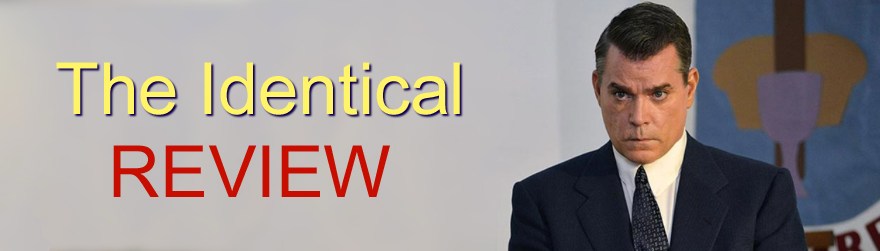


 CJ's Corner