
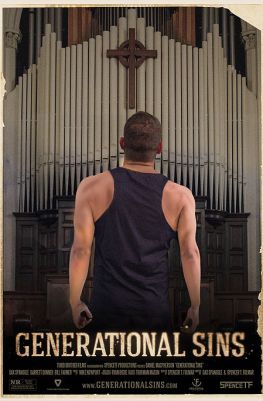
 The Hollywood Reporter last week featured a story about Christian movies going blue. In 2012, Blue Like Jazz was a Christian film that tested the waters with drugs, sexual innuendo, binge drinking, and foul language. It caught the attention of many supporters, becoming the second largest Kickstarter funded movie at the time.
The filmmakers’ careers were blocked in a unique boycott situation after the film’s release. They were reportedly stopped from ever working on another Christian film. One documentary even had the filmmakers discussing the disdainful treatment that they received from other Christian filmmakers.
A lover of controversy, writer-director Spencer Folmar decided to follow in their footsteps. On October 6, 2017, his film Generational Sins releases in theaters. The film is PG-13 and has 32 profanities. Folmar is trying to coin the genre and is reportedly trademarking the phrase “Hard Faith” films.
Instead of getting boycotted, Folmar is getting a new level of support. The Dove Foundation, known for its family safe seal of approval, has started a new category of approval for those 18-years-old and up. Generational Sins has received the stamp.
Movieguide, a watchdog organization for family friendly and godly films, thinks the film should be judged on its artistic merits, not on its language. However, their position was not one of agreement as they wrote…
“There’s an underlying problem with the approach of looking like the world in order to reach out to it. It’s not how Jesus ministered, it’s not how the apostles preached, and it’s not how the Bible tells believers to live (Rom 12:2, John 17:15-18). What turns Christians off, and many others as well, is when believers, who are likely well intentioned, brag about the edginess of a particular choice because they’ve decided to mix it with Jesus. That doesn’t somehow make it cool all of sudden.”
There were thousands of movies during the golden age of cinema (1933-1963) that were real, morally healthy, and pushing artistic boundaries. Many of those stories were godly, well received, and worthy of the general public’s time and money. None of those films stooped to vile comments on the silver screen.
But the “in thing” today is all about the buzz of new faith-based filmmakers putting the gritty truth into their films in order to reach a more secular audience. The funny thing is that Jesus told stories to the secular public without profanity. Even his parable about a loving father dealing with a prodigal son was shared without being explicit.
Redemptive films, which I strongly support, rarely use any profanity, if at all. They are crafted to demonstrate the character’s repugnant lifestyle without drenching the audience in its filth. It only takes a couple quick scenes to express where the character begins his story arch, which ends in an uplifting place.
A good craftsman can create a story that reflects a raunchy lifestyle without immersing the audience in a bath of displayed evil. While I don’t feel all of the unsavory acts must be done off-screen, I wouldn’t for a moment suggest a director leave the audience feeling like they participated in the character’s depravity. After all, the goal of the film is to show the character’s transformation from an immoral lifestyle through to his redemption.
In the case of redemptive storytelling, the transformation is used to promote the film. In hard faith films, so far, it’s the edginess and profanity that’s being used to promote the film. The focus seems to be on debauchery rather than transformation.
This choice is forcing the film into a limited release schedule with only 14 theaters. In other words, the distributor is assuming the film will flop unless the controversy puts people into the seats.
So, my question is, does 32 profanities in a faith-based film entice you to the theater?
 Many have asked me to clarify why I’m passionate about creating redemptive stories. The answer rises from the depths of my soul, which I find myself contemplating time and again. The contemplation is not a form of second-guessing, as I’m firm on my position, but it’s about distinguishing the gap between the two.
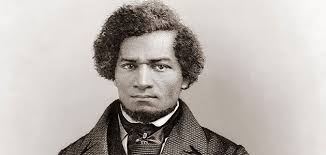 Frederick Douglass, in his Pictures and Progress essay wrote, “Poets, prophets, and reformers are all picture-makers—and this ability is the secret of their power and of their achievements. They see what ought to be by the reflection of what is, and endeavor to remove the contradiction.”

 CJ's Corner