 I met Eric last spring at a media conference where I watched 2-3 films a day during the week. The screenings were 1-6 months ahead of their theatrical release date. I was only impressed with two of the films: I Can Only Imagine and Beautifully Broken. Both films were hybrid films that were closer to being that of a redemptive story like The Blind Side, Les Misérables, or Gravity, than a faith-based film.
Unfortunately, both movies released as faith-based films, greatly reducing its potential audience. However, I Can Only Imagine survived with a cumulative $83MM box office against 10 new releases. Beautifully Broken released today against 23 new films with far less promotional dollars, yet the emotional story is every bit worth watching.
I had to give the film’s director a call this morning to chat about his first feature being released. Here is my conversation with Eric…
CJ: Beautifully Broken is about three families that end up being intertwined and they’re from different walks of life.
Eric: Absolutely. The film is about three families coming from different worlds. Two completely different worlds. The springboard of our story starts with action. It begins in Rwanda, and William Mwizerwa, a Rwandan businessman, is thrown into a decision when he is forced to flee Rwanda because of the genocide that’s taking place and the tribal warfare. He has to leave his [extended] family behind and escape to Kenya with his wife and his daughter.
CJ: I understand he faced the difficult decision to accept an opportunity in America, but he had to get established there before being able to bring his family.

Eric: So, he leaves Kenya, and ends up going to America where he meets Randy Hartley, a man who’s going through his own set of challenges. Through the friendship that these two [men] strike up, an amazing story unfolds that shows the redemption and power of God in people’s lives. Through the course of the film, we see these men in their relationship save each other’s families. Then there’s a third family involved that’s a little bit of a curve ball in how that family interacts. The stories blend together in the end for a very inspirational and powerful film.
CJ: When I watched the film last spring, it felt like an international version of The Blind Side. There were similarities where a family decided to help somebody else and in return, they received blessings within their own life.
 Eric: I think that’s an interesting parallel. I think the thing that is unique about this film, is that you have certain assumptions and stereotypes out in the world today about people in other countries. Just like The Blind Side challenged some of those stereotypes, I believe this film does even more so. You assume that just because … one of the lines of the film is, “Just because you see no tears does not mean the person hadn’t cried.” That’s really true of so many stories in this film, but also in life. We have assumptions that people live Facebook lives. Everything is perfect because you see they’re out traveling or doing this, that, and the other, but people have things in their lives that hurt. They have things that they don’t wanna share. There’re scars. There’re pains. The glorious thing about this film is that you see how God can use different people’s stories to bring hope and healing to other people.
CJ: I certainly picked up on that theme of helping others can actually change the world around us. Did that theme just rise from within the three stories that came together, or did you find a way to bring focus to it in the film?
Eric: The way the movie unfolds is true, and people may think that it’s hard to believe. If Hollywood wrote the story, no one would believe it, but Hollywood didn’t write this story. God did. It’s just an amazing true story, and a lot of things that happened will really shine and inspire people.
 One of the craziest things is we had the premiere the other day. We had the premiere in Franklin at a place called The Factory. The first job William got when he came to America, was at The Factory. It’s mind blowing to think this man escaped Rwanda, came to America, first job that he had was at this factory, and 20 plus years later we’re celebrating a film about this gentle, quite hero in the same place that he had a job.
Now if that isn’t God, I don’t know what is because you couldn’t have written that. That’s just such an amazing way that God just kind of sees the larger narrative.
CJ: I’m always amazed anytime there’s some form of providence that occurs. We had talked a while back about the fact that this film wasn’t quite a faith-based film, but it’s also not quite categorized as a redemptive film. The film is in between both camps. I Can Only Imagine was also more redemptive than faith-based and ended up making $83 million. What was it like creating that unique balance between a faith-based and a redemptive film?
Eric: It is a bit of a challenge to walk that line. Our film deals with some real issues, and that’s what’s resonating with people. We don’t shy away from tough topics, and we show them in the light of God’s redemption. But the quote that the friend of mine had encapsulated on this film when he saw it was, “I don’t wanna call it a faith-based film because it’s a different type of movie. I wanna call it a film about faith.” You’re seeing how faith infuses in real-life stories.
CJ: I appreciate the naturalness to which the elements came out. They weren’t forced like in many faith-based films, but rather came out of the circumstance that each person faced.
Eric: Yeah, there’s not an agenda that we’re trying to push on people. We’re really just trying to tell a story of how these people were able to overcome … hopefully you’ll find yourself in one of these characters, or someone you know, and identify with these people.
CJ: I know you come from the world of short films and music videos. You’ve made quite a few. Was this your first feature?
 Eric: Yeah. Coming from the world of music videos, it was a challenge. It was literally like filming a music video every morning. Every morning, five, six o’clock in the morning you show up on set and you’re just like boom, go. Most music videos you only get to film a day based on budget and usually the artist’s availability. So, this was like doing a music video every day for two and a half months. It was a marathon.
And continually I was telling myself, “Okay. Pace yourself. Pace yourself.” There’d be nights where I wouldn’t go out to eat after being offset. I would just go home, look over what we had to do the next day, and go to sleep because it’s a grind. It’s 14, 16-hour days sometimes and you’re up, standing up on your feet, directing, working with people and then the pressure cooker of the clock is a real thing. So, yeah. It was a challenge. Like an idiot, I took on a film that has three storylines weaving together in two different countries. So, I jumped into the deep end of the pool, if you will.
CJ: The last time I saw a film with three interwoven stories was Christopher Nolan’s Dunkirk. Now, he had the added issue of showing parallel action while each timeline was different. One took place in a couple hours, one in a day, and one over several days. You fortunately had a more equally based timeline. But what was it like being able to track the three stories and how they kept interweaving?
Eric: We had a great script to work with. That really was my guideline, and laying the script to the timeline of what happened with everyone and trying to make sure that you tell each individual story of each family clearly, but then also [considering] how their stories are gonna weave in toward the end was a real challenge. There’re props that you have to consider, like this comes up later, so make sure you film this, but also the dialogue and what you could and couldn’t say. We had to be very careful because it’ll affect the story later on, but not just in one story. The other families are affected but nuances and changes in each story.
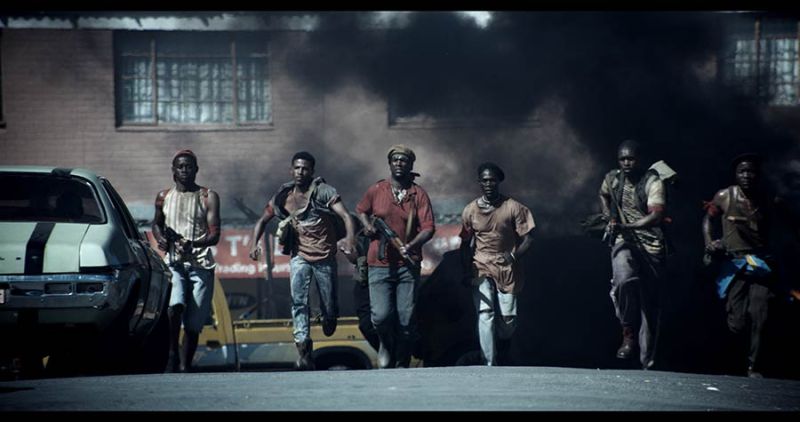
So, I had to be very specific. Had to know that story inside and out before we went filming because in the chaos of making a film sometimes, like we have this scene at a roadblock. It’s a pivotal scene in the movie, and we’ve got a car on fire here. We’ve got militia soldiers going from car to car questioning people. Then you have your main family there stopped at the roadblock and what are they gonna do? You have to capture dialogue, and there’s a prop that plays a really important part in the film. So, there’s all these elements that you have to capture and the sun is moving. You can’t stop it. I’m not Joshua. So, there’s that continual process of trying to beat the clock and make sure that you get everything in a pressure cooker.
CJ: The scene with the car fire was beautifully cut together. In fact, it was almost like a music video, which I thought did a couple things. One, it really revealed the danger that the characters faced, and it softened the action enough, as a PG-13 film for families to better handle.
Eric: Yeah, well I mean that’s the thing. Our film deals with real situations, but it’s not a graphic film and that’s something that I as a filmmaker have embraced. I think people … there’s a lot of times films, they have to be gratuitous and they have to go over the top to show something. It’s like going back to 300 and Meet the Spartans. There’s a Spartan, there’s blood splattering on the lens. It’s just like, “Okay. Got it.” I think people are sophisticated enough in storytelling these days that you can imply something is happening and people get it. They understand what’s going [on] without having to jump in and get in the weeds on things.
It’s really a beautiful story that covers the common ground that we all have no matter what our social, economic, racial, or nationality of our background. It really covers all those bases and propels you to an inspiring end that is a beautiful story and really touches people’s hearts.
We had a pre-screening last night and the first person coming out of the theater was like, “Man, thank you for making this movie because I went through what this character went through…” This was a grown man in tears. I had four or five fathers come to me in tears, expressing their story, what they went through. I think we’re seeing a lot of people come through this film inspired and challenged and healed in some way.
CJ: I remember when we met. I must have seen nine films by the time I saw yours. The one thing I remember clearly about yours is that it was, to me, the most real. It truly touched, not just through the theme, but also watching how, when we do something that we think is trivial or little, it actually can impact someone else’s life in a massive way.
Eric: I appreciate you saying that. You saying that is very humbling because I know the other films you saw and that means a lot. Thank you for sharing that.
CJ: I think certainly as a director you have certain hopes and aspirations for where your film is going to head and what you hope it will accomplish, but there’s so many other factors. For instance, it can be frustrating if the marketing department doesn’t agree with the directorial department. And, instead of your film release being up against 3-10 other films this weekend, your film is releasing alongside of 23 new films. That’s a lot of competition for the audience to search through for a good film. The good thing is that out of the three dozen movies I’ve seen this year, yours still stands in my top ten films worth watching in 2018.
Eric: Well, I … hey, that … thank you. I mean, what can one say? That means a lot because I know your background. I know what your passions are. That’s a huge honor to be in that top 10.
CJ: So, you’ve come out of the gate with a great first feature, so what’s next on your docket? Do you have any plans or thoughts?
Eric: People will ask that, and they wanna know, “What’s he gonna do next? I really enjoyed this, what’s next?” I’m like, “Well, God only knows and he ain’t saying.” So, I am just taking it as it comes. The first thing, I promise you, will be rest ’cause we’ve been pushing on this film hard for several years.
CJ: You definitely have to take time off and relax. Congratulations on your opening. I’m excited to watch the numbers and see how many people see your film over the next two weeks. I hope it does better than your 23 competitors.
Eric: Well, I appreciate your support.
CJ: All right. Well, have a great day and I hope you celebrate your weekend.
Eric: Hey, thanks so much. I appreciate your support and reaching out and it was great talking with you.
© 2018 by CJ Powers


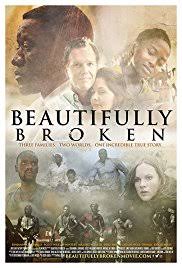 It was an amazing weekend for the box office. Independent film Beautifully Broken exceeded the film distributor’s (ArtAffects) lifetime box office gross (including adjustments for inflation for its previous titles) in its first weekend with just under $500K as a limited release. However, the small ad budget restricting the film’s promotions and the lack of available screens for expansion in this saturated market might kill the picture’s chance to surge this weekend. In other words, this weekend might be its last in theaters.
 Crazy Rich Asians was the biggest winner with a $25MM take at the box office. While most films’ ticket sales drop 35-60% during its sophomore weekend, Crazy Rich Asians fell less than 6%. This is in keeping with the new movement of audiences looking for lighter films with redemptive endings. You can read more about it in my post titled
  In my latest talk,
