
Advertising Dissolves Freedom of Choice in NM

Last week a female photographer made a choice to not photograph an event, only to have the New Mexico courts state that she discriminated against the lesbian couple by turning down the photographing of their commitment ceremony. The photographer thought being a U.S. citizen gave her the freedom and the choice to decide who she would take on as a client and who she would not take on.

The court held that “a commercial photography business that offers its services to the public, thereby increasing its visibility to potential clients” is bound by the New Mexico Human Rights Act “and must serve same-sex couples on the same basis that it serves opposite-sex couples.”

In other words, because the photographer used her freedom of speech to promote her business, she has lost her right to choose who she would take on as a client and who she would not take on.

I’m curious to know what happened to the photographer’s freedom to choose the type of work she wanted to do. I’m also curious as to what power enabled the New Mexico courts to determine which of the two people got to maintain their “freedom” – The right to choose what projects we work on versus the right to choose any photographer a person wants.

When I was growing up, discrimination laws allowed both parties to maintain a certain level of rights, but not control all of the rights. For instance, the person hiring a photographer had the right to hire a photographer, but not necessarily a specific one if others were available. And, the photographer had the right to take the weddings they wanted, like the more profitable ones or the ones that paid their bills on time.

Even the Boy Scouts faced the issue when a girl wanted to join. However, the court allowed the Boy Scouts to turn the girl away if there was a Girl Scout club available, as it was similar in nature. The unique thing is that fighting to give a girl the right to join the Boy Scouts does not give her the opportunity to be a part of a boys club. For once she joins, the club is no longer a club for boys, as her presence nullifies it.

I was raised in a small town that had signs in it’s store windows stating that the proprietor of the establishments had the right to refuse services to anyone not wearing a shirt or shoes. It would be interesting to find out if a proprietor would have to now serve a gay person that entered the establishment without shoes.

Theoretically they would not have to serve a person without shoes because they only serve the niche market of people who wear shoes. The New Mexico court stated they “must serve same-sex couples on the same basis that it serves opposite-sex couples.” In other words, all are served who wear shoes, which means no one is discriminated against.

However, in the case of the female photographer who also serves a niche market, the court decided her niche market didn’t count. In fact they refused to hear it.

The female photographer only photographs a niche market of clients who hold to a certain religious belief. The lesbians did not hold to that belief and therefore were not considered clients. With the lesbian couple not being a part of the niche market, it made me wonder if the lawsuit was for political reasons. After all, why would a person who lives outside of a niche, demand that a niche photographer take their pictures?

I did wedding photography to help put myself through college. I had the freedom to pick what dates I would be available to shoot and I had the freedom to choose what weddings I wanted to shoot. Frankly, I learned to avoid the ones where the bride or groom kept dickering about the price, and the ones with an open bar – You would not believe the things I captured when people got drunk and how many of my pictures became evidence in court.

According to the New Mexico court, if a lesbian who planned an open bar and constantly dickered on my price wanted to hire me, I’d have to take the job if I had used my freedom of speech to promote my business. This interpretation of the law is dangerous and flies in the face of our country’s freedom of choice stance when it comes to selecting the projects we want to work on.

But now, the New Mexico ruling leads us down a slippery slope that destroys our freedom of speech. According to them if you advertise, which all businesses do, you become a slave to the one wanting to hire you – Leaving you powerless to choose what jobs and projects you take or reject.

It’s my hope that the appeals court will overturn this interpretation of the law and make sure our freedom of speech stays intact, especially since it’s at the bedrock of our freedom to choose.

© 2013 by CJ Powers

Behind the Scenes of “Working Title” Blog #2

There are seven controversial issues within our film that need to be kept confidential and protected prior to the film’s release. This level of secrecy will help us leverage the controversy for free publicity once the film releases. Unfortunately, it’s very difficult to keep everything under wraps in our electronic world where a simple tweet can get to millions of people within the hour.

To help us protect the Working Title’s intellectual property, my producer and I chatted with several lawyers. We wanted to find one that was excellent. We also hoped to find someone we could trust. Okay, now’s not the time for lawyer jokes.

My first call went to William Morris Endeavor. I had used them on several film projects earlier in my career when they were the William Morris Agency. I learned that when the company reorganized, the attorney I worked with retired and did not pass on any of his accounts. This meant starting from scratch.

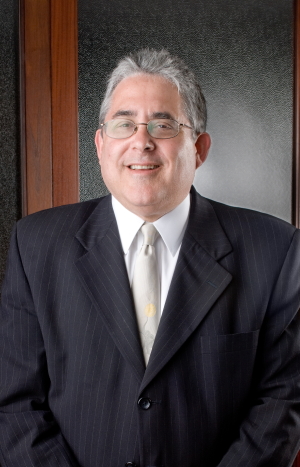
KesslerI met Hal “Corky” Kessler at a conference and started chatting with him about our film. He has a high degree of knowledge in film law, the new tax laws, and foreign distribution pre-sales markets. We took the conversation off line to discuss possibilities of working together. He seemed very familiar to me, so when I got back to the office I looked through some old records and found that I had worked with him on a project years ago – It’s a small industry.

Corky is based in Chicago (Yes, he’s done projects with Oprah) and has worked on 40 plus features with names like Russell Crowe, Robin Williams, Howie Mandel, Rob Reiner, Martin Mull, Jim Carrey, Dana Carvey, Lili Tomlin, Sara Silverman, Bonnie Hunt, John Carpenter, Timothy Hutton, etc. He has worked for screenwriters, directors, producers and executive producers on features including Steel Magnolias, Driving Miss Daisy, and The Sum of Us (winner of the Australian Academy Award for Best Film).

BennettI had also bumped into attorney Emerson R. Marks at a film conference in Texas. I believe my producer bumped into Bennet Fidlow at a film conference in Florida or Colorado. Both men are entertainment attorneys from the same firm in Virginia – Handling the growing hot bed of independent productions in Virginia, the Carolinas and Georgia.

Bennett has worked with a long line of industry names during his time at Columbia, Tristar, MGM, United Artists, Orion, Goldwyn, Sony, Miramax, Screen Gems, Republic Pictures, Universal, NBC, Warner Brothers TV, Fox Family, and Fox Cable, to name a few.

It became clear that Corky’s expertise was in foreign pre-sales and state tax credit laws and Bennett’s was in talent acquisition and production operations. Bennett quickly introduced us to others on his team who specialized in offering memorandums and corporate structures that are conducive for investors.

Everyone we talked with was on board about keeping the controversies quiet, except for me. Well, not exactly. I definitely want to keep most of it a secret, except for the information I plan to leak in up coming blogs. After all, my readers deserve some extra insight.

© 2013 by CJ Powers

Behind the Scenes of “Working Title” Blog #1

This is the first in a series of behind the scenes blogs for a new film that will be released in 2014. The film requires a great deal of secrecy due to some of its controversial content, so I will be limited in what I share between now and the film’s release date.

Behind the Scenes with CJ PowersHowever, I’ve decided to share the entire process from start to finish with my readers. I had always wished someone had done the same for me in my early filmmaking years, so I’m going to do it for you.

This means you will read about my successes and failures as they happen. You will know when I hit a brick wall or fall flat on my face, and when I’m celebrating because something special or fascinating happened. That’s right. You’ll be right there behind the scenes with me.

You’ll see into the development process with investors, pre-production meetings with department heads, production work on set and location, post-production magic and special effects, music composition, distribution, international releases, and the film’s premiere.

I’m guessing this new blog series will be entertaining for fans who like to hear things in advance of a film’s release. It’ll also be educational for filmmakers who want to live vicariously through my production to glean new processes for their own films.

Hmm, maybe this should be called a reality blog.

Just like reality TV shows you’ll learn about the good, the bad, and the ugly. I’ll even add pictures when I can, and video clips too. Everything and anything that might help you experience this picture in the making right along with me.

I don’t recall any filmmaker who chose to be this transparent with his fans, but I’m going to do it. What do you say we get started…

The story is the most important part of filmmaking, although I never believed it when I first started in the business. My first few jobs with the networks led me to believe that technical excellence was more important than anything else. I’ve since watched hundreds of technically perfect, boring films that lacked good story.

As a result, our story will be entertaining and eye opening.

The three of us who got together in the mid 90s to write the original story found our script ahead of its time. There was no one in Hollywood that was willing to take the risk, so we put it on the shelf. However, there were some significant changes that happened in society a few years ago that forced our story to surface as being extremely relevant.

All three of us simultaneously started looking for each other. None of us knew that the other had started the search at the same time, but we soon learned that we had. The core of the relevant story stayed intact, but we had to rework the style and pacing of the story to fit the industry’s artistic changes.

When the three of us reconnected, the first thing we did was attempt to voice the sense of awe that we felt. The story was more relevant than we had ever been able to imagine and we instantly knew that the film was going to open the eyes of millions. It was as if we had traveled ahead in time to learn what our future audience would need.

I can’t wait to tell you more about this amazing story and take you behind the scenes with every step we take to make this film. Please give your friends a heads up about our project, as I’m sure they’ll want to hear about it as well. And trust me when I say you’re not going to believe some of the amazing things that I’ll be sharing – I’m still trying to grasp it.

But it’ll be a great adventure and I hope you join me for each entry.

© 2013 by CJ Powers