It’s All About the Audience

The cinema and the local church have sought new ways of drawing people to its seats for years. When new media came along, marketers started to focus more on niche audiences. Magazines published various regional issues that focused advertisers on specific markets and technology took a deeper dive into personalized advertising.

Localized stories found a ground swell of audiences forcing some to go viral and large corporations shifted their attention to social media. Films like Minority Report gave us a glimpse into the future with electronic mall posters changing ads to reflect the likes of the person walking past, based on localized broadcasts of nearby mobile phone gps signals.

These innovations soon crossed over by creating a combination of partnerships, which make advertising all the more impactful. Here is a clip of a localized broadcast in a Hong Kong theater that makes a point about not texting while driving. The technology being used gives creative people an entire new way of introducing an audience to cinemas and churches.

Mood Reels

ConflictThe latest craze in film fundraising is the development of mood reels. The mood reel consists of clips from other movies cut into a sequence that would be reminiscent of the feelings to be generated in the future film. By using similar music, production teams hope to set the tone and create an emotional atmosphere to pitch potential investors.

The mood reel is not too different from a living reel, except for the use of someone else’s work. Any form of previsualization helps to gain the attention of investors and clarify the type of film being made. Similar to animatics, a rough animated version of the storyboard, the mood reel is designed to introduce a logical decision maker into the world of the picture.

Mood reels are typically 2-5 minutes in length and intangibly present an emotional background or give the audience a feeling about the story. These compilation pieces can also give a sense of the types of shots, timing and effects that will be used throughout the film.

The drawback to a mood reel resides with the investor’s ability to separate the mood and his emotions from the short and translate it into the possibilities for the feature film. This is a similar problem to having an investor read a script without knowing how to properly read scripts – Causing them to miss the subtext and demand more overt content.

Mood reel or not, the most important element for an investor is whether or not he can trust the filmmaker’s artistic choices in transferring the story from the page to the screen. The filmmaker either knows his film inside and out and can communicate it, or he can’t. This requires the filmmaker to be a good verbal communicator and not just a visual communicator.

The reason behind the continual search for a visual tool like the mood reel is because the average investor prejudges the story. The more niche the film’s distribution, the greater the prejudgment.

Walt Disney was the first to experiment with storyboards, artistic renderings and the like in order to sway bankers. There is an entire warehouse of composites created by Disney artists experimenting with concepts, as they attempted to reduce Walt’s ideas to paper or canvas. While most of the images are symbolic or give a feel for the concept, they have in their own right become valuable works of art.

The skills needed to make a great feature film are very different than making a great mood reel, trailer, short, or other promotional piece. Yet, investors continue to prejudge a filmmakers feature ability based on these preliminary tools, so its not surprising that filmmakers have shifted to using a mood reel – Taking advantage of great art that already exists.

Copyright © 2014 by CJ Powers

The Gift of Imagination

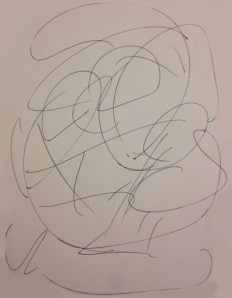
scribbleOnce upon a time there was a wee little man who wished his imagination was big enough to create a gift for his niece’s birthday. He sat down immediately and started scratching lines and curves on a piece of paper. He was hoping that from the chaos a form of fun art would emerge, but his strokes didn’t look like art.

Nothing looked like anything, which infuriated the little man. Out of sheer anger he scribbled all the more until his paper was filled with a squiggly mess.

His eyes began to water when a wise old owl perched outside of his window.
elf“What seems to be the matter?” questioned the owl.

“I can’t seem to do anything creative,” moaned the wee little man. “I had hoped to sketch out a present for my niece’s party, but my creativity lacks something awful.”

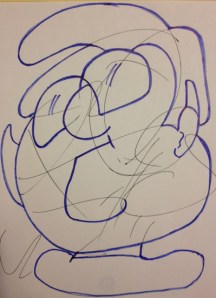
“Not at all,” mused the wise owl. “For I see a cool elf in the picture that will amuse your niece.”

The wee man squinted and bulged out his eyes until he finally saw what the owl had discovered. His hand quickly covered the paper with a tissue and outlined the picture with another color until it was easier to see.

Colored Scribbled elf“It’s amazing!” cried the little man.

He turned from the owl and began coloring the work. It would be a wonderful, humorous gift for his niece. By the time he was finished a large smile formed on his face, but then disappeared.

“What is the matter?” asked the wise owl.

“My niece has a turtle collection and I wished my scribbles had created a funny turtle for her instead.”

“Very well my little friend,” affirmed the owl. “Turn the original scribbled picture upside down, find the turtle, outline it and color it to your satisfaction.”

The man flipped the picture around and spotted the turtle carrying a service tray. He outlined it and colored it until it looked like a fun picture.

Turtle“Thank you Mr. Owl,” said the humble man. “I would never have seen my own creativeness had you not pointed it out.”

“You are welcome,” the owl said. “Now take your gift of creativity to the child and teach her how to see the inspiration that her chaos can bring to our world.”

The wee little man gave a nod, grabbed the picture of the turtle and headed off to the party. He couldn’t wait to see what his niece’s imagination would create.

Copyright © 2014 by CJ Powers