 I’ve chatted for a few minutes with numerous directors over the years and I’ve found that the top one percent all think alike. They are captivated by the human condition and explore each character they meet, finding the underlying treasure deep within their being.
This newly exposed treasure always contains a form of entertainment that fascinates. The story that rises from the personal backstory brings understanding to the attentive audience. Regardless of ones personal perspective, empathy is drawn and reveals the human condition.
Philosopher Martha C. Nussbaum, in her book “Upheavals of Thought,” speaks to the intelligence of emotions. She argues how storytelling rewires us. Her argument can be easily extrapolated to explain why motion pictures alter our culture. She further argues that our emotion is the very fabric of what forms our moral philosophies.
“Emotions are not just the fuel that powers the psychological mechanism of a reasoning creature, they are parts, highly complex and messy parts, of this creature’s reasoning itself,” says Nussbaum.
A director who is aware that emotions are not a motivator, but instead part of the character’s reasoning can form arguments that change the way people view themselves. Thereby changing our culture.
I met a lesbian pastor a year ago and we chatted about what drew her to other women. After she gave me the programmed and politically correct answer, I asked the question in a different way. She carefully shared how she was always beaten by males as a small child and comforted by females. Women provided the only form of love she understood.
If I were doing a character study for a film, I’d draw from the pastor’s experiences that shaped how she felt about men and women. Her reasoning was molded by her emotions and the only thing that could change her course in life is the demonstration of a higher love that she does not know exists.
As a director, it’s my job to acknowledge the audiences reasoning on culturally hot topics and introduce them to another perspective. When I demonstrate through a character and his or her circumstances similar ideas and feelings, I hook the person long enough to consider the new perspective demonstrated through the main character changing by the end of the story.
Top directors always talk about the thesis world, antithesis world, and the new thesis world. The thesis world starts the audience where they are socially and politically concerning their reasoning. The antithesis world demonstrates the things that can go wrong with their version of the thesis world. Every thing is turned upside down and looked at in a fresh way. This is followed by the new thesis world where the director leaves the audience with their version of what our culture can look like.
The human condition is where we all must start. It’s where we all live with our flaws and unanswered hopes. We can then explore all the things that could go wrong based on our current worldview. This opens our hearts to better solutions that we consider when presented in love or entertainment. If the information we consider includes a demonstration of what the new perspective proposes, we are ready to embrace it and test it out in our own lives.
The logic is sound and it makes sense why all Hollywood films follow this format. What seems illogical is that faith-based films, which are supposed to have truthful answers for our lives, do not follow this process. In fact, many Christian films do the exact opposite and don’t stand a chance of changing our culture.
Film is one of the greatest art forms ever created and it’s the only one that directly impacts our culture. Some say its because it includes the other art forms within it, but top directors say its because film starts the audience with the reality of the human condition, explores the flawed alternatives and gives rise to a great demonstration of what life can look and feel like when embracing the main character’s choices in the person’s own life.
Copyright © 2015 by CJ Powers
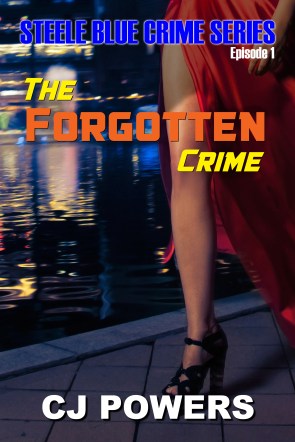 I’m happy to announce that my new crime novel, from the Steele Blue Crime Series, is available as an eBook for pre-sale orders on Kindle. The story is made up of seven episodes starting with “The Forgotten Crime.”
 CJ's Corner