
Lunch with DP Marc Miller

© Peter Kim - Fotolia.comI had the pleasure of eating lunch with Marc Miller yesterday. He is a Director of Photography and Camera Operator who has been in the industry for 38 years. He has a significant list of credits and awards. His career started after attending Columbia College in Chicago, when he held staff positions in Chicago and New York. More recently he completed four seasons of CBS’s Big Brother.

Marc returned to the western suburbs of Chicago and is currently working on a documentary. He and I first met years ago, just after I left ABC to work on my first feature. Schedules didn’t mesh, so we never had a chance to work with each other, but we always enjoyed sharing our passion.

Halfway through lunch we chatted about one of the stories I’m developing. I broke down a few visual ideas and Marc knew exactly how to bring it to fruition. His understanding of set etiquette and diplomacy rivals that of a First AD. He is also the type of DP that appreciates a strong director who is flexible to explore the art of a story when time and budget allow.

Marc’s list of credits goes beyond features, television series and documentaries. He has done numerous corporate projects, music videos and commercials. His local projects have included shooting a training series for The Second City and a pilot for the History Channel.

Marc is a member of Local 600 International Cinematographers Guild, SOC and Digital Cinema Society. He is refocusing on features in hopes of finding stories that can make a difference in peoples’ lives. His goal is to construct visual stories that take the audience to places they can’t go, coupled with a subject matter that counts.

We’ve decided to shoot some test footage in the near future, which may double as a promotional piece to raise funds for my next feature. In fact, we’ve already started talking about locations and we’ll set up a scouting trip in the near future. It’s my hope that we will continue building our artistic partnership and I hope to share some of the footage with you.

© 2013 by CJ Powers

Casting Vision

© apops - Fotolia.comProducers and directors are in a position to cast vision for their film, giving cast and crew the information needed for impromptu interviews or questions from unannounced bloggers. It only takes two to six minutes, depending on the depth of information given, to create a united front for the film’s promotion.

I was involved in a production that had numerous layers to the story. Each cast member had certain plotlines they liked more than others, which showed up in their interview segments. By the end of the interviews, the host of the talk show was confused and no longer able to promote the movie because she didn’t understand what it was about.

Simplicity in promotion is critical for sending messages through word of mouth. Any attempt at explaining all of the plotlines dilutes the message and weakens the film’s box office. It’s important that there is one simple vision cast that the production team can share.

The producer and director can prepare their vision casting talk using the following outline:

1. KEY ISSUE: All films address some form of a problem, burning issue or needed societal change. The beginning of the vision casting talk should include an attention-getting device and a clear statement of the key issue.

2. BACKSTORY: Listeners need to hear what brought about the key issue and the common answers of the day that were unsuccessful. This will not only allow the audience to understand the stakes involved, but it also sets up the film’s solution as something plausible and worth pursuing.

3. FILM’S SOLUTION: Present a tangible idea as a solution for the common problem using references to real resources. Use example scenes from the story to support the statements. This will help the listener understand the practical steps needed for success.

4. PAY-OFF: Make a clear and concise statement that gives a specific answer to the key issue. To make a greater impact, keep the comment simple and memorable.

5. CLOSE: Follow up with the prominent benefit that results from the change and encourage everyone to get the word out to reach fans, friends and family with the benefits.

By casting a specific vision for the film, the producer and director are able to focus the promotional and social media messages to drive the film’s box office. The repetition of the message throughout the project’s duration will ensure that the cast and crew embrace it and share it.

© 2013 by CJ Powers

Notes from the Napkin

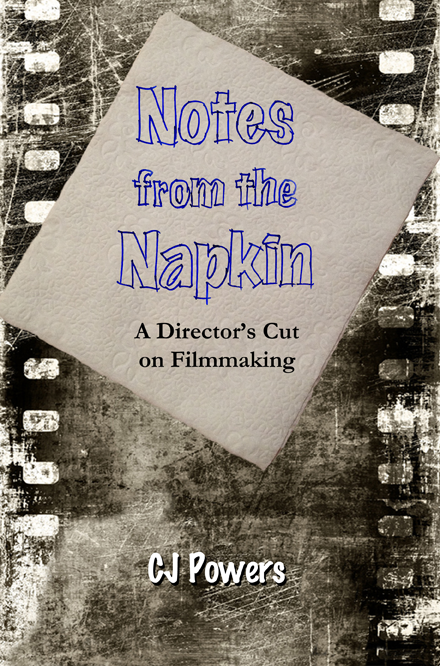
Notes from the Napkin by CJ PowersMy latest book, Notes from the Napkin: A Director’s Cut on Filmmaking is now available at Amazon.com and at my estore.

The book features lots of industry tips and tricks that I’ve picked up from conversations with filmmakers Ron Howard, Christopher Nolan, and Ken Burns to name a few. My conversations weren’t much longer than 2-5 minutes, but I gleaned valuable information that changed the way I wrote, directed and produced.

I’ve also added in great tips that I’ve learned from independent filmmakers. The helpful information was never taught in my college film or television classes. Nor have I come across many of the tips in industry books. It’s as if there is an entire set of knowledge only available to those who have been on set with the pros, which I’m making available to independent filmmakers through this book.

The book is broken into three sections: Notes from a Screenwriter, Notes from a Director, and Notes from a Producer. However, there are plenty of notes for actors salted throughout all sections of the book.

I’ve also added in some tips that I’ve learned from the school of hard knocks when working on projects released to ABC, CBS, PBS, WGN, and ABC Family. A few of my tips have come from international workshops that I’ve conducted in Europe and Asia Pacific. And, from my experience successfully releasing films in eight countries.

If you’re looking for tips that actually work, I believe this book is for you. My easy to read, informal style will help you unpack complex issues, adding new technics to your filmmaking tool belt.

Whether you’re interested in reading the book or not, I’d appreciate you passing on the information to other filmmakers who might want to learn a few golden nuggets.