
Adventure at Fort Pickens

I clobbered the 16” softball, sending my cousin back peddling. Tom turned and sprinted to pick it up before it stopped rolling. He shouted, “25!” as he swept up the ball. Tom was a couple years older than me and was raised in a family of brothers who played 500 all summer long. The only thing that kept me in the game was my ability to hit the ball harder and farther than he thought was possible for a little kid.

Fort_Pickens_Battery_2For some reason Tom didn’t toss the ball back. His eye was caught on something inside of the fort ruins. He dropped the ball and entered the inner structure. The old Fort Pickens ruins were cold and damp, which made the afternoon Florida sun bearable. Inside the partially underground fort were brick archways that seemed to fade into pitch-black darkness.

The sight was so amazing that I lost track of where Tom had gone. I suddenly found myself lost within the fort’s battery tunnel. Suddenly an old brick took a blaster shot and shattered from the arch above me. The debris rained down as I took cover. I pulled out my raygun and returned fire. Chunks of exploding brick bounced off of the wall.

Fort_Pickens_Arches_OpenI noticed a skylight type opening above and climbed the arch. My hands grabbed a chunk of grass from outside the opening and I pulled myself up and out. I shuttled around behind a bush and took aim. Something was not right. No one followed me out, so I took slow steps toward the opening.

BANG!

I was hit. I spun around to see the intolerable menace, Dr. Vorick of the Neuzillian spaceport, pointing his raygun at me. He slowly raised it to take aim and I turned away and rolled down the hill, landing out of sight in bushes. The imaginative moment vaporized when Dr. Vorick, I mean Tom, told me that we had been called to dinner.

After washing the dishes, my family went to a laundry mat. There was nothing to do except daydream new adventures about my escape from the evil Dr. Vorick. On the drive back to camp, mom gave instructions for how the Easter morning service would work and how our camping group would walk together to the beach. The car suddenly swerved to miss an animal and I gasped for fresh air.

I rolled down my window to help my breathing, but the skunk smell poured in more potently than expected. My mom groaned about the clean laundry in the trunk, but wasn’t about to return to the laundry mat until after she shared the moment with her fellow campers. She drove a few times around the campsites until she was confident that everyone from the group had smelled the lovely aroma.

The car stopped next to our camper, which made me realize that sleeping in Tom’s pup tent a dozen yards away would be a better choice. My mother quickly agreed and gave me an air mattress for my comfort.

Tom had put up the tent in a small island like space nestled in among a few evergreen trees. It was a short distance from the fort on one side and a shorter distance from my family’s camper on the other. It was well positioned with one exception – It was in a miniature valley, but there was no forecast for rain.

I climbed into the tent and puffed air into my mattress. It was a long and arduous process that Tom quickly gave up on. He decided that his sleeping bag had sufficient padding so he went to sleep on the ground.

I continued to inflate mine, although it was getting more difficult. Once Tom fell asleep, I felt alone in the dark woods. I slipped out of the pup tent and headed to the camper in hopes of finding some courage, but I stopped cold in my steps when I heard a distant coyote howl. I was suddenly aware that I had the choice of sleeping in the camper or stepping up and being a man. Since I did well keeping up with the older kids playing 500, I decided I could handle manhood and the noises in the night. I was exhausted, so I headed back to Tom’s tent and fell asleep.

A crack of lighting woke me up in the middle of the night. Rain was pelting the canvas, so I assessed the pup tent – no leaks. I closed my eyes and fell back to sleep.

I was awoken to a new sunny day by a weird gurgling sound. It was like a sputtering noise made by… I turned toward Tom and found he was asleep, lying in four inches of water. His nose was dry, but he was exhaling through his mouth at the water line.

I was concerned about my predicament and I found that I was floating on the water thanks to my air mattress. It was one of those strange moments in life that you couldn’t make up if you tried. I decided to hold tight and watch Tom sleep, wondering what it would take for him to wake up. It wasn’t long before Tom shifted in his sleep and his face went in the water. He bolted upright, coughing and spitting. He was soaked.

It was hilarious and I couldn’t hold back my laughter, but Tom didn’t find it amusing. He glared at me, “You’ll have to get wet eventually…to get out of the pup tent.”

I realized that to stand up, my foot would have to get in the water and the odds were the air mattress might buckle in my attempt, pouring water onto my legs.

Tom started to laugh, “I’ve got to see this.” He stepped outside and flipped the tent door flap up out of the way to give him a clear view of my future demise.

But, I stayed low on the mattress and started to paddle. Tom watched as my air mattress drifted out of the pup tent and onto the dry ground. He was speechless.

The sun was just coming up over the horizon and I remembered the Easter service. I ran to join my family at the camper. I soon realize my mother’s loops, scenting the campsite with the smell of skunk, provided early morning entertainment. A sign was staked in the ground next to the camper that read, “Welcome to Stinky Hollow.”

Fort_Pickens_BeachOur adventures at Fort Pickens were memorable and I felt the experience helped me brave the new world of manhood. I also learned a couple life lessons like making sure your tent or house is on top of the hill rather than in the valley.

Copyright © 2013 by CJ Powers

12 Essentials of Directing Actors

Movie director.In watching and chatting with numerous actors and directors over the years, I’ve learned a few things that directors do poorly and several they do well. During this time frame the ideals have changed within the production world, so I’m writing only those key points that relate to actors giving a truthful performance. I hope directors will find these recommendations helpful.

  1. TAKE AN ACTING CLASS. Actors are vulnerable and sensitive people who need encouragement and an understanding director.  The best way to inspire great performances is by understanding the acting process. To keep up with the latest trends, I take acting or an improvisational class every so often.
  2. MAKE A CONNECTION. An actor’s job is intense and exposed, which can cause them to feel overly sensitive or vulnerable. The director needs to come along side of them as a trusted advisor. Actors rarely need to be challenged or have an authority figure bear down on them, as most self-critique or compare themselves to their own detriment.
  3. KILL CRITICAL SPEAK. The director owns the set and must stop any cast or crew from saying anything negative to actors. Direction must only come from the director who fully understands the vision and can give proper and affirming recognition. If anyone on the set feels a need to make suggestions or confer with the director about someone’s performance, it must be done in private, if at all. The director MUST protect the actors.
  4. ASK QUESTIONS. The last thing an actor needs on set is an authoritarian or a director that bellows out commands or instructions. Each actor is an expert at her character and because the director is focused on everything, the professional actor will maintain that expert status. It’s therefore prudent for the director to change the actor’s performance inductively by asking questions. By drawing the actor into the thinking process, she is able to discover for herself what the character needs to do. This activity strengthens the actor’s ownership of the character and enhances her performance.
  5. TREAT ACTORS EQUALLY. An actor’s emotions can take its toll throughout the shooting day. Great directors try to keep an eye on each actor’s emotional status and take specific time to remind her that she is liked and respected. The director is a powerful leader that must share this treatment equally with all actors to maintain a mutually warm environment from which the actors can safely perform.  Leaving an actor out of this personalized attention can send her reeling out of control.
  6. BE COURTEOUS. Directors can raise the performance bar by being courteous and avoid the common mistake of telling an actor how she blew it. By saying, “What was that? You can’t bellow out your lines. Let’s do another take and give me less,” the director increases the actor’s fear and stiffens her next take. Instead, a director might consider saying, “I’d like to try something a little different on this next take. I wonder if you could maintain your emotional intensity and drench the other character with a dangerous calm.” This gives the actor more to work with and inspires creativity and performance.
  7. AVOID COMMON ACTING PROBLEMS. Acting is self-conscious and self-judgmental, which many times can cause an actor to act from her head instead of her heart. The director must work with the actor to make sure she is focused on the character and not herself. This approach will avoid numerous problems that typically rise during any given shooting day and help to draw out an honest or truthful performance.
  8. PROMOTE RELAXATION AND FOCUS. Relaxation is important to make sure the actor doesn’t project her voice as if on a stage. It will also impact the way she carries herself. When a scene calls for tension, it will naturally grow from the relaxed state and appear in her hands, walk, voice and face. Anytime anxiety creeps in, the actor becomes stilted in her performance. A director can improve the performance by reminding the actor of what she’s done well. Even redirecting her focus off of her feelings and back onto the character will reduce the temporary lack in confidence.
  9. CLARIFY SUBTEXT. Reviewing subtext during rehearsal will help an actor focus on each line, glance or action. Every element of her performance must lead to her character’s super objective or what she is fighting for. The subtext can be clarified with a verb to be played, a character she plays to, and an intended effect that her character wants as the outcome.
  10. KILL ANTICIPATION. It is difficult for a director to have an actor play a part “naturally” in a specific way, as the mere mention of doing it naturally makes the performance stilted. Within that moment the actor gets trapped in her head and starts to anticipate a line or action. She might also purposely hold back in an attempt to be more natural, which creates an awkward lag and reveals that the actor has done this moment several before in rehearsal. One of the best ways to avoid this conundrum is to walk the actor through the character’s thinking process, while salting in moment-by-moment clues as the performance unfolds – Just like in real life.
  11. KILL INDICATING. It’s common for an actor to increase the visible size of her performance in hopes of reaching the audience or allowing them to see her character’s personality. Unfortunately, the lens is only kind to subtle performance and the actor finds herself overworking and destroying her character in the process. Having the actor think about a secret or some internal struggle during the performance, allows the audience to see that there is more depth to the character without an over-the-top performance. Giving direction to the actor as if you’re speaking to the character also generates this subtle secrecy effect.
  12. SPEAK IN VERBS. Many actors memorize certain actions to help them “do business” during their scene and it weakens their performance because it doesn’t naturally flow from the character. Instead of having an actor pull something out of her bag of tricks, the director can share verbs that stimulate creative ideas that develop new actions based solely on the character. An example might come from a script line like, “She keeps up with her dodging in and out of shadows.” The immediate thought an actor might come up with is moving from tree to tree peering around as she tries to keep up with the other character. However, the director can bring to bear an arsenal of variations on this movement by asking the actor to “trail” the other character. Or, he can step up the intensity with each word suggested: follow, track, pursue, hunt, stalk, or chase. Each verb intensifying the action and giving a new mental picture for the actor to perform.

If I were to add a “don’t” to the list for amateur directors, I’d have to recommend NOT ever demonstrating how you’d like something played. This act instantly reduces the director’s credibility to zero and he doesn’t get what he’s asks for, as his performance never plays out the way it was in his head. It is also insulting to the actor who is the expert on her character, who would never do things like the director demonstrated. This is not to take away from the director showing an actor their blocking, as he walks the actor down the path, while discussing the character’s motivation.

The key is to remember that the actor is an expert at her character and the director can’t be due to his high level of knowledge on the entire picture. However, the director will know what works and what doesn’t and must use questions to help the actor create variations of performance until the director gets what will work best on screen – Something the actor trusts the director to accomplish.

Copyright © 2013 by CJ Powers
Illustration © shambulin – Fotolia.com

Stand Up Guys Falls & Broken City Breaks – Reviews

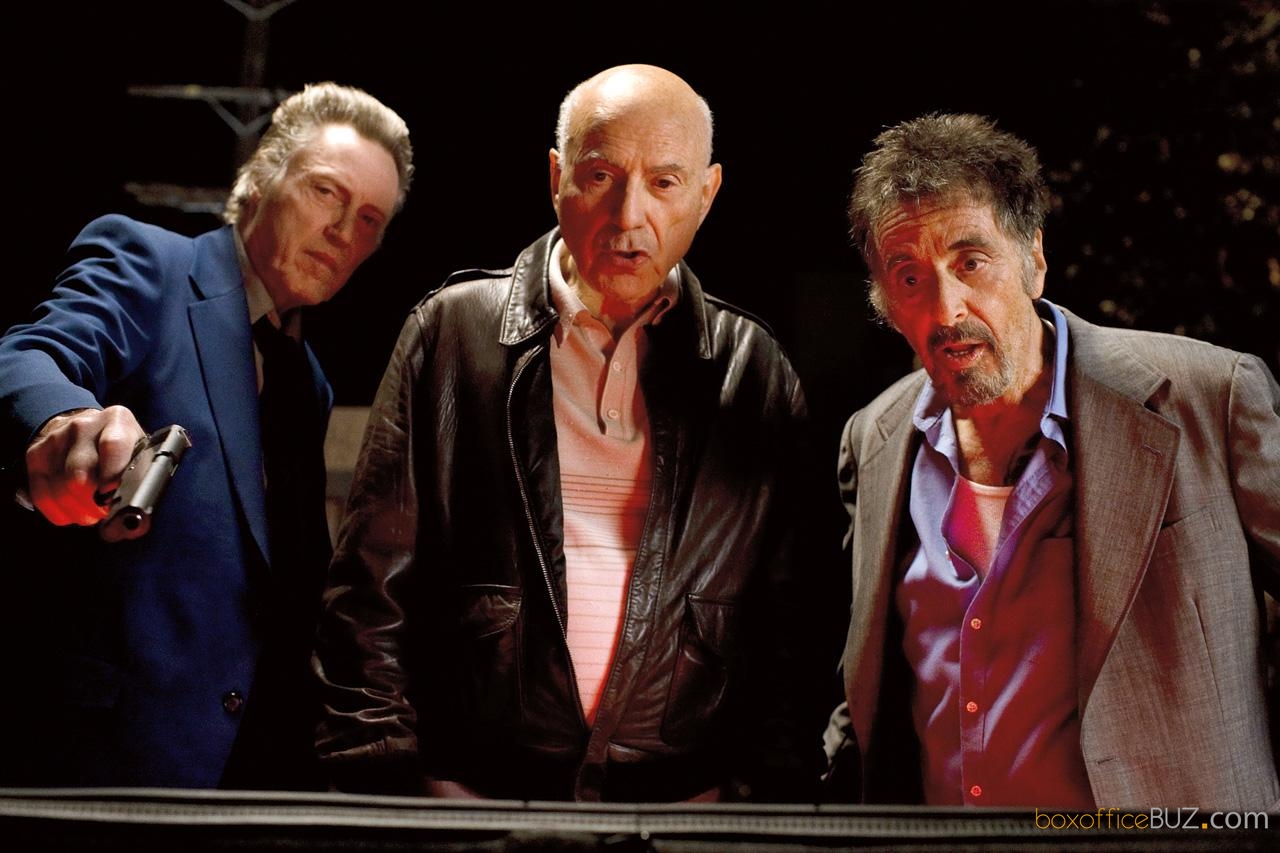
What do you get when you take three Oscar® winning powerhouse actors like Al Pacino, Christopher Watken and Alan Arkin and put them together with the wrong director? Utter failure. Oh, I’m sure some critic will be nice and give Stand Up Guys something higher than two stars out of respect for the cast, but he’d be putting his readers in jeopardy of wasting their time – Not even worth watching on TV.

Stand Up GuysDirector Fisher Stevens, known for his comedic acting, has several documentaries and short films under his belt as a director. Unfortunately, he was not able to ignite his powerful cast. Instead he created the worst film I’ve seen in some time. Stevens is a great actor in his own right, but might want to leave directing to others. Although, I will give him credit for bringing Allison Timlin on board to play Watkins’ granddaughter.

broken cityBroken City was another star-studded waste of time. It broke my heart to watch Russell Crowe and Mark Wahlberg play characters in a story that couldn’t get off the ground. I partially blame director Allen Hughes for this broken film, but mostly because I know his talent from the movie The Book of Eli. This thriller lacked the intensity and bored the audience to the point of discussing Crowe’s hairstyle over the weak twists in the story as they exited the theater.

The Book of Eli was officially directed by the Hughes Brothers (Allen and Albert), so it might be possible they make a better team than individual directors. Outside of his television work, I believe Broken City was Allen’s first solo directing gig.

Stand Up Guys and Broken City are two films that are worth missing in the theater and on TV. But for most, the names will still draw them into wasting hours of time in hopes of enjoying the talent, regardless of the story or poor direction.