 Storyman Webb Smith invented the storyboard in the 1930s, while working at Disney Studios. The team developing Walt’s stories used 4X8 sheets of plywood that were covered in material. Pictures sketched on paper were pinned to the boards in the order of the story. The artists found it much easier to follow the boarded story than reading and rereading a script.
 The practice is now industry wide and is used for the creation of commercials, stunt scenes and special effects. Writers have also found the boarding aspects of the process to be helpful in plot development and story structure. Even documentarians and some editors use a form of storyboards to help manage their workflow more efficiently.
Vision boarding, the latest form of storyboarding, has entered the corporate world with gusto. Entrepreneurs are using the boarding process to create visual dashboards and workflow charts. Marketing communication departments have also made adjustments to the concept by creating infographics.
Storyboards are successful because they make it easier for a person to visualize a pitch or a set of data in tables. The greater the need for fast information or a form of previsualization, the more popular storyboards become.
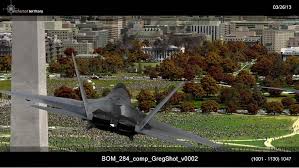 Limited animation was developed from storyboards and the testing of commercials generated the motion driven preview of storyboards. The process is called animatics. Even the blockbuster motion picture teams are now using previz (an animated form of storyboarding).
 Since a picture is worth a thousand words, corporate employees are starting to take sketch notes during meetings. Sketch notes allow the employee to take more memorable notes that don’t pull the individual’s attention from the speaker. And of course, it’s a descendant of storyboards.
The more our world shifts from a literary to a visual society, the more popular infographics and sketch notes become. And, since the practice was formulated decades ago, it clearly is compelling and stands the test of time.
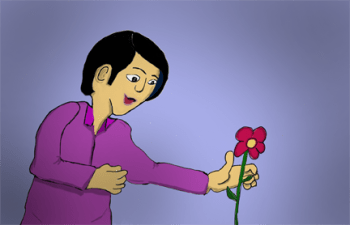 My picture of a character reaching for a flower is symbolic of anticipation. It causes the audience to wonder if the character will caress the flower and smell it, or pick it. Both possibilities have been seen before, so how it’s done tells a new story worth watching. Not knowing how things will play out causes the audience to anticipate several possibilities. The audience is compelled to continue watching to see the outcome.
 The flower being picked confirms the anticipated event to be new or what was expected, but done in a fresh way. It also raises another question. The audience now wants to know what will happen to the flower. The action drives the viewer to seek the end of the scene. They need to know if the character will hand the flower to someone, put it in a vase, toss it over the neighbors fence, or maybe realize that picking it killed the poor thing and grieve. The possibilities are endless.
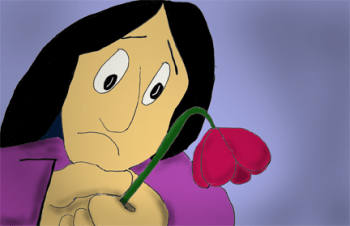 The aftermath isn’t always negative, but many times it is, except for the midpoint and climax of the film. But it’s always emotional so the audience shares the experience and desires to know more about what will happen in the next scene. Many writers speak about this moment being critical to moving a story forward using a consequence or conflict.
 Persuading a person to your perspective is ascribed to two forms of communication: argument and story. Film is considered both an argument and story. Yet, many independent filmmakers never try to argue their point to a mass audience or share a story that’s saturated in experience and meaning. They simply want to create something cool, which adds to society’s noise.
 CJ's Corner