Abandon the Faith-Based Label

The Passion of the ChristThe Hollywood Reporter printed a guest column by Mark Joseph. The title was “’Faith-Based’ Is Not a Film Genre” and the column opened with a quote from the author. “I’ve come to the conclusion that the label is both untrue and unhelpful, and should be abandoned.”

Joseph is a marketing expert that has worked on the development and/or marketing of 40 films including, The Passion of the Christ, The Chronicles of Narnia, and, I Am David. His article opposes his success stories being lumped together with the myriad of bad Christian movies that, based on its significant volume, created the Faith-Based label.

I understand his concern, since in Hollywood the term “Faith-Based films” is synonymous with “bad Christian movies.” When a producer approaches a distributor and presents a Faith-Based movie for consideration, the distributor immediately tells him not to expect any revenue from the limited release. The shoddy contract supports the statement.

However, Joseph’s article fails to mention that marketing must label product in order to properly promote it. This is why most Oscar winning films are genre specific, which is easier to market. It’s not possible to market a film that is “sort of this and kinda like that, with a twist and biblical message.”

The real problem isn’t that the large number of Faith-Based films forced Hollywood to group the movies into a single label that preempts the audience with its consistently bad storytelling and lack of artistic prowess. The real problem is that those making Faith-Based films actually think what they’re making is high quality and they see no reason to improve their craft.

I’ve had several opportunities for funding that required us to add a handful of elements to satisfy the religious investor, which would destroy the storyline and artistic expression of the film. Having a history of making artistic story rich shows for most of the major networks, my integrity didn’t allow me to accept the terms and I  suffered the consequences of not being funded. Several fund worthy friends had similar experiences and we’ve all scratched our heads wondering why bad films are funded and great ones are not. This made me wonder if investors don’t truly understand how great story in film impacts society.

Some producers tried to re-label their Faith-Based films for a general release, but because the investor funded elements were present, the story was destroyed and the film received the unwanted label – Forcing the film’s failure in the marketplace. Not only did the films fail as predicted, but it also positioned the producers as liars.

Today, the only way to avoid the Faith-Based label, which alerts the audience that a film is bad, is to make a universal story picture for the general public. As for the biblical message, it can be lightly salted into the theme, where based on the art form, would have the greatest impact. This will also push the film to the largest number of people in each market, placing the message before millions worldwide.

Now, I understand that there is one other way to change the Faith-Based label to something meaningful that draws a new audience, but it requires those who participate in Christian films to judge and categorize each film’s actual level of quality. Bad films have to be called bad and compared to the good films, which must be called good. And, for those few great films, they too must be called great. Then, and only then, will marketers be able to clearly articulate the differences between Faith-Based films, recreating the meaning of the label.

Since most Christians don’t want to suggest that a film carrying a message from God is bad, this will probably never happen. Instead, the funds will eventually dry up and Faith-Based films will disappear until the next generation can find a way to make the films self-sustaining. I’d wager a guess that within the next ten years a new breed of filmmakers would step into the limelight and change the definition of Faith-Based films forever.

Copyright © 2015 by CJ Powers
The Identical — Review

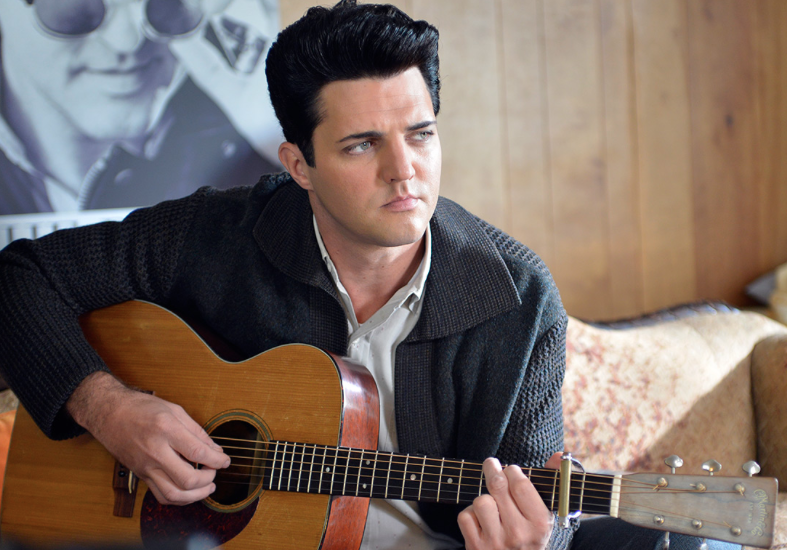
The IdenticalThe Identical (Blu-Ray/DVD release on January 13, 2015) is almost a “what if” story about Elvis and his stillborn twin. It’s almost a concert film. And, it’s almost a historical biopic. But, regardless of the scattered focus, the film delivers a story of an unknown twin that finds his true calling in life rising from the ashes of all that held him back.

But that’s not all.

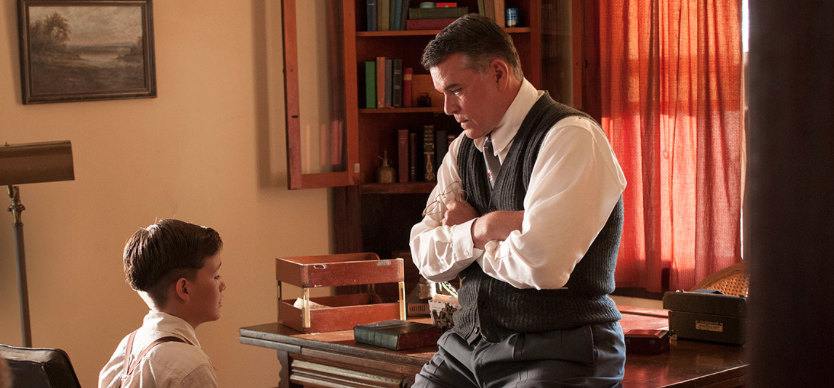
The film is also about the father, an itinerant preacher, who adopts the twin and pushes his son to follow in his footsteps, but later sees the importance of having his son be what is right for him to be.

The story was a little confusing with dual storylines taking turns driving the film, rather than one being the subplot of the other. This directorial choice made me wonder if the film was actually about the father, especially since by the end we see a transformation in the father’s approach to wanting what’s best for his son.

Ray LiottaThe character that changes always gets our full attention and the twin never changes. From the beginning of the film he is a part of music and by the end of the film he is a part of music. Even when his father attempts to push him away from music, he secretly stays connected to it. He is always about music and continues to be about music through to the end.

Blake Rayne, a real life Elvis impersonator, is The Identical. But, in real, real life he is Ryan Pelton, as Blake Rayne is a stage name – the name he uses in the film industry. Now, if that isn’t weird enough, Rayne plays Drexel Hemsley (An alternate world Elvis) and Ryan Wade (The alternate world’s living twin of Elvis). Of course, by the climax of the film he learns that he is actually Drexel Ryan Hemsley.

I was also confused by two messages that the audience is left with:

1. It’s a man’s job to learn to stand in his truth.
2. If He (God) is in your dreams, nothing can stand against them.

The first theme is the most powerful, as the story follows Ryan’s struggle to learn who he is and his purpose in life. As for the second theme, it seemed to be added to help attract the faith-based market.

Instead of Ryan chasing a specific dream, he works hard to clear his confusion in life, surrounds himself with music, and attempts to figure out who he is – A great singer who’s not in it for the money. But, this storyline is greatly overshadowed by Ray Liotta’s (Goodfellas, Hannibal) performance as the father/itinerant preacher.

Once you get past the muddiness of who the picture is about, there are a lot of positive things in the movie worth enjoying.

The picture spans five decades and was well crafted by Production Designer, Keith Brian Burns (2 Fast 2 Furious, Abduction, Four Brothers). Each period is well executed and takes you back to the look and feel of the era. The only exception is the polished nostalgic look with new props and mint vintage cars instead of things carrying different ages of use and dirt.

Ashley JuddAshley Judd (Divergent, Double Jeopardy, A Time To Kill) commands attention on screen as the perfect woman who keeps her house together, while respecting everyone in it regardless of their mistakes and passions. Her performance even changed subtly to fit each decade’s style.

Seth Green (Austin Powers, The Italian Job) and Joe Pantoliano (Bad Boys I & II, Daredevil, The Matrix) gave great performances with new characterizations that added humor to the story. Erin Cottrel (Little House on the Prarie, The Janette Oke “Love” films), gave an inspiring performance as Wade’s wife that would cause any man to love her for eternity.

While I can understand why critics slammed the film for its muddied story, it’s worth a closer look now that its being released on video January 13, 2015. The best part of the Blu-Ray/DVD release is the 85 minutes of bonus content including a making of program, behind the scenes footage and deleted scenes. Hearing from the key players and what they tried to put into the movie was eye opening and made the film worth watching a second time.

97 Films Recommended by The Church of Satan

Good vs. EvilI’ve written about Christian films in recent days due to the surge in religious films. Some of the films are great redemptive stories for the general market, while others are preachy and intended for the like minded. In both cases, the genre has been difficult to define by production companies and distributors.

Another type of film is also getting attention and it too is hard to capture within a defined genre. Some refer to the films as satanic, while others suggest it is atheistic. In reality, it’s a genre that is more based in “I-theism.” In other words, pictures about a main character that is his own “god” – A person that establishes his own subjective hierarchy with himself as the most valued.

The films might also reflect the strong satanic beliefs followed like:

  • All forms of emotions from love to hate are healthy.
  • Ritual is for self-psychotherapy to purge any sense of conscience or emotion that hinders intelligently moderated pursuit of pleasures.
  • The prime dictate in lifestyle indulgence, over compulsion.
  • Animalistic tendencies and concern for the ecosystem.
  • All forms of sexuality between consenting adults.
  • Societal laws that regulate behavior so that a maximum of freedom might be obtained.
  • Justice where the punishment fits the crime when working to maintain an equitable society.

BladerunnerWhile some of this content sounds fine, like justice fitting the crime, it’s the intent and overarching goal that is self-centered. The purpose of the philosophy is to help individuals take their place, as god in their own lives, which is what Satanism is all about. That’s right, for most followers, it’s not about worshiping the devil, but self.

The list of films is one that Magus Anton Szandor LaVey felt best guided a viewer toward Satanism. While most of the filmmakers didn’t know they were leading their audience down a religious path, some were purposeful in their intent.

There was no surprise reading some films from the list like Rosemary’s Baby, Bedazzled and Svengali. Each of those films had overt satanic elements. However, some films were more of a surprise including classics like Citizen Kane, Metroplois, and Fantasia. Even more shocking was the family friendly film Willy Wonka and the Chocolate Factory.

The List of Films is NOT to be FearedWhen it comes to films like All the King’s Men, Bladerunner, The Comic, Pennies From Heaven, The Private Files of J. Edgar Hoover, Scarface (the original), The Stepford Wives, and Westworld, I can understand how the elements appreciated by the cult can be gleaned from the films, but that doesn’t make the film itself a satanic film.

Depicting a characteristic or a human flaw doesn’t make a film satanic, for it’s how the element is demonstrated that determines how it is received. For instance, a film about a wretched sinner that is later redeemed doesn’t make a film satanic, yet it might get the title onto the list.

Intent and performance determines if the content is redeemable or not. A selfish character may make the list, but if the film depicts a realistic cause and effect of his life, followed by a redemptive outcome, the film does more for the soul than a story steeped in teachings that convince audiences to put themselves above others – Looking out for number one.

The bottom line is that the list of 97 films is not to be feared or avoided, as some would conclude, but can bring an awareness of perspective.

A film like Les Misérables depicted a character that may have made a more recent list. But the story’s realistically portrayed redemptive qualities were far more powerful, putting the character’s original life choices in perspective with love, humility and gracious generosity that overcomes all. There has never been a better movie depicting the redemptive qualities of grace and mercy. Yet, some avoided the film for fear that their character would be negatively affected.

Redemptive stories will always overcome self-centered stories. Call it good versus evil, or God versus Satan, if you will. But, most of the highest grossing films of all time are stories of redemption. And, most satanic films do poorly at the box office.

What’s your view? Can a filmmaker unknowingly make a Satanic film?

Copyright © 2914 by CJ Powers