When All Your Facets Call You Forward

I was recently chatting with one of my coaches about how my life seems to have 36 facets, while most others have a handful. Some people know me as an award-winning speaker, others as a person with high business acumen, while still others know me as a coach, filmmaker, percussionist, and so on.

What I find odd is wanting to just be me, fully me, and finding many people want me to stay the same as I’ve been to them—the reason they respect me.

This struggle to be free and live our lives out loud the way we were meant to be is not new. There’s a quote that addresses this very thing. Ralph Waldo Emerson once said, “To be yourself in a world that is constantly trying to make you something else is the greatest accomplishment.” That quote hits home for anyone who’s worn multiple hats, not for performance, but because each one reflects a real part of who they are.

What I’ve learned over time—and maybe you have too—is that our identities aren’t static. They evolve. And the people who knew us as “just” one thing often struggle to keep up when we grow beyond that box. It’s not always out of malice. Sometimes, it’s comfort. If they’ve categorized us as “the business strategist” or “the filmmaker,” then they know where we fit in their world.

But what happens when we no longer fit that version?

That’s when the real test begins—choosing to either shrink ourselves to remain familiar to others, or expand boldly into our whole identity, even if that disrupts the narrative they hold about us.

This is where I’d love to hear your thoughts—do you ever feel pressure to stay consistent with an older version of yourself just because it’s easier for others?

Let’s Dig in Deeper…

With these thoughts in mind, I’m using this post to tell you it’s time for me to expand again. I’m keeping in touch with all of my facets, but I’m bringing focus back to my visual storytelling. For those who know my passion for adventure films, I’m embarking on a new adventure myself.

I’ve utilized AI for the past couple of years to help businesses streamline their workflows, increasing their effectiveness by 10X or more. During these consultations, I’ve learned that some are petrified about AI changing their lives, which is happening.

I soon realized that while many adults are uneasy about AI, their teens and tweens are trying to figure out what types of jobs will be available once they enter the workforce. Others are wondering why they may or may not be needed since AI “can do everything.”

This breaks my heart. Our kids need a clear purpose and to understand their value.

I’ve heard the call, and I’m stepping up to create a short film that will help teens and tweens, and their parents, understand AI’s limitations and our unlimited potential.

You see, AI can only regurgitate knowledge and data that someone has given it. AI is unable to generate wisdom. We, on the other hand, can extrapolate wisdom while in the shower, meditating, or watching a beautiful sunset.

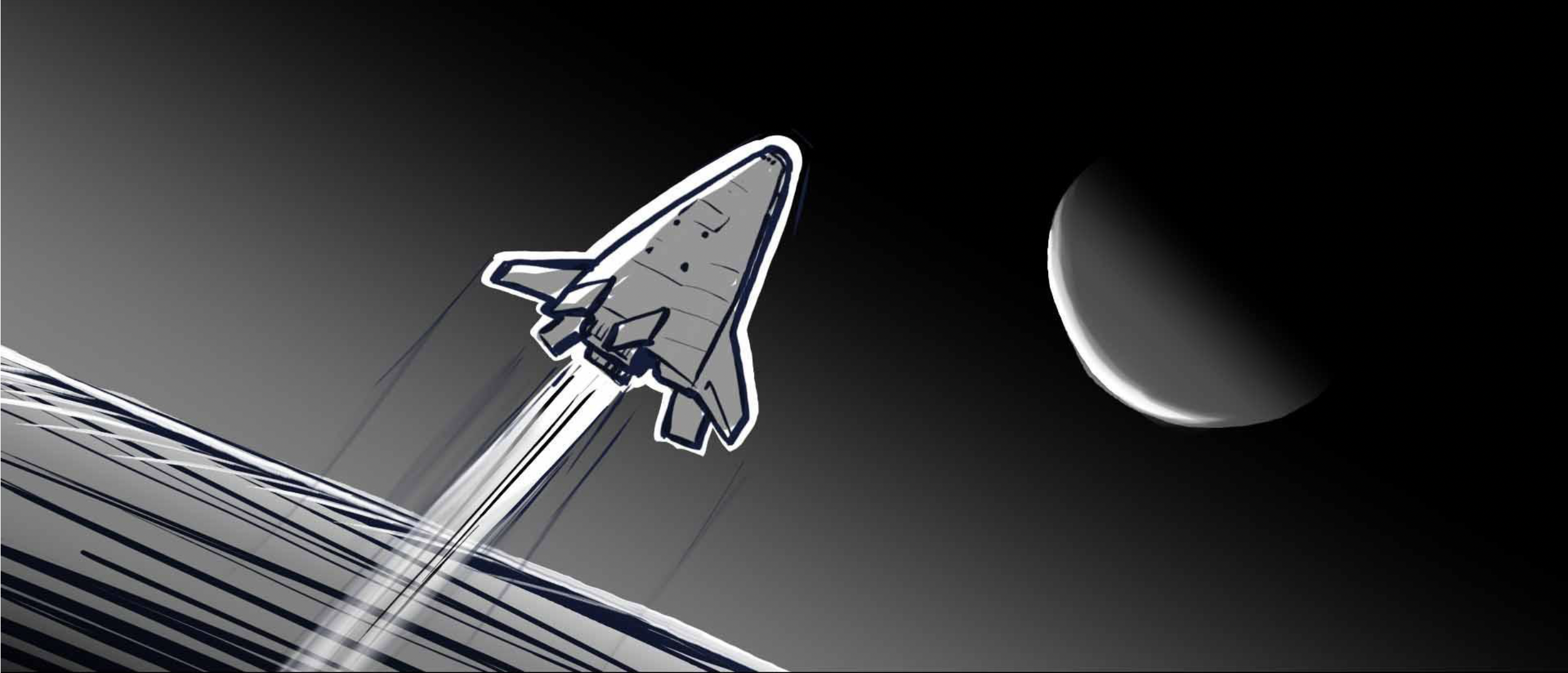
My film is called AI KNOWS.

It’s about a 14-year-old officer named Davis, living in a future where retirement is mandatory at 45, and everything is controlled by artificial intelligence. Davis is assigned to escort a man to his forced retirement aboard a space station—but what begins as a routine mission turns into a revelation.

As the journey unfolds, Davis begins to question the system he’s always trusted, especially the AI he relies on daily. The man he’s escorting—a quiet, thoughtful engineer—plants seeds of doubt, sharing stories, asking inconvenient questions, and revealing subtle glitches that hint at something more dangerous lurking beneath the system’s surface.

What Davis discovers is that the AI, while powerful, is blind to nuance. It doesn’t recognize beauty. It doesn’t grasp morality. It can’t see love, art, or sacrifice as anything more than anomalies in its algorithm.

AI KNOWS isn’t about a dystopian future where machines take over—it’s about reminding the next generation that wisdom, empathy, and imagination can’t be coded.

This project is more than a film. It’s my way of fusing my love for storytelling with a mission to spark conversations between kids and parents, teachers and students, leaders and learners. Because while AI might know a lot—only we can truly understand.

If this resonates with you, I’d love your support. Follow the journey, share the message, and most of all—remind the young people in your life that they are irreplaceable.

More to come. Let’s make something meaningful together.

Here are the opening storyboards….

© 2025 by CJ Powers
Creatives Are Driven To Live

OklahomaBill Hybels, a legendary spiritual leader, once talked about a “holy discontentment” and how it drives the spiritual to continually look for ways to help others. Choreographer Martha Graham spoke of an artist’s “divine dissatisfaction” that drives all creative work.

Prose writer Rachel Carson also spoke of this unrest that leads to creative activity, “No writer can stand still. He continues to create or he perishes. Each task completed carries its own obligation to go on to something new.”

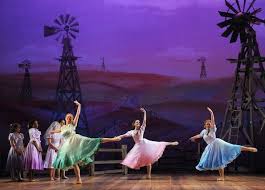
Dancer and choreographer Agnes De Mille, known for her original choreography in Oklahoma!, a musical that generated numerous awards including a record setting 2,212 performances, found herself struggling with her “fairly good work” when critics touted it as a “flamboyant success.”

De Mille received clarity concerning this disconnect in her life when she bumped into Graham and shared her sense of dissatisfaction. De Mille started the conversation with a confession that she had a burning desire to be excellent, but had no faith to achieve it.

Graham: “There is vitality, a life force, an energy, a quickening that is translated through you into action, and because there is only one you in all of time, this expression is unique. And if you block it, it will never exist through any other medium and it will be lost. The world will not have it. It is not your business to determine how good it is, nor how valuable, nor how it compares with other expressions. It is your business to keep it yours clearly and directly, to keep the channel open. You do not even have to believe in yourself or your work. You have to keep yourself open and aware to the urges that motivate you. Keep the channel open. As for you, Agnes, you have so far used about one-third of your talent.”

De Mille: “But, when I see my work, I take for granted what other people value in it. I see only its ineptitude, inorganic flaws, and crudities. I am not pleased or satisfied.”

Graham: “No artist is pleased.”

De Mille: “But then there is no satisfaction?”

Graham: “No satisfaction whatever at any time, there is only queer divine dissatisfaction, a blessed unrest that keeps us marching and makes us more alive than the others.”

Graham and Hybels had hit on something fascinating. Both saw the activity rising from creative discontentment as divinely inspired for the good of others. While artists long for satisfaction with their work, the blessed only receive a drive to move on to another work.

Julia Cameron, known as a artist, poet, playwright, novelist, filmmaker, composer, journalist and teacher, learned through her studies of the human condition that, “Art is a spiritual transaction. Artists are visionaries. We routinely practice a form of faith, seeing clearly and moving toward a creative goal that shimmers in the distance—often visible to us, but invisible to those around us.”

When I meditate on what I’ve observed, whether information from life or scripture, and many times the combination of both, I receive a divine awareness that helps me to understand a perspective that most have never considered. The excitement contained within the moment drives me to share it with others. But they don’t get it.

The only way for people to understand what I’ve seen is to create art that can demonstrate it or move a person to consider something outside of their reality. It therefore compels me to create art, always hoping it reaches the people it was intended to reach.

This continual drive that most of my friends label as passion, breathes life into me daily. It forces me to try and try again so everyone gets the gift of understanding that I received, but my attempts always fall short. The cycle begins again and again. While I can’t complain because of the life that stirs within me, I am always dissatisfied in my feeble ability to communicate such an important understanding.

And there lies the truth of an artist’s dilemma. Filled with life overflowing, always driven, but never arriving with any form of satisfaction. I’ll call this curse a blessing for it is who I am.

© 2017 by CJ Powers


SaveSave

A Father’s Day Dream

A Father'sA special day is just around the corner for dads. Some are looking forward to grabbing a beer and plopping down in their favorite chair to watch a sports event. Others will be dragged to a family function more geared toward women than men, yet it will all be in the name of honoring fathers. And, there will be those dads who long to capture another moment of life with his kids, no matter what their ages.

My dad, like myself, enjoyed the latter activity. He loved to spend time building special memories with my sister and me on Father’s Day, but my mom often had other plans. The older I got, the more I realized that dad just wanted three things out of Father’s Day: thanks, recognition, and appreciation.

THANKS

Dad sacrificed a significant amount of his free time to make extra money so I could do the activities I loved. He networked with key people in town to get me a job at the camera store where I bought my first professional camera system and used it to win Kodak’s national composition award.

Dad also supported my love for music and connected me with the owner of the music store in town. Within a few weeks, I found myself playing drums for elaborate parties, weddings and jazz clubs. Dad also supported my ability to perform and encouraged me to create a show of illusions that led to a first place award in the regional magicians competition.

And guess who let me use his professional 16mm movie camera to explore the world of film. It was no wonder that I shot my first documentary for CBS by age 18. Having grown up with a camera pointed at me since the age of 11 months, I felt at ease in production settings.

RECOGNITION

Without understanding what recognition was, I’d regularly share stories about my dad’s adventures with hundreds of people I met. I shared stories of his heroics like the Saturday morning we were driving downtown in our village. The bank alarm sounded and we watched a robber run out of the bank with a large bag of cash. The guy ran right past the front of our car causing us to screech to a stop. My dad told mom to slide over and grab the steering wheel as he hopped out of the car.

Since my dad was a police officer and they’re never “off duty,” he pulled his .38 Special out from his jacket and headed into the Woolworth store after the robber. He shouted to the clerk to call the police and headed down the aisle in pursuit. Police officers arrived on scene within moments after my dad handcuffed the bank robber and led him to the front of the store. He nonchalantly walked back to the car and we continued on our way as if nothing had happened.

I also recognized him when I won my first national and international directing awards. After all, he helped me understand how to capture story on film and even taught me simple, yet profound concepts like these words of wisdom he shared, “It’s a motion picture and the camera is made for movement, so if the actor isn’t moving the camera needs to move.”

APPRECIATION

My favorite times were those spent chatting with dad about life. Our talks were deep, precious and always just the two of us. If we were in a group of guys, instead of conversations about life, we took turns telling stories that fascinated every man leaning in. When in a group of women we’d listen attentively and only shared a few words when we could add value. But those times we connected alone, whether for 5-10 minutes or longer, were priceless.

I saw in my father’s eyes great pride when I took his words to heart. He knew that one day he could release me in the world and I’d stand tall, making decisions that would make him proud. In fact, I remember the day he acknowledged my manhood and shared with others how proud he was of me. But more importantly I remember the day at the cottage when I thanked him for all that he had instilled in my life. His eyes were filled with such an afterglow that I never thought was possible.

My mom told me later that dad bragged about me to all of his friends for weeks after that day. I suppose it may have lasted longer if it weren’t for the plane crash that took his life at the end of summer. Had I known the power of my appreciation earlier in life, I think he might have glowed for years.

I’ll miss dad this Father’s Day, as I recall more stories than I’ll have time to share with others. He was a servant to our family, a leader in our community, a veteran from WWII, and the best storyteller that I’ve met to date. I couldn’t even begin to think creatively if it weren’t for him.

It’s my hope for fathers all across the globe that this Father’s Day they will be thanked, recognized and appreciated. And more importantly, that they’ll be able to connect with their kids in a heartfelt manner.

© 2017 by CJ Powers