Abandon the Faith-Based Label

The Passion of the ChristThe Hollywood Reporter printed a guest column by Mark Joseph. The title was “’Faith-Based’ Is Not a Film Genre” and the column opened with a quote from the author. “I’ve come to the conclusion that the label is both untrue and unhelpful, and should be abandoned.”

Joseph is a marketing expert that has worked on the development and/or marketing of 40 films including, The Passion of the Christ, The Chronicles of Narnia, and, I Am David. His article opposes his success stories being lumped together with the myriad of bad Christian movies that, based on its significant volume, created the Faith-Based label.

I understand his concern, since in Hollywood the term “Faith-Based films” is synonymous with “bad Christian movies.” When a producer approaches a distributor and presents a Faith-Based movie for consideration, the distributor immediately tells him not to expect any revenue from the limited release. The shoddy contract supports the statement.

However, Joseph’s article fails to mention that marketing must label product in order to properly promote it. This is why most Oscar winning films are genre specific, which is easier to market. It’s not possible to market a film that is “sort of this and kinda like that, with a twist and biblical message.”

The real problem isn’t that the large number of Faith-Based films forced Hollywood to group the movies into a single label that preempts the audience with its consistently bad storytelling and lack of artistic prowess. The real problem is that those making Faith-Based films actually think what they’re making is high quality and they see no reason to improve their craft.

I’ve had several opportunities for funding that required us to add a handful of elements to satisfy the religious investor, which would destroy the storyline and artistic expression of the film. Having a history of making artistic story rich shows for most of the major networks, my integrity didn’t allow me to accept the terms and I  suffered the consequences of not being funded. Several fund worthy friends had similar experiences and we’ve all scratched our heads wondering why bad films are funded and great ones are not. This made me wonder if investors don’t truly understand how great story in film impacts society.

Some producers tried to re-label their Faith-Based films for a general release, but because the investor funded elements were present, the story was destroyed and the film received the unwanted label – Forcing the film’s failure in the marketplace. Not only did the films fail as predicted, but it also positioned the producers as liars.

Today, the only way to avoid the Faith-Based label, which alerts the audience that a film is bad, is to make a universal story picture for the general public. As for the biblical message, it can be lightly salted into the theme, where based on the art form, would have the greatest impact. This will also push the film to the largest number of people in each market, placing the message before millions worldwide.

Now, I understand that there is one other way to change the Faith-Based label to something meaningful that draws a new audience, but it requires those who participate in Christian films to judge and categorize each film’s actual level of quality. Bad films have to be called bad and compared to the good films, which must be called good. And, for those few great films, they too must be called great. Then, and only then, will marketers be able to clearly articulate the differences between Faith-Based films, recreating the meaning of the label.

Since most Christians don’t want to suggest that a film carrying a message from God is bad, this will probably never happen. Instead, the funds will eventually dry up and Faith-Based films will disappear until the next generation can find a way to make the films self-sustaining. I’d wager a guess that within the next ten years a new breed of filmmakers would step into the limelight and change the definition of Faith-Based films forever.

Copyright © 2015 by CJ Powers
Over Cranking Beauty Shots

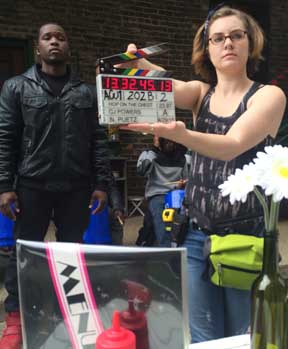
Hop On The ChestHave you ever wondered why the female lead always looks stunning during an intimate heartfelt moment in a Hollywood film, but not in an independent film? It has a lot to do with the type of director at the film’s helm – artistic or techie.

There are several clear distinctions between the talents of a director with a techie background and one with an artistic background. The techie guy typically has a history of using technology to glitz up his film with cool imagery, while the artistic guy focuses on story, emotions, and rhythm.

When its time for close-ups, the techie director uses the same lighting and lens set up as he used for the medium shot or the over the shoulder shot. The artistic director hates to see the camera team just tighten the shot and instead suggests a significantly heightened set up to explore the feelings of the moment.

One of my favorite techniques is over cranking the film. Or, for those with a video only background, shooting more frames per second. The technique is ideal for those heartfelt moments when the director needs a beauty shot or a graceful close up of the female lead.

I tend to ask my DP (Director of Photography) for a more muted lighting set up to help enhance the over cranking shot. The softer lighting bends gently around the woman’s face and diffuses any harsh shadows that would otherwise be present. A soft filter might also be added to the camera to makes sure that there are no sharp edges.

If the camera is shooting at 24 fps (frames per second), I have the DP bump it up to 32 fps. This increases the clarity of the shot, while taking off the rough edges. By clarity, I’m not referring to sharpness of image, but rather the avoidance of extra blur inherent in capturing motion.

More importantly, by adjusting the speed by about 30% the image is captured with more detail within the actor or camera’s motion. This translates to an image with a great fluid movement during playback. Directors all have their own set of percentages for capturing a beauty shot, but I’ve found mine to be emotionally effective for all audiences.

In post-production, the 32 fps are then played back at 24 fps to generate a far more graceful shot of the female lead than was present on set. That ideal graceful cinematic shot can only be achieved with special diffused lighting, slightly soft focus lens and adjusted speed of film with readjusted playback.

The techie director tends to avoid the elaborate set up for the beauty shot by just slowing down the image in post. However, he can never get close to capturing that same dreamy and graceful effect that comes from the in camera artistry created on set by the camera team.

This one difference between a techie director and an artistic director is magnified when considering all the other techniques artists master that techies rarely learn.

The cumulative sum of these parts or production elements is what creates the uniquely different look between a Hollywood produced picture versus an independent picture. This focus on detail requires time and a budget for talented people in order to capture the beauty shot that everyone remembers from the film, but can’t explain why.

Copyright © 2015 by CJ Powers

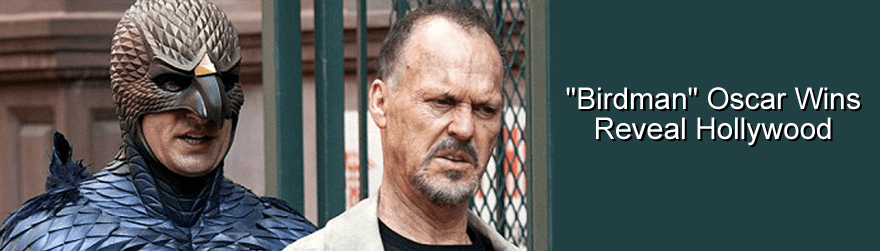
“Birdman” Oscar Wins Reveal Hollywood

birdmanBirdman took home Best Picture, Best Director, Best Original Screenplay and Best Cinematographer. None of which were a surprise to me due to the current condition of the industry.

Hollywood was taken over by marketing and business years ago, which led to the increased production of sequels and hero films based on existing comic books. This movement generated large box office dollars due to the economy and Americas’ need for hope to survive. Unfortunately, it was at the cost of creativity.

The industry is filled with creatives who are desperate for something new and unique. They want to take artistic chances and explore their craft, but always fall short by being put on films that regurgitate the same stories over and over again.

How many times can they reboot Spiderman? Sony is working out the kinks on the third version with yet another actor at the helm.

Only 15% of the top 20 films last year were original movies. The rest were either sequels, adapted from books or superhero stories. For a group of creatives that thrive on making their own stories, three films out of the top 20 is a far cry from what would satisfy an artist.

I can’t imagine what it would be like for a painter to spend the majority of his day painting ad campaigns and only 15% of his time expressing his feelings on canvas. Nor can I picture a writer penning marketing copy for most of the day and only write a handful of words to fulfill his need to express himself within a novel.

But, some how people in the movie industry have become slaves to the business and marketing teams who have no need to express anything creative.

It’s no wonder that the past three years the top Oscars have gone to stories about the industry and the pains or the forced draught of the artists themselves. Birdman speaks volumes about the desperation for a story that is new, creative and risky. It’s a revelatory film of artists’ desperation in the new Hollywood.

Film is not about money. It’s about story and artistic exploration. Yes, some have turned it into a moneymaking factory, while others have forced it to be about political messages, but in reality it’s just another art form of heartfelt expression.

This awkward set of circumstances is what drove the majority of filmmakers to create independent films rather than studio films. It’s also what is driving filmmakers to macro studios and away from Hollywood. Even the best writers are leaving film studios for independent television projects that will be released in non-standard venues.

Today, if you want a great star to be in your movie, all you have to do is come up with a risky story that’s never been done before. If it has a character that has great depth and unique qualities, you’ll be able to get any true artistic actor to sign on. After all, Hollywood is bored and desperate for something new to explore.