
Why My Phone Hides Everything but Fitness Apps at the Gym

How AI helped me create an automatic Gym Focus—and reclaim my attention.
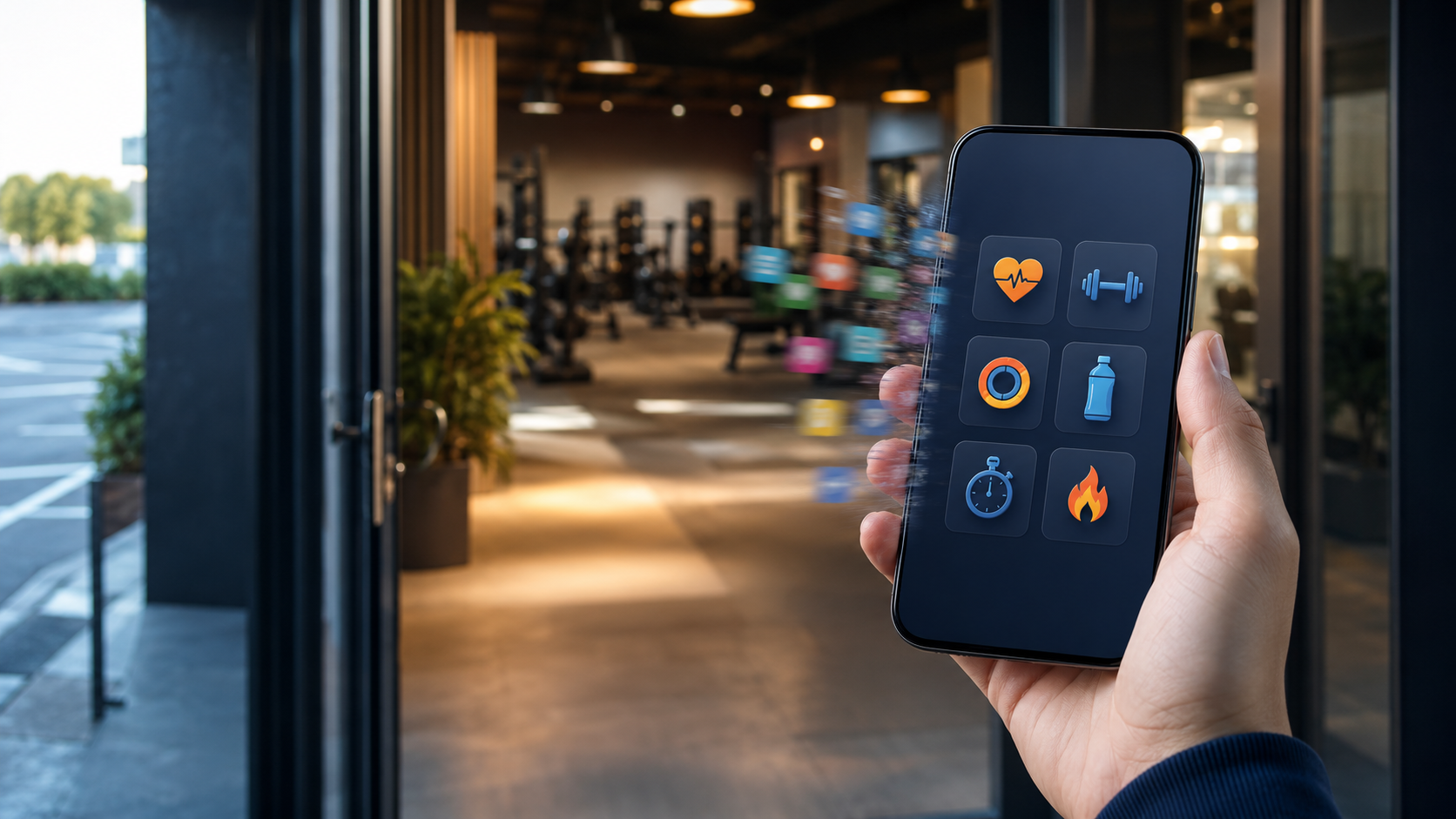
This morning, I got into my SUV, and my navigation app offered a route to the gym. It knew my habits.

When I pulled into the gym parking lot, my phone notified me that it was time to focus on exercising. Nearly every app page on my iPhone disappeared, leaving me with only one page of exercise apps.

When I finished my workout and left the parking lot, my phone revealed all my app pages. My focused gym time had ended.

I don’t need to remember to turn anything on. I don’t have to reorganize my phone before every workout. The change happens automatically because I used AI to help me build a location-triggered Gym Focus.

But the most important part of this story isn’t what AI did.

It’s the decision I made before asking AI to do anything.

The Observation

Working out is a priority for me—but priorities need support from our environment.

I’ve noticed that our phones treat every part of our lives as if it belongs on the same screen.

Work apps sit next to entertainment apps. Fitness apps compete with email, social media, news, shopping, and games. Every time we unlock our phones, hundreds of options ask for our attention.

And unless we intervene, everything is presented with roughly the same level of importance.

While many of my apps play an important role at some point in my life, most aren’t useful at every moment.

When I enter the gym, I don’t need my entire digital life displayed in front of me. Nor do I want to be overwhelmed by the vast number of apps on my phone. I only need a small set of tools to help me exercise.

That got me thinking. What if my phone could automatically adjust its priorities when mine changed?

The Real Problem

The problem surfaced at a pool party I attended yesterday. One guy complained about the number of minutes he spent searching for the right app. He said he went through this search a few dozen times each day.

The problem: every app was being given equal access to his attention.

We often blame ourselves for becoming distracted, but our phones are designed to keep presenting us with choices. Even if we open the phone with a clear purpose, a notification, an email badge, a news alert, or a familiar social-media icon can lead us somewhere else.

At the gym, that could mean interrupting a workout to check something that could have waited until I finished.

I didn’t need more discipline. I didn’t need to go without certain apps. I needed a better environment.

The Investigation

I looked into Apple’s Focus feature, which can do much more than silence notifications. It can also determine which Home Screen pages appear while a particular Focus is active.

A Focus can be scheduled to turn on at a specific time, when a certain app opens, or when you arrive at a specific location. Apple also allows related apps and widgets to be organized on a dedicated Home Screen page. Apple explains the Focus scheduling options here and the page-customization concept in its Home Screen guide.

The capability already existed. I simply didn’t know how to turn it into the experience I wanted.

So I asked AI for help.

AI had previously given me step-by-step instructions for building a Shortcut. On another project, it even wrote an AppleScript for me. For my gym setup, I explained the outcome I wanted and used AI to walk me through the necessary steps.

This is one of the most practical ways to use AI: not merely to provide an answer, but to translate an intention into a workable process.

The Framework: Group, Focus, and Trigger

AI becomes far more useful when we can clearly explain what we want or need. Using the example of my phone’s Gym Focus, I created three decision points to guide what I provide to AI:

  • Group: Which apps belong together for a particular activity?
  • Focus: Which app pages should appear—and which should disappear?
  • Trigger: What event should activate and deactivate that environment?

For my gym setup, the answers were simple:

  • My fitness apps belonged together on one page.
  • That page should be the only one visible during a workout.
  • Entering the gym parking lot should activate the Focus.
  • Leaving the parking lot should return the phone to normal.

Once I had made those human decisions, AI could help me handle the technical setup.

The Story

The real test came the next day when I drove to the gym, especially since I had forgotten that I had set up the automation.

I entered the parking lot, and my Gym Focus activated. The regular pages on my phone disappeared, leaving the page I had created for fitness.

My phone hadn’t become less powerful. It had become more appropriate for the moment.

After my workout, I got into the car and headed home. Once I left the location, the Gym Focus turned off, and all my regular app pages returned.

Nothing had been permanently deleted or rearranged. My phone had simply changed environments with me. And just in case, I had a button to override my automation if necessary.

The Gym Focus is a small automation, but it solves a very human problem: the difficulty of protecting our attention. You can bet I started thinking about other priorities that might need the same kind of automated protection.

The Practical AI Step

You, too, can use AI to build systems that protect your priorities. Start by writing down the different roles your phone plays in your life.

You might create groups such as:

  • Fitness
  • Work
  • Writing
  • Family time
  • Travel
  • Church or personal reflection
  • Evening relaxation

Next, decide which apps belong together on each activity page.

Then ask AI something like:

Depending on the task and the access you give it, AI may be able to help create part of the automation. In other situations, it will serve as a patient technical guide while you build it.

Either way, review the instructions before making changes and test the automation in a low-risk situation.

The Human Takeaway

AI didn’t decide that exercise mattered to me.

It didn’t decide which apps supported that goal or which distractions interfered with it. It didn’t decide that entering the gym parking lot should mark the transition into workout time.

I made those decisions.

AI helped translate them into a system.

That is the kind of relationship we should be building with technology: humans determine the priorities; AI helps remove the friction.

Your Challenge

Look at the apps on your phone and ask:

Which apps naturally belong together—and during which parts of my day should the other apps disappear?

Create one dedicated page. Choose one Focus. Select one conditional trigger, such as arriving at a location, opening an app, or reaching a certain time.

Then ask AI to help you build it. Don’t use AI simply to help you do more.

Use it to help you focus on what matters.

Copyright © 2026 by CJ Powers

A Well-Worn Pair of Gym Shoes

The New Year is coming, and my buddies and I chatted at the gym. The conversation was a repeat of the last three years. We made a gentleman’s bet on the week in February when the cramped gym space would return to normal for the remainder of the year.

Every year, we watch a large group of hopefuls show up to get stronger or skinnier within an unrealistic time frame. Most of them refuse to socialize with those of us who work out regularly, so we feel awkward when compelled to point out their unsafe technique. Most of them overdo their workout or strain something, so we’re not surprised when they seldom return.

These patterns appear the first week of every January and vanish sometime in February, with a few March exits. According to statistics, 80% of New Year hopefuls abandon their fitness goals by February, a pattern we’ve observed firsthand at the gym. The guys always speculate on why those desiring change don’t explore the option each of us selected.

We all started in a simple manner that made it impossible to fail.

We also slowly stacked new habits on top of our working habits, celebrated small wins to drive up dopamine to keep us going, and gained pointers from the guys who showed up daily. Let me break these four things down for you.

Start Small and Keep It Simple

When I first stepped into the gym, I didn’t know anyone, and I was intimidated by those who had more toned muscles than me. Part of me wanted to show off my incredible leg strength, which during my school years allowed me, a 160-lb. guy at the time, to drive 325-lb. guys off the line of scrimmage in football.

However, if I focused on my leg strength, people would soon learn that my upper body strength was below average. So, I considered what might work for my current state of disrepair.

I didn’t aim to deadlift my body weight or run a 5K in a month. Instead, I started with what felt achievable: 15 minutes on a slow treadmill and a few minutes on a single set of weights. Small wins built my confidence and, over time, my stamina.

The trick?

I didn’t overwhelm myself with a massive overhaul. Instead of trying to change everything at once, I picked one action that felt manageable. Once I felt comfortable with my small, consistent actions, I realized I could build on them by tying new habits into my routine.

Stack Habits for Lasting Success

You might think habit-building sounds like another buzzword, but trust me—it works. The gym regulars all found ways to tie new habits into their routines. It was as simple as putting my gym clothes and shoes in the bathroom next to the vanity the night before. That small act made it easy for me to head to the gym first thing in the morning. One of the guys always tossed his gym bag in the car the night before, so when he got off work, he headed straight for the gym.

The secret is linking a new habit to an existing habit.

My nightly ritual of washing my face and brushing my teeth was extended to include placing gym clothes next to the vanity. By linking a new habit to a standard habit, we reduce the obstacles that might hinder our choice to improve ourselves.

Celebrate the Small Wins

Here’s where the magic happens—dopamine. When you hit a small goal, like running for two minutes longer or lifting two pounds heavier, that little rush of accomplishment keeps you returning to the gym.

Dopamine is a neurotransmitter in the brain often referred to as the “feel-good” chemical. It plays a critical role in our motivation, reward system, and ability to experience pleasure. When we achieve a goal, no matter how big or small, our brain releases dopamine, creating a sense of satisfaction and accomplishment.

This chemical reward encourages us to repeat behaviors that lead to success or joy, making it a key driver for habit formation and goal-setting. By celebrating small wins, we can leverage dopamine to build momentum, sustain motivation, and focus on long-term objectives.

While dopamine is incredibly motivating, it’s essential to manage it wisely. Negative self-talk can interfere with your brain’s release of this reward chemical. Instead, focus on celebrating each win to keep your motivation strong.

All you need is a 1% improvement over yesterday’s exercise to celebrate and release dopamine. Just do one more push-up, increase your dumbells by 2 lbs., or walk around the track one additional lap. Then celebrate the win.

We forget that if a person improves their efforts by 1% each day for an entire year, their improvement by the end of the year would be 36X your starting point. This exponential growth demonstrates the power of consistent, incremental progress over time. So feel free to start as simply as you can.

Learn from Those Who Show Up

One of the best-kept secrets of sticking to fitness is learning from those already doing it. The regulars at the gym aren’t just there to show off; they’re a goldmine of knowledge. I didn’t hesitate to ask for tips or advice when I started. Most people are happy to share what’s worked for them because they remember being a newbie, too.

By leaning on the experience of others, I avoided common pitfalls and even picked up new techniques that kept things fresh. If you’re new to something—the gym, saving money, or building relationships—don’t underestimate the power of learning from those who’ve been where you are.

Besides, most regulars are kinder than those you might see at work. They are worth getting to know.

The Simple Step of Shoes

For months, a friend—let’s call him Mike—talked about returning to the gym. He’d tell me every Monday, “This is the week I’ll hit the gym.” But Monday would roll into Friday, and he’d have an excuse. Too tired. Too busy. Too something.

Mike, like so many of us, wanted to start but felt overwhelmed by the idea of doing it all at once. That’s why I challenged him to focus on just one small step. “Don’t think about the whole gym thing. Just set your gym shoes and clothes out the night before. That’s it.”

Mike laughed at me because he was capable of so much more. I told him to appease me and do it. The following morning, he saw his gym shoes and clothes sitting out and thought, Well, I might as well put them on. Once dressed, he figured he could at least drive to the gym. Walking through the doors, he still didn’t have a plan. So, he picked one machine—the rowing machine—set the timer for 4 minutes and started.

That seemingly insignificant step turned into something bigger. He repeated the process. His clothes were out, so he dressed and headed to the rowing machine. He added a minute to the timer and saw another day of success. A month later, he added weights to his routine. And by the end of three months, Mike was thriving and had increased his stamina.

Mike swears it all started with those shoes. Setting his shoes and clothing out the night before created a chain reaction of small, achievable actions. Over time, those actions became habits that transformed his life.

What’s Your Shoe Moment?

What is that super simple step that is so easy you feel foolish if you don’t do something more?

That simple step is not foolish at all. Maybe it’s setting out clothes, packing a healthy snack, or checking out those unexplored options you’ve never considered but work for others. It might be the very thing that will bring you enough success to motivate you and your following steps.

So, as my buddies and I wait to see how long the gym crowds stick around next year, I hope you’ll be the one who stays. Start with your ‘shoe moment’ tonight, and let that simple habit guide you to your desired transformation.

Copyright © 2024 by CJ Powers