Abandon the Faith-Based Label

The Passion of the ChristThe Hollywood Reporter printed a guest column by Mark Joseph. The title was “’Faith-Based’ Is Not a Film Genre” and the column opened with a quote from the author. “I’ve come to the conclusion that the label is both untrue and unhelpful, and should be abandoned.”

Joseph is a marketing expert that has worked on the development and/or marketing of 40 films including, The Passion of the Christ, The Chronicles of Narnia, and, I Am David. His article opposes his success stories being lumped together with the myriad of bad Christian movies that, based on its significant volume, created the Faith-Based label.

I understand his concern, since in Hollywood the term “Faith-Based films” is synonymous with “bad Christian movies.” When a producer approaches a distributor and presents a Faith-Based movie for consideration, the distributor immediately tells him not to expect any revenue from the limited release. The shoddy contract supports the statement.

However, Joseph’s article fails to mention that marketing must label product in order to properly promote it. This is why most Oscar winning films are genre specific, which is easier to market. It’s not possible to market a film that is “sort of this and kinda like that, with a twist and biblical message.”

The real problem isn’t that the large number of Faith-Based films forced Hollywood to group the movies into a single label that preempts the audience with its consistently bad storytelling and lack of artistic prowess. The real problem is that those making Faith-Based films actually think what they’re making is high quality and they see no reason to improve their craft.

I’ve had several opportunities for funding that required us to add a handful of elements to satisfy the religious investor, which would destroy the storyline and artistic expression of the film. Having a history of making artistic story rich shows for most of the major networks, my integrity didn’t allow me to accept the terms and I  suffered the consequences of not being funded. Several fund worthy friends had similar experiences and we’ve all scratched our heads wondering why bad films are funded and great ones are not. This made me wonder if investors don’t truly understand how great story in film impacts society.

Some producers tried to re-label their Faith-Based films for a general release, but because the investor funded elements were present, the story was destroyed and the film received the unwanted label – Forcing the film’s failure in the marketplace. Not only did the films fail as predicted, but it also positioned the producers as liars.

Today, the only way to avoid the Faith-Based label, which alerts the audience that a film is bad, is to make a universal story picture for the general public. As for the biblical message, it can be lightly salted into the theme, where based on the art form, would have the greatest impact. This will also push the film to the largest number of people in each market, placing the message before millions worldwide.

Now, I understand that there is one other way to change the Faith-Based label to something meaningful that draws a new audience, but it requires those who participate in Christian films to judge and categorize each film’s actual level of quality. Bad films have to be called bad and compared to the good films, which must be called good. And, for those few great films, they too must be called great. Then, and only then, will marketers be able to clearly articulate the differences between Faith-Based films, recreating the meaning of the label.

Since most Christians don’t want to suggest that a film carrying a message from God is bad, this will probably never happen. Instead, the funds will eventually dry up and Faith-Based films will disappear until the next generation can find a way to make the films self-sustaining. I’d wager a guess that within the next ten years a new breed of filmmakers would step into the limelight and change the definition of Faith-Based films forever.

Copyright © 2015 by CJ Powers

Film Marketing Shifts to Becomers

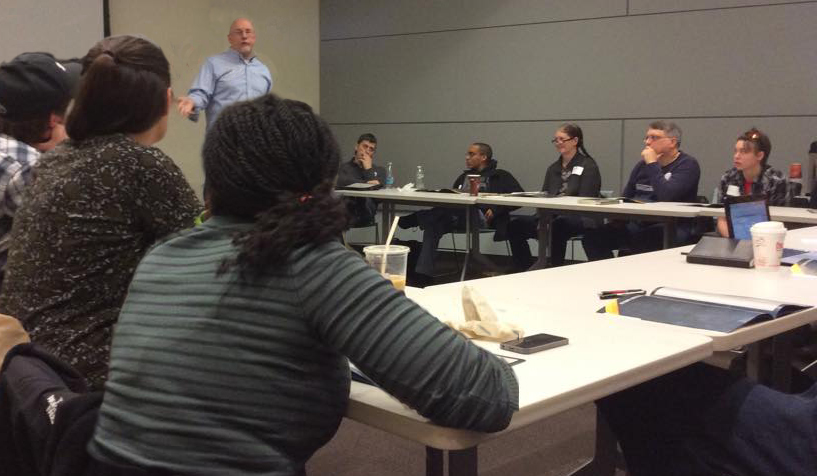
CJ presents workshopLast weekend I taught a four-hour workshop on the 7 Secrets of Impacting a Film’s Story. The room had filmmakers from several genres present including far right Christian and far left LGBT. One of the Q&A topics that came up was all too familiar: Why are faith-based films so bad?

I gave the first obvious answer about how Christian filmmakers focus so much on the message that they leave out the story. I also defined story based on story structure standards:

Action + Emotion = Story

(By the way, to achieve action a film must have conflict, which faith-based filmmakers fear and avoid.)

Then I pointed out the second most obvious answer about how the message must be lightly salted into the B-plot rather than dumping massive doses into the A-plot, as Christian filmmakers love to do – Reducing their audience to a handful of religious Baby Boomers.

I also pointed out that Blue is the Warmest Color, a lesbian film, did a great job of lightly salting their message into the B-plot. The film received great acclaim and touched millions of Millennials internationally.

The filmmakers who know how to structure and salt their message within the story are the ones who will change the future of our planet. Those few, are also on top of the latest marketing trends, while most “Christian markets” are now 12 years behind the trends. It used to be ten years behind, but the latest marketing push for Christian films included 12-year-old techniques.

The “Becomers” are the fastest growing marketing segment within the Millennials. They are the ones now coming into power and will determine the fate of our planet over the next 20-40 years. I have yet to find a single Christian filmmaker who is addressing this group, yet the LGBT groups have been researching and seeking them for the past two years.

The Gen-Xers have dissipated from marketing models and were split. They either ended up lumped in with Baby Boomers or mixed into the Millennials. As a group, they were depowered and only had a short-term presence driving the business market. This resulted in shifting control to the Becomers.

The Becomers are the older Millennials who are currently positioned to change the marketplace in all industries. They are the ones who don’t attend church. They believe in truthful facts, but don’t care about it unless there is a narrative that guides their acceptance of the facts.

In other words, to get them into church required a very different approach that Baby Boomers wouldn’t fund or accept, as it would change their religious experiences. Some pastors created new churches aimed solely at Millennials and grew strong, but those congregations were mostly void of controlling Baby Boomers.

This dichotomy between church groups arises from marketplace conditions and decisions, which is the same issue now driving faith-based films. The Baby Boomers control the budgets, the Christian filmmakers are ignorant about the Becomers, and the combined groups are having fun creating films that don’t impact society. These new films have little ability to stand the test of time based on societal norms.

The trend is getting worse. Baby Boomers are now funding ten times more irrelevant films, while convincing themselves that they are making a difference in our culture. However, the LGBT groups continue to make a smaller quantity of films that make a significant impact in our culture. The differences are limited to how a message is crafted within a story: subtly or overtly.

The “how” can easily change if and when new Christian filmmakers, that understand story structure, step up to the plate. Unless, that is, current Christian filmmakers scare away the audience by promoting one thing, while delivering another – A new common and unethical, yet self-justified, practice.

The key is that the new breed of filmmakers must understand the Becomers and how to market to them. Then again, I have five screenplays written for Becomers and cant’ find any Baby Boomers to fund the projects, so maybe having understanding isn’t enough.

Of course, I’ve been told that if I change the stories to fit the faith-based market I’ll get funded, but then it would no longer attract the Becomers and sway their future to something more wholesome and moral. So, my scripts collect dust and I continually get told that I need to conform to the “right” way of writing screenplays, you know, the way it was done 12-15 years ago.

Wake up!

Those days are over and bringing back old strategies is foolish. Don’t you know the parable about the wineskins? It won’t work. Instead, learn from the LGBT producers who are succeeding at changing our world. They know exactly who the Becomers are and how to reach them. And most Christian filmmakers I’ve met don’t even know the Becomers exist or that they are being given control of the market’s future.

Okay, that’s enough. Let me know if you’re interested in funding a film written for Becomers that will introduce time proven morals into the lives of those coming into power.

The Coming Demise of Independent Filmmakers, or NOT

Short Films Require Set-Up by CJ PowersMega studios are teetering on the brink of collapse based on the ratio of mega hits versus losers they field. The industry is already projecting a downward trend of the comic and action/adventure franchises that generated the rebound for Hollywood over the past ten years.

For the consumer, the blame is focused on increased technologies reducing the price of a high quality theater experience at home compared to the rising ticket prices at theaters. For the artists, the blame falls upon the marketing and business people forcing the creatives to regurgitate franchise installments and sequels over and over again – Driving the creatives to independent projects and “television” (in its latest Internet form), where they can create something new and unique.

Within this setting is the rise of independent niche production companies including, and most notably, the faith-based and horror genres. Today there are tens of thousands of production companies due to easy access to less expensive technologies. Anyone with a wealthy friend can now make a feature length movie.

Unfortunately, this glut of material is turning major distributors away from purchasing independent films, as the vast majority of the films lack great techniques and story structure. The films that can’t get a viewing with a distributor and those that are rejected by distributors, are creating a massive transition to digital releases to niche markets, sabotaging the numbers within existing audience venues.

Since no independent filmmaker has enough fans to perpetuate his products, the need has grown for joint ventures within the independent marketplace. This is closely following the corporate trend of jobs being farmed out to boutique companies that pool their resources from one project to the next.

The companies that are attracting the pros and generating sustainable work, rather than just collecting points for backend payoffs that rarely occur due to creative financing, are expanding into macro studios. This enormous growth is being tracked by studios who plan to infiltrate and take advantage of the new production finance models.

While Orlando was first considered to be the east coast of Hollywood, it evaporated when the economy dropped. This was due to the fact that studios only sent overflow work to Orlando. However, the high risk ventures of big box office mega pictures created additional constraints and forced Hollywood to pick up as many titles as possible without the up front risks.

Everyone, filmmakers included, decided they were capable of making films and created a glut of bad movies. Last year, out of the 400+ horror films produced, less than 50 got distribution deals. Out of the 470+ faith-based and Christian films produced, about 200 were self-distributed and 19 received a major release. The glut of bad movies that distributors had to sort through was on the increase; causing distributors to focus only on companies they can trust.

In other words, the onslaught of amateur films in 2014 made it very difficult for professional companies to start off 2015 with any traction. This trend will continue, as Hollywood knows that only great production techniques coupled with great storytelling is paramount to wide distribution success.

The ramifications will force the professionals to create macro studios and joint ventures in order to consolidate audiences and accumulate enough revenue to cover better techniques and storytelling.

Thanks to a new stream of creative control in cable and Internet television, many macro studios are already in place and waiting for the transition to grow their businesses. Unfortunately, some smaller studios are still trying to make films for the dispersing markets instead of consolidating audiences with like-minded projects.

This shake up is as significant as the one that hit in the late 70’s with the introduction of home video. In the long run, the mom and pop shop studios that survived were the ones who shifted to digital production over film. The ones who held tight to film fell by the wayside.

Over the next three years, production companies that partner on bigger projects will see a great deal of growth, while those trying to keep everything within their full control and low budget will be forced to stay within their niche markets. Horror film companies will be sorted based on the categories of thriller versus blood and guts. Faith-based films will be most likely sorted by denomination.

The companies rising to the top will be limited to higher budgets, production values, great unique stories, and universal appeal. Amateur companies can’t fake these key elements, which is why it will become the differentiator within the world of motion picture production, regardless of release format.