
10 Things to Know before Loving a Creative

Emotions Run Depp within CreativesI came across an article by Justin Gammill that helped me understand there are scores of documents proving that highly creative types think very differently than the average person. They’re hardwired aptitude for the arts generate amazing works that we benefit from. But for their lover, it’s important for them to understand the ten things that come with the creative’s unique mindset.

  1. Mind is Always Working

The creative mind runs at full speed all the time. It allows for spur-of-the-moment fun, but their lover sometimes finds it draining. Creatives also tend to bounce between projects throughout a day. Their lover can seldom keep up and soon realizes they will never be able to control or manipulate the creative into a clear schedule.

  1. Life Takes on Patterns

Creativity ebbs and flows, bringing emotional highs and lows to the creative in regular patterns. To some it might appear to be a manic behavior disorder, but its simply part of the creative process. Their lover must understand that their lows are temporary and bring about a new perspective for the creative, who then ramps up with more ideas.

  1. Need Down Time

While some people assume that many creatives are introverts based on their withdrawal periods, most just need to pull away to deal with their thoughts. The same holds true when chats become limited or quiet. The creative hasn’t lost interest in their lover, but instead is temporarily stuck in his head working through ideas.

  1. Hyper Focused

When hyper focused on a project, the creative can lose track of time and find sleep altered based on his workflow. This can be difficult and frustrating for the lover, as he is ignorant and irresponsible at one point, and brilliant and responsible at another. The lover must remember its part of how the creative is wired.

  1. Emotions Run Deep

Creative people feel everything on a deeper level. What seems like a small thing to the lover could be a much bigger deal for the creative to the point of feeling crushed. The lover must remember that it’s the same passion he uses to create art that expresses love.

  1. Think and Speak in Stories

It takes the creative a lot more words to express his experiences, instead of just saying what he wants to say. This storytelling process ascribes his humanity to what he shares, but can be hard to follow at times for the lover unless she reads between the lines.

  1. Wage Internal Battles

Creatives can take several hours to come up to speed and accomplish a task on one given day and jump out of bed for a project on another. It’s impossible for the lover to slow him down and she soon learns to be patient during the slow times, as surges of activity will quickly show up.

  1. Thrive on Intuition

Creatives rely on intuition over logic due to their intense emotions. They typically go with their gut and are right far more times than logical people care to admit. While lovers might be concerned about what appears to be impulsive tendencies, the creative is actually following his depth of experience and passion.

  1. Struggle with Confidence

Creating for a profession develops second-guessing in all creatives. While some lovers might be concerned about the creative’s need for acceptance, he is typically just seeking to understand the needs of his audience. This comes from the vulnerability of having to wear his heart on his sleeves for the sake of art. This in turn leads to questions about whether or not his work is ever good enough. The lover’s most important role in maintaining her relationship is being supportive of the creative – protecting his heart and ability to continue loving.

  1. Play

Creatives know how to let their inner child play. At times, the lover might think he’s being immature or impulsive, but he’s just being a child at heart. This is an innate part of the creative’s brain and thinking process. The lover has to remember the things that make the relationship fun and playful are the same things that might become frustrating during serious times.

Copyright © 2015 by CJ Powers

10 Directing Techniques that Raise a Film’s Quality (Part 1)

There are over 100 documented techniques that directors develop to master their craft. Independent filmmakers have little patience to develop the skills that delay gratification. This lack of preparation causes poorly managed shoots, fewer artistic choices, bad acting and less coverage.

To avoid the nightmare that generates lower quality films, every filmmaker can improve his preparation by practicing ten directing techniques.

1. Search for Great Stories

There are seven steps to determine if a script is worth shooting. All seven are a part of analyzing the story. By reading a lot of scripts and working through the process of determining which ones are great stories, the director will be able to quickly spot flaws in the next script handed to him for consideration. He will also be able to determine if the flaw can be fixed or if the story should be pitched.

I read and conduct a partial to full analysis on 2-3 stories a month to keep my chops up. This means I read 2-3 stories a week to find the ones worth analyzing. It doesn’t take more than 3-10 pages of reading to know if the story is worth finishing. Those that are worth a full read are considered for analysis.

2. Breakdown Set Pieces

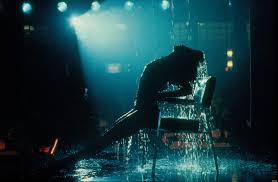
FlashdanceSet pieces are scenes that are designed to have an obvious imposing effect on the audience. They are iconic to the story and many times become culturally iconic. The mere mention of fire trails or light sabers reminds us of Back to the Future and Star Wars. Or, for those who don’t like sci-fi, think about the horse head in bed and a dancer being doused with water, which reminds us of The Godfather and Flashdance.

By finding the 3-8 set pieces in the story, a director can use those scenes to practice the remaining skills. When I first started breaking down set pieces, it took me 45-60 minutes per scene to understand what made those scenes pop. Now, I can find the iconic building blocks within a few minutes per scene.

3. Mark Story Beats

Every script has story beats. Some beats are obvious and some are clouded by subplots or old beats that were never taken out of a previous draft. Some systems recommend 7 beats, others 8, 12, 14, 16, 17, 23, 28, and 32. Each genre tends to have its own rules of beat placement and writing systems. For instance, both the myth and hero processes place varying emotional levels of beats into the story structure.

Marking all the story structure beats within the script gives the director a clear understanding of the story structure, pace, and distortions. Every year I download all Oscar nominated screenplays and search for the beat structure within each story. Patterns within genres and between screenwriters become evident and increase my speed and ability to spot key story elements that must be treated with high importance during a shoot.

4. Mark Entrances, Exits and Power Changes

Well-written screenplays have a shift in power between characters several times within any given scene. Marking each character’s entrances/exits and power shifts, breaks the scene into manageable parts. It also gives the director insight into segmenting the shoot for the greatest on screen emotional impact.

I’ve found that by marking scenes according to the exchange of power, I can instantly tell if the scene will entertain or fall flat. I’ve also found that most scenes that belong in a story, yet are flat, typically have a central element that will play better if the scene is rewritten using subtext. And, those flat scenes that are empty I cut from the story.

5. Notate Verbs for Motivation

With every power shift within a scene the talent needs a new motivation for her character. The best way to inspire the talent is to have a verb ready to suggest the motivation. The verb can be written on the script page with a stronger and weaker verb for back up.

When I’ve suggested to the talent that her character needs to “influence,” I can turn to my back up verbs if she plays it too big or small. For instance, if she plays “influence” too big I can suggest her character needs to “urge,” or if she plays it too small I can suggest she needs to “incite.” By listing all three words on the page, I have immediate tools available for altering a performance should I need it.

To be continued in (Part 2)

Copyright © 2015 by CJ Powers

Story, Structure and Style

© ktsdesign - Fotolia.comMentoring in the moment is an important function of giving back. Not only does it give me an opportunity to help new upcoming filmmakers move up a level in the business, but it also gives me a fresh perspective on what unforeseen industry changes might be slowly approaching.

In a recent conversation with a young female director, I was asked, “What are the three most important things that a director brings to a script?” After answering, I realized that there are indeed three specific things a director brings to a script that determines the success of a film.

STORY

The director brings the story to life by attaching his vision to it. He is responsible for finding the holes in the story and making it whole. He also has the power to determine how it is to be told and position it so the audience can easily understand and embrace it. If the story fails, it’s the director’s fault.

One first time director argued the point with me by suggesting he was not at fault, but his bad writer was to blame. I asked him if he was sure and he confidently defended his position. Once I could see that he put his entire defense into the bad writer, I asked why he chose to make the film when he knew the writing was so bad. His argument proved him to be either a bad director or a foolish one for shooting an unworthy story.

STRUCTURE

The director determines the beats of the film and the visuals that will best depict the story. He is responsible for the development of the characters and the emotional highs and lows of the picture. He even holds the responsibility to inspire his team to perform admirably within the confines of the budget.

An experienced director with 35 plus features under his belt told me that he left the structure of the film to the writers and director of photography, while he focused solely on the actors. I asked him how the film was translated from the page to the screen without his artistic touch. He suddenly realized that he had given up his artistic choices to chance happenings – When the written word happened to match well with the visual depiction.

STYLE

All directors have an artistic style that evolves into something that few can replicate. When a person watches a Woody Allen movie, everyone knows it’s his, even if his name was left out of the credits. Just sharing director names at a party immediately invokes the look, feel and overall style of his work within the person’s mind. Consider Hitchcock, Spielberg, and Nolan. It’s hard to say those three names without seeing their style show up in your mind’s eye.

I recently chatted with an up coming director who was struggling with his first short film. Every time someone helped him improve his story, he lost interest in it and started over. I realized that something about the suggestions must have spun the style of his show within his mind to become something he was no longer passionate about. This was disconcerting since directors always spin the suggestions into their own version that matches their stylistic vision.

Directors put their fingerprint on everything they do. It shows up in the perspective from which the story is told to the structure of its emotional beats to the overall look and feel that is presented. The director owns the success of a film and has the three key tools that place his fingerprint onto his work.

Copyright © 2015 by CJ Powers