
Story — Endow Experience with Meaning

CFD81E31-5644-4EE4-A744-32C46B021CC0Persuading a person to your perspective is ascribed to two forms of communication: argument and story. Film is considered both an argument and story. Yet, many independent filmmakers never try to argue their point to a mass audience or share a story that’s saturated in experience and meaning. They simply want to create something cool, which adds to society’s noise.

The number of independent films, both short and feature, hit its peak and started to decline last year. The main reason for the drop was due to filmmakers leaving the industry. Many cited their inability to “break in” to Hollywood, as the reason for exit. When asked what changed perspective or infused meaning they had hoped to give their audience, none were able to answer. Their response suggested they had all been a part of the noise.

One filmmaker stated strongly that he didn’t make his film to persuade the masses, but instead created it to encourage like-minded people that agreed with his philosophies and ideas. He was asked a follow up question, “What meaning did you attach to the character’s experience for the edification of the audience?” His response was, “I had lots of lessons in the film.”

Having talked to thousands of independent filmmakers, I can tell you that a person who says they’ve put lots of messages in a film, has failed to provide the audience one clear understandable message. The film becomes a conglomerate of noise.

Story is a gift that allows us to turn meaningless activities into art filled with purpose. Without purpose, the artistry of a story fails to appear. It’s only when a single purpose or vision is conformed by artistry that a memorable story survives the test of time. When watching great story, audiences catch and embrace the meaning as their own, much like watching a good friend work through a crisis to success.

If you felt the need to label the outcome, we would call it a testimonial of the main character. After the hero overcomes his greatest obstacle, he is able to testify to his success. He lived through the painful process and not only landed on his feet, but also demonstrated to the audience a solution they can implement in their lives as well.

In other words, stories that stand the test of time are those that show a main character who attaches meaning to his or her experience. It is also a story that is easily shared with the masses because of its universal appeal. Whenever meaning is attached to a character’s activities, the story is of great interest to all viewers.

One benefit of losing filmmakers who don’t endow their experiential stories with meaning is the reduction of noise in the market. The less noise producing filmmakers, the easier it is for audiences to find the filmmaker who produces great stories.

Copyright © 2016 by CJ Powers
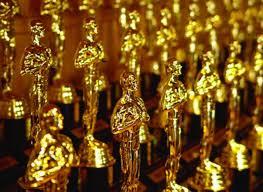
 

Don’t Boycott the Academy Awards®

Academy AwardsTwo factions are digging in their cleats to push their political agenda to the masses. One group suggests the Oscar® nominations must be more diversified. The other group suggests those receiving nominations did so on the merit of their work, not their skin color.

Side arguments have also risen suggesting that blacks shouldn’t complain, but instead “improve their craft to get nominated.” Still others suggest that “if you don’t like segregation, then close down the BET network.” More political strikes come from those suggesting it’s “the studios fault for not producing enough ‘black’ material.”

The arguments continue to divide the once unified art form, sending more professionals to television. Most shows are made with a universal audience in mind, but some are now suggesting that more “all black films” must be made. Diversity is now requiring more segregation for equality. Oh, the ebb and flow.

Everyone in the industry knows that audiences determine what films are made. If they support Star Wars to the sum of billions, then sequels will follow. If they don’t support the independent art film, then fewer art films will be made.

On average, white male actors dominate the box office. White females come next and then black men. The list continues through all nationalities, races and known orientations. It’s not rocket science. For some reason black actors like Denzel Washington (6 Oscar® Nominations and 2 Oscar® Wins) can draw a large audience of all races, while Tyler Perry (Zero Oscar® Nominations) draws a smaller mixed audience and a larger black audience.

Female leads draw fewer viewers than men, unless they happen to be Angelina Jolie or Jennifer Lawrence. Why? Because men and women both like watching men on screen and fewer men and women like watching women on screen. If you want people of color to have more lead roles on screen, you need to give the audience incredible talent to change their minds about what they prefer to watch.

Three factors can create a green light project: talent, money and distribution. But, only one factor can determine a film’s success: the audience. Whoever can build an audience can make whatever film-starring vehicle they want, but it doesn’t mean it’ll be award winning.

As for the Academy, it’s open by invitation to those who do great work for a universal audience. Those who create niche films typical don’t get invited. Why? Because they don’t reach a large enough audience for the Academy to notice them. That’s not to say the Academy doesn’t try to award great filmmakers who practice outside of the universal audience segment, they do with best short film and documentary categories.

The Oscars® are the best of the best based on wide distribution. The blacks that have won Oscars® in the past deserved it. To suggest that a poorly acted film like “Straight Outta Compton” should get a nomination because they’re black, only weakens the well deserved Oscar® received by blacks in prior years. Yes, Compton’s was a good film (although written by two white guys), but the acting was only up to the caliber of a music video, not an award level theatrical picture.

The Academy doesn’t give everyone a trophy for showing up to set. They keep things extremely competitive to raise the standards in the industry. You have to be “excellent” in the eyes of “all your peers” to win.

Now, some think Will Smith (2 Oscar® Nominations) should have received a nomination for “Concussion.” However, the story wasn’t as powerful as the “Erin Brockovich” story that landed Julia Roberts her Oscar®. While Smith may have performed well, Oscar® is usually associated with great stories.

It takes the right combination of audience, money, talent, story and excellence to land a nomination. And, it takes the admiration of ones peers to cash in the nomination for a win. By sticking a couple music video actors in the nominations reduces the weight the nominations carry among peers. If the nomination means nothing, the win becomes nothing more than political, which kills the awarding of the art form by peers.

Copyright © 2016 by CJ Powers


HAPPY NEW YEAR!

2016At the beginning of every year I like to set a direction for the New Year. My first step in the process is reviewing the previous year. So let’s get started.

Reflecting back on 2015, my 7th year of blogging, I found that the most read posts were not from the current year, but the year I wrote my book – Notes from the Napkin: A Director’s Cut on Filmmaking. That’s not to say my current writings didn’t get a lot of readership, it did. But, the top five most read posts were all written two years ago.

According to the analytics I received, this is the third year in a row that my writing had “staying power.” In other words, what I write would do well in a book that can stand the test of time to some extent. The information or stories are not timely flashes of ideas, but shared thoughts that endure.

There are about 31,000 of you, my dear readers, from 142 countries. You enjoyed all the categories of posts I wrote, but the top two categories were posts on filmmaking and my life experiences. You also passed my posts on to an additional 472,000 unique readers through social media, ezines and republished articles.

These numbers would be hard to grasp if it wasn’t for the encouraging emails I’ve received from so many of you. The personal contact makes all the difference and helps me know who I’m writing to.

Now for 2016…

I’ll take a week or so to figure out what I’ll be writing about this year, but I think it’ll be something I can roll into a book – Just like I did two years ago. And, since the majority of my readers prefer a topic on filmmaking, I’m sure it will have something to do with experiential hands on steps in making a film.

If you have any thoughts on what you’d like me to write about, please make a comment below.

Have a great 2016!