
3 Types of Skilled Movie Directors

DirectorProfessional movie directors make most movies, but few in the audience can discern the difference between which of the three types of directors made the film they watch. The three types of skilled directors are: Technical; Performance; and, Arts & Craft.

Technical Director

Directors fascinated with the technology know how to capture images that look cool and stir the soul. They are most likely first attracted to splash videos before understanding the subtleties of story-based cinema. He or she works well with the crew, but pretty much leaves the actors alone to do their own thing. Sometimes this relaxed process flows from the director’s inexperience, or ignorance of not knowing how to communicate with the actors.

Performance Director

This type of director may have once been an actor. He or she understands the nuances of performance and the depth it can bring to a story. Instead of focusing on the technology, the director spends time with each actor and determines how to draw out the best performance possible. Regardless of the schedule, time is allotted to capture the best performances through coaching, experimentation, and augmented performance technique.

Arts & Crafts Director

This is the rare breed of director who understands the technical and the performance aspects of film production. He or she takes time to work with the actors and tweak their performances, and to help the crew understand exactly what needs to be captured. The director takes these same skills into post-production as well, where he or she represents both the technical and performance sides of the production team in the editing suite.

Most technical directors gravitate toward television where story decisions are made by the producers, head writers, and show runners. Performance directors lean more toward live stage shows. And, arts and craft directors typically thrive in the motion picture industry. Unfortunately, all too often directors are misplaced and find themselves battling to survive, rather than thriving in their ideal environments.

The best combination is for a director to figure out which type resonates within his or her soul and enter the appropriate market. The same holds true with directors that lean toward specific genres. The sports enthusiast director should think twice about making a Hallmark movie, unless he or she is prepared to stretch him or herself creatively.

I’ve directed numerous genres in my life, but I’ve only won highly competitive awards for adventure films. I’ve also won several awards for my dramas, but they came from lesser competitions. In other words, my best combination where I thrive is directing a fun adventure film that’s salted with dramatic moments and humor. That’s not to say I can’t direct other types of stories, I’ve done numerous successful shows outside of my core expertise. But in all honesty they were never on the same level as when I’m paired to an adventure film.

Do you know your favorite director’s core genre?
© 2017 by CJ Powers

Creatives Are Driven To Live

OklahomaBill Hybels, a legendary spiritual leader, once talked about a “holy discontentment” and how it drives the spiritual to continually look for ways to help others. Choreographer Martha Graham spoke of an artist’s “divine dissatisfaction” that drives all creative work.

Prose writer Rachel Carson also spoke of this unrest that leads to creative activity, “No writer can stand still. He continues to create or he perishes. Each task completed carries its own obligation to go on to something new.”

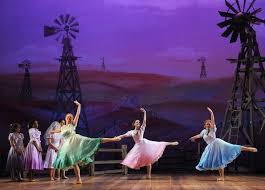
Dancer and choreographer Agnes De Mille, known for her original choreography in Oklahoma!, a musical that generated numerous awards including a record setting 2,212 performances, found herself struggling with her “fairly good work” when critics touted it as a “flamboyant success.”

De Mille received clarity concerning this disconnect in her life when she bumped into Graham and shared her sense of dissatisfaction. De Mille started the conversation with a confession that she had a burning desire to be excellent, but had no faith to achieve it.

Graham: “There is vitality, a life force, an energy, a quickening that is translated through you into action, and because there is only one you in all of time, this expression is unique. And if you block it, it will never exist through any other medium and it will be lost. The world will not have it. It is not your business to determine how good it is, nor how valuable, nor how it compares with other expressions. It is your business to keep it yours clearly and directly, to keep the channel open. You do not even have to believe in yourself or your work. You have to keep yourself open and aware to the urges that motivate you. Keep the channel open. As for you, Agnes, you have so far used about one-third of your talent.”

De Mille: “But, when I see my work, I take for granted what other people value in it. I see only its ineptitude, inorganic flaws, and crudities. I am not pleased or satisfied.”

Graham: “No artist is pleased.”

De Mille: “But then there is no satisfaction?”

Graham: “No satisfaction whatever at any time, there is only queer divine dissatisfaction, a blessed unrest that keeps us marching and makes us more alive than the others.”

Graham and Hybels had hit on something fascinating. Both saw the activity rising from creative discontentment as divinely inspired for the good of others. While artists long for satisfaction with their work, the blessed only receive a drive to move on to another work.

Julia Cameron, known as a artist, poet, playwright, novelist, filmmaker, composer, journalist and teacher, learned through her studies of the human condition that, “Art is a spiritual transaction. Artists are visionaries. We routinely practice a form of faith, seeing clearly and moving toward a creative goal that shimmers in the distance—often visible to us, but invisible to those around us.”

When I meditate on what I’ve observed, whether information from life or scripture, and many times the combination of both, I receive a divine awareness that helps me to understand a perspective that most have never considered. The excitement contained within the moment drives me to share it with others. But they don’t get it.

The only way for people to understand what I’ve seen is to create art that can demonstrate it or move a person to consider something outside of their reality. It therefore compels me to create art, always hoping it reaches the people it was intended to reach.

This continual drive that most of my friends label as passion, breathes life into me daily. It forces me to try and try again so everyone gets the gift of understanding that I received, but my attempts always fall short. The cycle begins again and again. While I can’t complain because of the life that stirs within me, I am always dissatisfied in my feeble ability to communicate such an important understanding.

And there lies the truth of an artist’s dilemma. Filled with life overflowing, always driven, but never arriving with any form of satisfaction. I’ll call this curse a blessing for it is who I am.

© 2017 by CJ Powers


SaveSave

4 Steps to Setting the Value of Your Services (Part 3 of 3)

Continued from part 2.

BusNotesPt3Pricing Sample:

An editor I coached needed to make $50,000 a year. She also needed two weeks of vacation, holidays off, and some personal/sick days to take care of her kids. She was also able to work 6 hours a day, although not in a row, and wanted to make sure that her work time was filled at least 80% of the time. Here is the formula we used to determine hours she’s available to work each year:

((6 hours per day * 5 days per week) * 48 weeks per year) * 80% of time busy = 1,152 hours of work

• The 49 weeks allows for two weeks of vacation, one week of personal/sick time, and five holidays.

Next we had to figure out the hourly rate:

$50,000/1,152 hours = $43/hour (Not taking into account overhead, education, etc.)

Since no one wanted to hire her by the hour, she needed to convert the hourly rate into a per page or per word rate. She determined that there are about 150 words per page and it takes her 5, 10, or 20 minutes per page depending on the type of editing she does. So we developed the following two formulas:

$43/(60 minutes/time per page) = per page rate

per page rate/150 words = per word price

She created two versions of the above prices based on the three types of editing she does, which looked like this:

Editing Type A = $3.58/page
Editing Type B = $7.20/page
Editing Type C = $15.00/page
Editing Type A = $0.03/word
Editing Type B = $0.05/word
Editing Type C = $0.10/word

Now when she gets a call from a potential customer, she asks how many words are in the manuscript. If they tell her 77,000 words, she says, “For type A editing, your price will be $2,310.”

Gone are the days of calculating out how many days are left in the month and her workload. She no longer has to review the physical documents for typeset size based on the font used in the manuscript. She just uses a simple multiplier to calculate the answer. All the other background work is done by the previous formulas to free up her quoting process. And, if she’s a bit faster on a job or two, she’ll find a nice bonus at the end of the year.

End of part 3 of 3.

© 2017 by CJ Powers