

Networking is a term that many fear and avoid yet it’s essential for business growth. The negative connotations rise from the riff raff who prey on people during professional networking sessions. They are in it for themselves and have no comprehension of how powerful maintaining a network of courageous professional relationships are to their future.
Others become disenchanted by the process due to those who immediately escape a conversation the moment they determine you aren’t a potential customer. They are short sighted, not realizing you may know a dozen perfect customers in your circle of influence that will add to their business growth.
After participating in numerous networking events, I’ve learned that there are three things all business people can use from the experience to grow their business.
Great Courage
It takes a lot of gumption to enter a room of strangers. The initial atmosphere causes many to connect with those they already know rather than exploring the unknown. No matter how skilled the person is they find themselves digging deeper into their soul for the strength to put themselves into the vulnerable realm of possibilities.
Courage is not about being comfortable, but about the choice of facing fear head on. We tend to forget that the courageous around us feel just as vulnerable as we do, but they’ve taken the further step of pressing through the fear courageously. It is merely a choice to take action, while feeling exposed.
This ability to choose courage over fear is a tool that will always force a business to land upright regardless of any temporary setback it might endure. It’s also the formula used by most businesses to grow. We know that businesses are either shrinking based on ignorance and fear, or they are growing because someone was courageous enough to take a risk.
Listening Skills
No one cares if you have a solution for their business unless they first learn that you care about them. Taking time to meet someone in a networking environment requires huge listening skills, especially in the din of most rooms designed for socialization.
Selective listening isn’t considered listening at networking events. The person only listening for a potential buying signal is shortchanging their future. Listening is a tool to learn about the person first and their needs second. Anyone who doesn’t take time to first learn about the person will never care about his or her customer.
The old saying about having two ears and one mouth gives us the perspective of talking a little and listening twice as hard, which actually helps at networking events. It’s also an asset for the person that wants to grow their business. A customer that feels like the vendor understands their need will always be a happy customer.
Clarifying Pitches
Noisy rooms force a person making a pitch at an event to be concise and understood at the audience’s level. Using jargon and rambling on about what you do is a sign that you may not know your core business or what value your current customers see in you.
By sharing your core competencies you avoid using stereotypical phrases, which stops the person listening from lumping you into a group of all others that do the same thing. Your razor sharp focus helps the person understand what differentiates you from the others who carry a similar title.
Setting yourself apart from the stampede of cookie cutter functions is critical to be noticed over the marketing noise that permeates the Internet, business market and event space. A quality pitch is one that is all about the uniqueness that makes you who you are, which can’t be replicated by any competitor.
Having the guts to meet new people, taking time to really hear about who they are and what they are trying to accomplish, and fine tuning your presentation so its easy to distinguish you from others, helps develop long term relationships that will eventually pay off.
Networking is about surrounding yourself with quality people and developing those relationships so you can help them when needed and they can reciprocate when you’re in need. These lifelong skills always drive business growth and force us to continually better ourselves for the next great adventure we face.
 The Hollywood Reporter last week featured a story about Christian movies going blue. In 2012, Blue Like Jazz was a Christian film that tested the waters with drugs, sexual innuendo, binge drinking, and foul language. It caught the attention of many supporters, becoming the second largest Kickstarter funded movie at the time.
 Many have asked me to clarify why I’m passionate about creating redemptive stories. The answer rises from the depths of my soul, which I find myself contemplating time and again. The contemplation is not a form of second-guessing, as I’m firm on my position, but it’s about distinguishing the gap between the two.
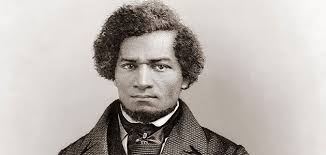 Frederick Douglass, in his Pictures and Progress essay wrote, “Poets, prophets, and reformers are all picture-makers—and this ability is the secret of their power and of their achievements. They see what ought to be by the reflection of what is, and endeavor to remove the contradiction.”
 CJ's Corner