Dynamic Composition

I was thinking about my dad over the weekend and recalled several lessons he taught me in filmmaking. One was about dynamic composition with a moving camera. Composition is something taught heavily to still photographers, but is rarely taught to cinematographers.

Dynamic CompositionDynamic film composition is a tool used by the director of photography to support the director’s visual choices for telling his story. Simply put, it is the composing and recomposing of a shot while the camera or actors are moving. The camera must encompass the same visual rhythm the director implements with the actors, and the duration of each shot must take into consideration the affects of perception it has on the audience.

The cinematographer must start with the understanding that his composition will create an immediate, instinctual response in the eye of the audience. He must also understand that each viewer will have a different ability to understand the composition, thereby affecting the way each viewer emotes in accordance with the story.

Strong composition within a still picture can quickly help a cinematographer understand the audience’s eye movement, just like shooting from a locked down camera. However, movement in this decade is king, and every shot requires a variety of camera adjustments to capture a frame that stirs the emotions.

The following elements impact the effectiveness of dynamic composition:

• A subject moving in or out of frame.
• The anticipation of a subject moving in or out of frame.
• A shift in focus from a background to a foreground subject and visa versa.
• A change in texture from hard to soft focus.
• Strong movement of a subject within a static frame.
• The variation of close-up and long shots.
• The camera following a subject.
• The synchronization of the actors to the camera movement.
• The blocking of the actors to isolate a character within the right focal plane.
• The movement of the camera on a dolly, crane, or jib.
• The camera’s angle to sightlines.

I know I’m missing several examples, but I believe the importance of blocking the shots for significance is understood, especially when the camera is in motion. The more movements the camera or actors execute, the more adjustments are required on focus, framing, and set up.

The duration of a shot and the expectation of the audience also play a significant role in dynamic composition. The longer the duration, the easier it is for the audience to discern the elements of a shot and make certain mental or emotional judgments. The faster the shot, the more instinctual or intuitive the scene has to play out in order to keep the audience focused on the story.

The director works with the cinematographer much the same way a conductor works with a musician. He desires to capture the right mood, feel and emotion in a shot, just as a conductor generates the same from the score. Both seek to bring a unique experience to the audience and a variety of rhythm. The director takes the audience on an emotional journey that heightens at the climax and soon resolves into having had a great motion picture experience.

Visual rhythm seems to be an overlooked art today, while still being the most important aspect of a movie. The films most easily studied to understand dynamic composition includes:

• The Battleship Potemkin
• Ivan the Terrible
• Stagecoach
• The French Connection

While other films can be studied, the above films were built around the impact of its visual rhythm. Some directors take this visual technique beyond the camera and work closely with production designers and costume designers to help them heighten the impact of a story’s emotional pulse. The director owns the depth to which the team will work on the visual rhythm of the story, but the cinematographer is responsible for his team capturing it.

Copyright © 2012 By CJ Powers

Total Recall — Review

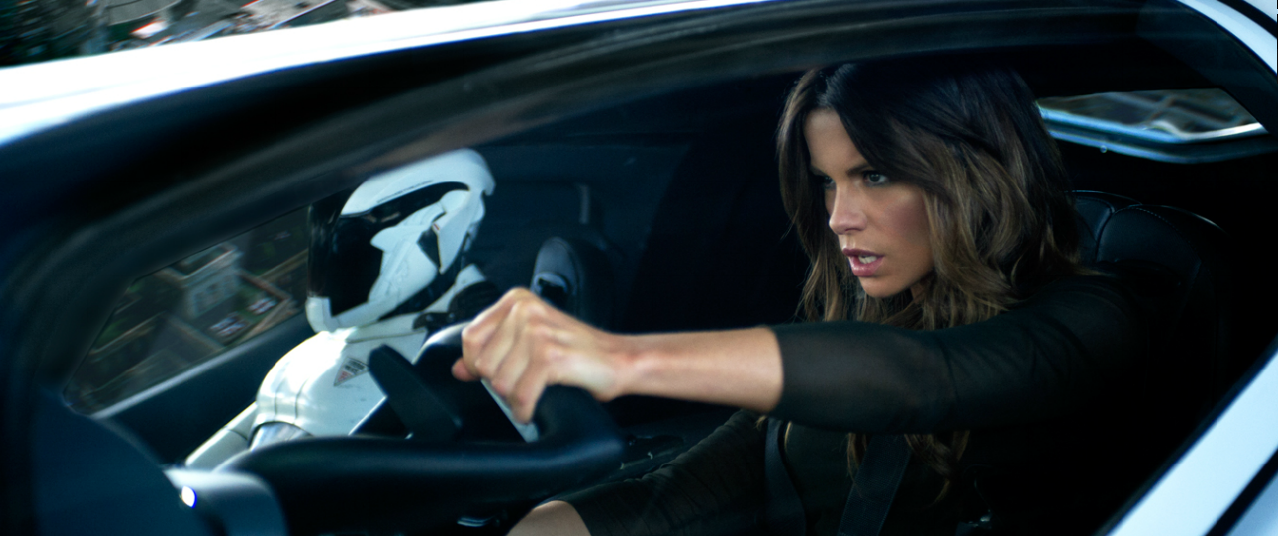
Total Recall has a great action cast headed up with Colin Farrell (The Recruit, S.W.A.T., Miami Vice), Kate Beckinsale (Underworld, Pearl Harbor), and Jessica Biel (Blade, Stealth, The A-Team). The film is a remake of the successful Arnold Schwarzenegger sci-fi story about a man who goes for virtual vacation memories of the planet Mars and unexpectedly finds himself in a harrowing series of events that force him to go to the planet for real, or does he?

CJ Powers Review of Total Recall

This reboot has some aspects of the same story salted throughout the film, but it is a more contemporary version and redesigned as a thriller with lots of robot police chasing after our hero. The world is made up of great CGI constructs including “elevators” that go up, down, and sideways, which made for a great action chase sequence.

Total Recall Review by CJ PowersDirector Len Wiseman did a great job capturing the essence of this mind-bender and created some great sci-fi chase sequences, making the film a unique stand-alone piece. Wiseman is known for his creativity in writing the six Underworld films, which gave Beckinsale a great sci-fi franchise to helm and fueled his own directing of this futuristic thriller with great heart pounding action.

Biel found the perfect balance between a demonstrable romantic interest and explosive action with her character. She was believable even in the most unbelievable situations. Her athletic drive in running away from police robots ordered to kill them was just as realistic as her gentle moment shedding a single tear.CJ Powers reviews Total Recall

Farrell dominated the screen with his local boy charm turning into a dynamic hero and overcoming his near death to save the colony from destruction. Even his subtle facial gestures gave rise to great subtext that drove the emotions of the film during the short quiet moments.

In my mind, Total Recall is a successful film in its own right. While it might disappoint some hardcore film purists with only a few nods to its original, the story will captivate the average goer. Being released in the shadow of Batman is its only drawback for those desiring a roller coaster ride of thrilling adventure. And, with its high-speed action sequences, waiting for it to come out on video will be a disappoint for most, as it was truly designed for the big screen.

Our Self-Evident Right to an Opinion

This week Chick-fil-A was bombarded by the media, mayors and GLAAD members. The controversy started with Dan Cathy stating that he supported the traditional marriage. The media immediately turned the statement around and promoted that Chick-fil-A was opposed to gay marriage. Since those original statements, both sides of the political issue have made far more detailed statements – Taking clear sides on the issue.

Freedom of SpeechThe thing I find fascinating about this event was the amount of people taking a stand concerning the topic. I also found that the emotionally charged words being shared by both sides gave little room for anyone listening to the other’s opinion. But one thing was certain from my perspective, those who are in social power today, determine what is politically correct tomorrow.

Now more than any time in history, the one who controls the media platform of choice and its content, controls our society’s future direction. While the media itself is a neutral tool, it is a platform used to express the views of the content producer, including their perspective on what is right and wrong.

In today’s society, when few are willing to go against the politically correct views of the day, the things that are right and wrong become relative. Historically, relativism led to the demise of several great societies and cultures. It is something that can only be stopped by society trusting in the absolutes of truth. And, truth can only be accepted when presented for consideration to each individual living within the society, whether through one-on-one conversation or through the media.

So, where do we start?

I’d suggest we help others understand the simple truth that they have the self-evident, God-given right to voice their opinion on what is right and wrong. This innate right was a free gift to them when God chose to make us in his image. Since he has the right to share anything he wants with us, we have the same right to reciprocate with him and share with those around us. This right is ours regardless of who dominates the media.

My grandmother shared stories with me from when she was living in the 50’s. She said it was common to have neighbors passionately discuss politics over the backyard fence. When both the Democrat and the Republican had their say, both people understood the other more and were able to respect the words shared. Rarely did anyone’s opinion change, but they were both able to share their views. They also walked away with an attitude of respect for each other, which allowed them the opportunity to do it again on the next day.

Respecting someone’s viewpoint, while not agreeing with it, is one of the greatest acts of love gifted to mankind. This form of compassion can help us demonstrate respect to those we disagree with. It can also help us understand those who are hurting or emotionally wounded from a political issue.

It’s my opinion that everyone has the right to share what is on his or her heart. Unfortunately, society is not always a safe place for sharing. I hope there are people across America who have let go of judgment and replaced it with respect, so they can carefully understand those who are hurting and need encouragement.

And, sharing an opinion in a respectful manner might allow more people to consider our position on issues. But, regardless of the diplomacy or the politically correctness of an idea, no one should tamper with our freedom of speech. We must hold onto this freedom for all, even those who disagree with us.

Copyright © 2012 By CJ Powers
Photo © sval7 – Fotolia.com