
One Hit Wonders

Jim StaffordThe term “One Hit Wonder” refers to a singer who made it into the top Billboard list with one hit song. Some songs had staying power like Jim Stafford’s “Spiders and Snakes” (1974), but most came and went like Rick Dees’ “Disco Duck” or Larry Croce’s “Junk Food Junkie.”

Stafford turned his hit into a goldmine for 24 years at the Jim Stafford Theater in Branson, Missouri. Years ago when I met Stafford, his theater was generating an average of $1MM a month, thanks to its 3,000 seats and great publicity. To accomplish the nice paycheck, Stafford had to perform regularly each year. It’s no wonder that he’s decided to move into semi-retirement.

“I feel like it’s time to try something else,” Stafford said. “You do a show just about every day. The least number of shows I ever did there was five days a week.”

Semi-retirement means he’ll be taking a show on the road this year. It’ll be the first bus tour of his career, which started in the early 70’s. His show will be family oriented, filled with nostalgic songs and the comedic humor he’s known for.

Stafford’s success never took off like many in the industry, but it did allow him to perform and have fun throughout his career. He loved performing and touching the lives of those with similar wholesome and moral entertainment taste. That’s not to say he didn’t face hard times. He did. There were days when he’d play for a small handful of people – One show only had six people in the audience.

While Stafford never had more than one hit, he certainly knew how to entertain. His show had great musicians and singers, wonderful costumes and time for the artist to share a conversation with his audience. No matter what performance you’d attend, whether he was working that day or not, you could always expect great performances and good wholesome fun and laughter.

Keep a lookout for Stafford coming to your area over the next couple of year.
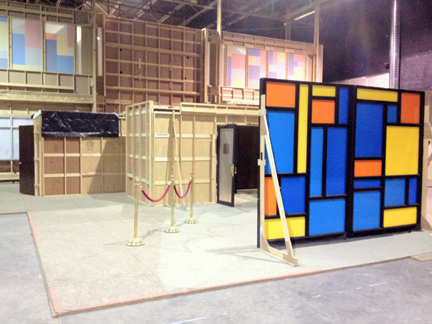
Why I Love Shooting in Soundstages

Playboy_setThe independent film industry is packed with films shot on location. Some say the choice is to shoot a more realistic setting, while others talk about the bottom line cost savings. But I’ve found the advantages of shooting on a soundstage to greatly out weigh the benefits of shooting on location.

Here are a few of my thoughts:

Blood Test

One of the first benefits of shooting on a sound stage is its ability to determine what’s in your blood or DNA. When shooting on a sound stage, if you’re overwhelmed by the sense of boredom and it seems fake looking, then film is not a part of who you are. On the other hand, if you’re charged up by how you can turn the fake into something extremely real and your mere presence on a soundstage excites you, then you’re definitely wired for film.

No Surprises

A set built on a soundstage looks exactly as it was designed and it can have moveable walls to give the camera all the space it needs. It’s also available 24X7, giving the team access throughout preproduction to make sure there aren’t any surprises during the shoot. Some directors also take advantage of the prebuilt sets for rehearsals.

Amenities

Most stages have plenty of facilities, workshops, cafes, and offices. This allows the team to save on travel time and provides various necessities during a long day of shooting. And when the sound stage lacks some needed accouterments, trailers can be located nearby covering every possibility.

Reshoots

I’ve never worked on a film that didn’t require a return to a certain set for pick up shots or a reshoot. If everything is housed in a soundstage, then the set is readily accessible the moment the team is running ahead of schedule. Or, should a rain day hit the exterior schedule, the team can retreat to the stage to keep the shooting schedule within reason.

Flexible Hours

The moment preproduction hits, the soundstage has someone working 24X7. That is something that rarely happens with rented locations, unless it’s a big studio production. With the production company owning full control of the soundstage, work can continue during any hour that might be required.

Control of Environment

Many an exterior set has been built in a soundstage to take advantage of its soundproofing. Not only does this reduce the amount of ADR in postproduction, but it also allows the sound team to capture more realistic dialog. The lighting team also benefits thanks to the catwalks and grids present on the stage. This allows the Gaffer and his team to set up more lights during down times, and gives the team more control over the film’s look, which is constantly altered by the time of day during a location shoot.

Safety and Security

Using a stage provides a certain level of security by reducing the number of passersbys or noisy fans. Some companies set up security cameras to protect many aspects of the production from theft and uses I.D. cards to limit entry to cast, crew, and VIPs. A higher level of security also helps keep information from leaking prior to the marketing team’s release date.

While there are many more reasons for shooting on a stage, I have to mention just one more…It’s fun!

Copyright © 2014 by CJ Powers

The Latest Technology

I laughed when I saw the latest technology satire, as it took me back to the days of 2″ VTR tape. That’s right, when I was just starting out in the business, the industry was moving from 2″ video tape to 1″ for studio work and Betacam for field work. That was about the time when professional Super 8mm film was attempting to take over the 16mm market.

I hope you enjoy a good laugh…