Life from the Perspective of Peas and Peanuts

peasMy youngest daughter and I were laughing at dinner. It was hard to withhold side comments when her son attempted to stick a garlic shell noodle up his nose. My son-in-law thought the little guy’s behavior was a little illogical, because if his son really wanted something up his nose, the peas on his plate would make the attempt easier.

Contemplating any form of logic in that particular moment was worth a chuckle, so we all joined in with crazy banter, trying to one up each other on profound comments surrounding the logical choice of peas.

Soon a deep parallel was drawn to my daughter and son-in-law’s middle school youth group. This morning half of the class shared their contemplation of topics few adults are willing to address. I was amazed at their understanding and openness to discuss such controversial subjects.

The most artistic filmmakers, actors and artists I’ve met all held the same willingness to explore the depth of any topic related to the human condition. In fact, the better the artist, the more impact they made in society by addressing the difficult in the development of their works.

Charles M. Schultz is one artist that I’ve admired for years. The man demonstrated integrity in his art and consistently demonstrated how to salt in morals and ideal behaviors that the masses drank in ever so deeply.

The syndicated Peanuts comic strip was his crown and joy. He spent 50 years entertaining the world with difficult childhood emotions that impacted our society. Two weeks after the assassination of Dr. Martin Luther King Jr., Shultz received a sincere letter from a Mrs. Harriet Glickman, who perfectly articulated the idea of adding a Negro child into the Peanuts strip. She was also astute enough to warn him of the possible ramifications.

Schulz LetterSchultz received thousands of letters every month and rarely heeded suggestions. He was a true artist with many ideas stock piled for future strips. However, he was so moved by Glickman’s suggestion that he responded to her with his concern. Schultz feared any attempt on his part might come across as patronizing and he had no good solution.

Glickman asked Schultz for permission to share his letter with a black male friend of hers by the name of Kenneth C. Kelly and had him write Schulz with two good reasons for including a Negro child in his Peanuts strip. Kelly was also articulate and suggested Schulz introduce the character as a supernumerary that could be developed later into a main character.

But Schultz wouldn’t have it that way. He had something specific in mind to do once his fear of patronizing blacks was defused. Schulz sent a letter off to Glickman announcing that on July 31, 1968 Peanuts would debut Franklin, Charlie Brown’s African American friend.

Unfortunately, Glickman was right about the backlash Schulz would receive, but he handled it well. Larry Rutman, president of United Feature Syndicate didn’t like a scene with Franklin playing with the other children and asked for a change.

Schulz gave the perfect response, “Well, Larry, let’s put it this way: Either you print it just the way I draw it or I quit. How’s that?”

Larry printed it and Peanuts went on to impact numerous societies worldwide.

It only takes one artist with perspective and integrity to change a culture.

Peanuts

Copyright © 2015 by CJ Powers

Creating a Two-Minute Persuasive Story

The vice president of Sales and Marketing approached me a week before the big trade show. He said he’d be joining me for dinner to meet one of my clients on the first night of the conference. He also made sure I understood the severe consequences if I didn’t set up the meet-and-greet.

Just before we sat down for dinner, I introduced my client to the VP. I was surprised to learn that the president of my division was also invited, along with two other executives and their guests. The dinner for three barely fit at the table now set for eight.

Then came another surprise. The president suggested that I start my presentation before the food arrived. Presentation? What happened to the meet-and-greet? The VP instructed me to begin. I wanted to confront him, but didn’t know how, so I dove into an off-the-cuff presentation.

The client, who agreed to a meet-and-greet, not a presentation, quickly interrupted and clarified what I already knew; He couldn’t do anything until he received his next budget in six months.

It was no surprise that I returned to a pink slip back at the office and was promptly escorted out of the building. I never learned if the dinner was a set-up, but I did wonder how things might have been different had I confronted the VP. What would’ve happened if I took two minutes at the table to persuade the executives to understand that the dinner was scheduled as a meet-and-greet, and nothing more?

The most difficult situations I’ve experienced always came down to a defining moment that was either won or lost during a two minute conversation. Being able to present a persuasive viewpoint in two minutes can separate those who are embraced in business from those who are rejected.

Everyone in business can present a persuasive argument by following four simple steps that can be formulated in the moment.

  1. Define a Specific Problem. The more specific the focus, the more plausible it is to correct or improve the stated problem. General comments allow the mind to wander into various avenues of possibilities and it dilutes the prospects of an actual fix. By establishing a focused issue, the train of thought is easily followed and considered – creating a mental or emotional buy-in on the specific problem being discussed.
  1. Share a Similar Experience. By sharing a similar experience that was methodically fixed, associates can easily extrapolate the same information as a probable fix, or at least agree to a certain line of thinking that has the potential of delivering a similar result. This connection positions the associate to consider a new outcome.
  1. Share the Positive Outcome/Benefit. All ideas must be field tested to determine its potential level of success. When positive results occurred consistently using a similar model or approach, associates are more likely to vote for similar trials within the area of problematic concern. Listing the benefits received from a similar experience helps the associates paint a vision for their own testing in order to speed the possible solution and its estimated benefits.
  1. Suggest Similar Action with Specific Problem. Buy-in is typically reached during a two-minute persuasive talk that matches a similar benefit to a known problem, however, without the actual “ask” to take action, the idea will dissolve into a sea of arbitrary comments that preceded the moment. It’s critical to state the needed action and ask for a consensus to move forward on implementation.

The above steps can be shared in two minutes. Defining the problem and getting a quick buy-in will take about 45 seconds. Sharing a similar experience can take 30 – 45 seconds. The benefits achieved will take 15 – 30 seconds and the call to action only takes 15 seconds.

Using these steps during an unexpected meeting with executives will clearly demonstrate great leadership skills, an understanding of the business, and insights worthy of consideration. It may also get you promoted to the task force for follow through – A chance to demonstrate additional leadership skills.

Copyright © 2015 by CJ Powers

Homeless, Carless and Filled with Miracles

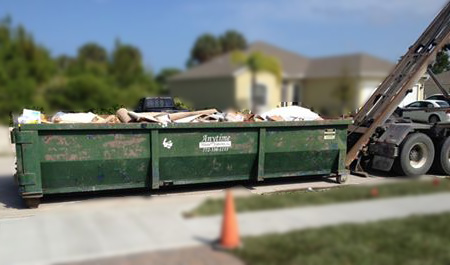
DumpsterThe housing market drop plummeted the value of my residence during the time I ventured back into the film and television industry. Instead of having $45K in equity, I was suddenly under water. If I sold my house, I’d still have to pay an additional $70K back to the bank. Unfortunately, I couldn’t make my mortgage payments and was forced to short sell my house to avoid bankruptcy.

My developing stories weren’t ready to cash in, so finances got very tight. A little project here and there covered my minimum living expenses, but only because close friends and family invited me to dinner often. The generosity of others made a significant difference in my outlook, but I still had to face reality.

If I was living within a tragic story, it was the perfect time for my car to breakdown, which it did. Being without a car in the Chicagoland area was a bizarre experience. Yes, there’s a lot of public transportation, but not at the times of day/night and locations that was necessary for my projects.

The good news is that last week ended on a high note. The house sold and the banks waved the remaining debt – A miracle. I was able to walk away from the house without any baggage. As for the car, it went to the compactor and I was paid enough for scrap metal to cover the towing service that took the heap to the scrap pile – Another miracle.

On the day I was moving out of the house, my helpers pointed out that I needed a 20 yard dumpster for all of the trash, the equivalent of a single car garage packed to the five-foot level. Unfortunately, there wasn’t a waste collector that could provide same day pick up service for under $700, until one person gave me the name and number of a waste collection driver.

The man had time available during his lunch break and a 20 yard dumpster that was only 10-15% full, so he negotiated a cash deal for a third of what others had quoted. He swung by and a half hour later the garbage was gone – Miracle number three.

Moving items into temporary storage was a stressful situation, as we had enough unloading to make our truck return an hour late, incurring overtime charges and penalties. But, miracle four showed up when the truck rental company called. They had just received an identical truck, which meant we could take the rest of the night to empty the vehicle without charge.

There were three other miracles that I counted and I realized that just because a person is down on their luck or having a very bad year, doesn’t mean that someone isn’t watching out for them. Too often we see our circumstances as a thermometer of our physical, emotional, mental and spiritual condition, when in reality it’s just a measure of our circumstances.

A smile comes to my face when I think back on all of the miracles from last week. The biggest miracle being friends and family who worked for hours helping me move a four bedroom house into two 10X10 storage units, not counting the trips to Goodwill and the dumpster.

Those who stuck by my side and the list of miracles both help me to understand that my situation is not me, but only a temporary situation that touches me. I’m not a loser because of my losses, but rather a winner who had friends and family members prove their love through exceptional and humbling service.

While I’d never want to put anyone through that turmoil again, I’m thankful for the faithful few that were there for me when I was overwhelmed. They’ve been endeared to me and etched into my heart. I hope to reciprocate with my service in the future, but if not, I’ll certainly pay it forward to others in need.