
 This year there is a push for more women in leading roles, but it isn’t necessarily a good thing. Hollywood decision makers continue to display chauvinism in their funded projects. Female leading roles in shows like Jessica Jones, where the heroine is a super female, only temporarily covers the producer’s attitude of superiority toward the female gender. There are few roles depicting normal women as equals.
Throughout the country feminism endorsed the super woman that could play in the sandbox with the boys. It promoted women like Carly Fiorina who had no problem, while at Lucent Technologies, proving herself to an acquisition by grabbing her crotch during the meeting and saying she’s “got balls.”
This type of feminism is finally giving way to a more balanced approach known as egalitarianism. The French word translates to equalism. The latest trends of thought suggest that all humans are equal in their innate value or social status.
The film industry is typically on the cutting edge of expressing social freedoms and nurturing the population to be more accepting of developing social norms. In this case, Hollywood is taking a back seat because few people will pay money to watch a “normal” woman on the silver screen.
Faith-based filmmakers who believe in the Bible’s equality have the greatest opportunity to show a normal woman in a realistic light. Unfortunately, most categorize their characters by function, not value. The woman tends to come across more like a doormat in a submissive role, than a powerful person who chooses to give her husband tie breaking decisions.
The egalitarian grassroots lobby has no support from liberal or conservative filmmakers, yet the movement is growing rapidly. With the decentralization of Hollywood over the past few years, its possible we’ll see new equality films released by independents 3-4 years from now. But, not until filmmakers have the guts to make a story about a normal woman that not only meets the Bechdel Test, but is well supported at the box office.
Hollywood can’t totally be blamed for the chauvinistic perspective in films. Some of the battle is innately implanted within gender differences. For instance, hearing a woman’s high pitched blood curdling scream in a horror film is far more effective than a man’s bellowing baritone voice resounding as a masked man stalks with a buzzing chainsaw.
Still writers need to create compelling stories about real life. The kind of life I see daily that’s filled with powerful women who do amazing things in their day-to-day world. How about the woman who keeps the family together, while holding down a job and taking care of her aging mother. Or, the female small business owner who has to balance all facets of her life without dropping any balls.
There are thousands of wonderful stories yet to be shared that demonstrates true equality between men and women. I’m convinced that the first filmmaker to release such a film may be surprised as to how popular his or her film becomes. It will be a refreshing and original story that reflects life as it was intended. The film might even become a role model for those trying to understand how to treat each other with equality within a chauvinistic and feministic world.
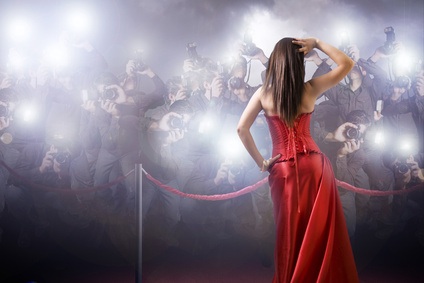 Actors are great at developing hype to draw their fans to anticipate the results of an award announcement. They bring their fan base into the ballroom vicariously through Facebook, Twitter, Instagram and Periscope. The progressive evening puts fans on the edge of their seat and then…nothing. The actor stops the stream of updated posts because he or she doesn’t know what to do when the award goes to another artist.
 Filmmaking is one of the few businesses that give you the choice of making art or a profit. Those entering the industry must either work their way up through the ranks, or capture the market’s attention with an extremely “artistic” film or a very lucrative one. Most filmmakers opt for the artistic film.
 CJ's Corner