

Gen Z Pushes Millennials Aside

Gen_ZChurches and Independent Filmmakers are now realizing they are late in gearing their presentations to the taste and needs of the Millennials. Both groups, which at one time drove our society, are playing catch up in shifting their attention to the next generation. Unfortunately, it’s too late.

Generation Z is now positioned to drive our society forward. They are a bigger group than the Millennials and the remaining Baby Boomers. They are currently the largest population group with the most disposable income at $40B annually.

In the church world, the structure or format of services is still geared toward Gen X. In the independent film world the movies are geared toward Baby Boomers. That’s not to say a handful of churches or movies weren’t made for the Millennials, but those organizations are in the minority. Regardless, both groups should be refocusing on Generation Z.

Millennials desired to learn the truth about living life from the Baby Boomers, but instead got inauthentic rhetoric. Gen X was too small to fill the role, so the Millennials did the best they could on their own. This led to watching less movies and not attending church. Only about a third of Millennials go to movies. Also, about a third attend churches. Neither of which is geared toward their needs.

But this year, Generation Z has now crossed the point of demarcation in being the largest population group and has the most disposable income. They haven’t yet determined their views on church, nor have they decided yet on making movies a part of their lives.

Pastors and filmmakers have a clean slate to build a new audience. Unfortunately, most have just caught on to the impact of the Millennials and might not catch on to the growing power of Generation Z until its too late. But for those who want to be ahead of the curve, I’ll share some of their characteristics…

Realistic Not Idealistic
Gen Z will not take hope from anyone based on an expressed set of ideals. Instead, they want the unadulterated truth about how to do real life. They are very realistic in what daily steps are required to succeed in this life and they don’t care about the media storm or the news drama filling the airwaves. They just want to know the simple truths necessary to live a good life.

Live in the Shadows
After watching the Millennials get into trouble with social media by accidental posts or the PC police chasing down the one wrong sentence someone uttered, Gen Z is standing back in the shadows. This generation has been walking away from top media sites like Facebook (lost 25% of Gen Z in last few years) to avoid being pulled in to the unwanted limelight.

Hard Working Entrepreneurs
Three fourths of Gen Z wants to be entrepreneurs. They are okay with hard work, as long as they get the direct benefit that comes with operating ones’ own business. They see the Millennials as lazy and accomplishing little, making the market ripe for Gen Z to take over. This will shrink large corporations and grow boutique businesses that will team on a project-by-project basis – Breathing life into a new kind of economy.

4D Thinkers
Gen Z is a hyper focused generation whose awareness is all encompassing. They are very much aware of what all generations are doing, how it affects them, and how to counter the negative effects. They are capable of piecing information together from multiple sources and coming up with new solutions that far exceed the Millennials.

Tech Savvy
To keep up with their rapid thought patterns and the development of their ideas, Gen Z sees technology as mandatory to survival. Most would put technology in the same category as air, water, food and shelter. This life pattern will mean more relationships developed over projects than in any other form.

These are the people the churches and filmmakers must learn how to interact with, teach, and entertain. Gen Z will be coming into power in about ten years, giving churches and studios time to ramp up to meet their needs. Unfortunately, many will miss the opportunity since they are just now focusing on the Millennials.

Copyright © 2016 by CJ Powers


The Love Triangle (or Box)

Love TriangleYoung filmmakers rarely use a love triangle within their movies. They miss the tremendous amount of conflict and story development that rises naturally from the mix. Their eyes are closed to the internal stories tumbling within the souls of each character and how it externally manifests itself in humor and drama.
Relationship triangles in life happen more times than we admit. But, I’ve experienced the dreaded relationship “box” and found the experience stranger than fiction. However, the true elements from within the experience make great tools for interesting movies.

I spent a couple summers in high school and college at my family cottage on beautiful Bughs Lake. It was a small lake that perfectly reflected its surroundings until the ducks flew in, putting ripples in the water just before dinner.

There were four of us that hung out together. Sue was the most beautiful, the smartest and most charismatic. She had the artistically sculpted legs of a dancer and a personality that could keep people entertained for hours. Her cousin Lori was also hot with well-toned muscles and a deep tan. She was the most energetic of the group and pumped life into every room she entered.

David lived one lake over and joined us numerous times for whatever the day’s activity would bring. He was a jock that looked like a California surfer and turned every head. We had a blast water skiing together and cruising around trying to figure out how we could win the hearts of Sue and Lori.

When the four of us hit the nightlife together, we were the most fun group in town. This was partly due to the group dynamics and we simply had lots of fun, which was contagious. But there was one other factor that stimulated interest. No one knew who might someday have the chance to date whom. It was like being in a lover’s triangle of sorts. But I’ll call it a four-cornered box to make my point to filmmakers.

I wanted to spend as much time with Sue as possible. Although our time together was limited to practicing dance for clubbing and planning how we could connect her with David. I wanted Sue to be happy, so I did everything possible to persuade him, but David was fixated on Lori. And yet, I was the one Lori invited to her prom – Forming a box.

I’m not sure if Sue ever dated David, or if he ever dated Lori, but I was pulled out of the mix. In fact, my family situation escalated with one crisis after another until it culminated in the selling of the cottage. With all the emotional turmoil I faced and the overwhelming responsibilities dumped in my lap, I lost touch of everyone. My last memory of Lori was when I totally messed up her after prom swimming event and never had the guts to apologize.

I never reconnected with David. And as for Sue, I eventually noticed her on stage during a performance my wife and I attended. She and her husband were professional dancers that traveled with the show. I took my wife backstage so we could reminisce for five minutes in between Sue’s performances. My wife felt a bit awkward since Sue was far more gorgeous than I had ever described. But it was okay because Sue and I were never more than summer friends and dance partners.

Love triangles, whether real or only perceived by a character, fuels internal struggles that launch external actions. Some are filled with humor and others drama, but in either case an audience is captivated until the end of the story.

In addition, the director can take turns revealing something first to the audience, while keeping the character in the dark, or vice a versa. This shifting of patterns also creates great interest in seeing the story to its conclusion.

For instance, let’s say our relationship box only existed from the perspective of my character, which is probably true in real life as well. Maybe Lori never liked me enough to date, but couldn’t stand the kids at her school. Because of our group friendship she trusted me enough to escort her to prom. In other words, she was just drawing from our friendship with nothing more in mind.

If the audience knows her request was just one of friendship, but my character was convinced she liked him, he’d find himself in awkward moments – Trying to avoid getting too close for fear of losing focus on Sue. Or, maybe she really likes him and uses the friendship to leverage an opportunity, but he’s so blinded by his false hope for Sue that he misses his opportunity with Lori.

Now, keeping the triangle/box idea in play, we can see that the only person that stands a chance at winning is David. He could realize what Sue has to offer and change his focus, or he could finally get Lori to slow down enough for him to win her heart. The audience then feels sorry for my character, as he slowly walks off into the sunset alone.

The reason love triangles work in movies is because they force the storyteller to reveal things about each character to a depth that stirs the audience. The viewers learn to care about the characters and want to see how things work out. The triangle technique develops the characters beyond the two dimensional stereotypes that reveals both internal and external circumstances.

Multi-dimensional characters always draw an audience and build the fan base for a sequel. The simple interaction between each character’s goals is enough to drive interest for a 90-minute stretch of story.

Copyright © 2016 by CJ Powers

When I met Prince

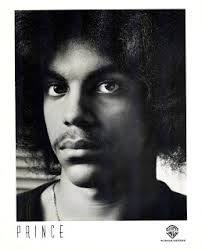
PrinceYesterday, when I heard about Prince having passed away, I reflected back on the day we met. It was at a party in La Crosse, WI. He came down from Minneapolis with a couple of his buddies to have the “college experience.” La Crosse was a college town with three universities and a mile long strip of bars.

Drinking started on Tuesdays with 99¢ beers. Wednesday nights were ladies nights. Thursdays were weekend pre-parties. And, Friday and Saturday were full blown party nights. Since Old Style Brewery was in town with the largest six-pack in the world (32,000 gallons per can), all bars served the same beer.

But on this night, there was a dorm party at Coate Hall at the University of Wisconsin. I had recently come off of a film shoot for CBS. I was hired as a cinematographer to shoot all location footage for a documentary titled The Chileda Institute. I was reviewing my up coming production schedule for The Wisconsin Television Network when a group of guys barged into my room.

The student had brought his new “friends” in to introduce me to Prince. He said we had to meet since we were both in entertainment. But, before the guy finished his introduction, the self-proclaimed head of Prince’s entourage introduced Prince as an up coming star that was putting an album together (For You) and it was destined to be a hit.

Prince was embarrassed by the over the top introduction. We shook hands, sat down and chatted. The other guys took off to find some “babes” to build excitement into the party.

It didn’t take long for our conversation to focus on art. Prince was a true artist and not much into the party scene in those days. Neither one of us had a drink in our hands, but we probably had more fun talking about art than anyone else did chugging the brew. A spontaneous conversation about art is far more appealing for artists than the overture any brew can make towards fun.

Our conversation was interrupted when his entourage returned with lots of women. One woman shoved a beer into his hand and pulled him toward the door. He told me that I should be a part of the music circuit during my production down time and he’d help make it happen. Then he disappeared into the crowd of women and that was the last time we’d meet.

Prince was true to his word. During that next week I received a call from the new venue in town and by the weekend I was a concert roadie. My tenure in the music industry was short lived, as I worked six days a week in television. But I did have the opportunity to work the John Denver World Tour and the Beach Boys Tour.

The experience opened my eyes to an entire world that I didn’t know existed. Some day I’ll take the time to share about it, but for now I’ll just say, “Thanks Prince, for our great chat and my intro into the music industry.”

Copyright 2016 by CJ Powers