 The Art Institute of Chicago is a wonderful place to explore painting styles that have brought pleasure throughout the centuries. Some of the great classics are on display including works from Winslow Homer, Grant Wood, and Edward Hopper. Each piece of great art can capture your attention and maintain your focus for several minutes, unless you’ve experienced what I call “artistry overload.”
The last time I visited the museum, I felt the effects of artistry overload after attempting to pause at each of the 1,000 plus paintings and appreciate what the artist was attempting to communicate. My time dwindled quickly and I never got to the works of art that I appreciate most.
I did, however, learn to appreciate several new artists that most people raced past on their way to more familiar corridors. My observation that day helped me to realize that knowing when to pass or pause was essential to understanding and appreciating great art.
I first became aware of artistry overload when I visited the Magic Kingdom at Walt Disney World. Prior to attending, I had watched two documentaries on the making of the park and read a couple of behind the scenes books regarding the details missed by most vacationers. I was ready to experience the park through the eyes of the artists who created the venue.
The turnstiles spun as a large crowd moved into the park. I tried to avoid bumping into too many people as we funneled toward the entrance. I was ready to see the park with new eyes. Everything I had learned popped into my mind as I saw the very things I read about.
Glancing around, I realized that I was one of the few appreciating the full artistry of the show (“Show” being one of Disney’s four keys to a great guest experience). Most hurried past on the way to their favorite rides.
The layout of the Magic Kingdom was designed to be a show, similar to watching a movie. The first things you see are the trailers or coming attractions. When you enter through the tunnel that resides under the train tracks, you see posters on the walls featuring the coming attractions from inside the park.
Once you enter Main Street Square, it’s like watching the opening credits. The signs and windows are covered with the names of people who made the Magic Kingdom possible. For instance, above the Main Street Athletic Club are the words, “Big Top Theatrical – Claude Coats, Marc Davis, John DeCuir, Bill Justice.”
The sign honors the four men listed, three of which are Disney Legends, although they had nothing to do with any make-believe Big Top Theatrical company. Claude Coats painted all the sets for Disney’s first animated feature Snow White and the Seven Dwarfs, and he also worked with Imagineering to design numerous rides including Pirates of the Caribbean. Marc Davis was one of the Nine Old Men, core animators during Disney’s life.
John DeCuir was a production designer and art director who not only won three Oscars for his work on The King and I (1956), Cleopatra (1963), and Hello, Dolly! (1969), but also illustrated in watercolors numerous theme park ideas that Disney dreamt up for the Magic Kingdom. Bill Justice, who painted many of Disney’s ideas, also animated characters in Disney’s classics, but is most known for animating Thumper from Bambi (1942).
There are dozens of credits throughout Main Street that pay tribute to the park’s artists, but are only appreciated by the discerning eye. I had fun scanning Main Street’s heritage, but soon tired from all the visuals bombarding me. I was experiencing artistry overload. The more I knew and could appreciate, the slower my trek down the boulevard.
I shared what little I had accumulated concerning artistry overload to a friend, who happily suggested that I shift my focus to what I use in a library. He said, “Picture shelves upon shelves of books expanding across aisles and aisles of floor space. All of which are due appreciation at some point, but not today.”
My mind jumped to my last library visit. I headed straight for my two favorite stacks of books. One held the books on entertainment and the other on movies and filmmaking. The carpet was well worn from my many visits and the nearby table was comfortably familiar. It was a place that never overwhelmed me, as I had already perused every book on the shelves.
That was my answer. I had to return to the Art Institute of Chicago multiple times. Once to see the traveling Monet exhibit, another time to study the miniatures, which I’m so very fond of, and another time to explore one new artist. Maybe during another month I’d visit my favorite artists and then plan future explorations to improve my discerning tastes and expand my horizons.
Heading back to the Magic Kingdom with a plan created great relief. I spent three entire days exploring things that most people miss. In fact, after a discussion with a cast member, I soon found myself behind the scenes and appreciating the artistry of show far more than I could ever have imagined.
The key was seeing things from a library of focus. No longer would I see the entire library as I entered, but instead I’d focus on only the things I was ready to explore. Just as a great movie can be watched numerous times to pick up on all the director’s hidden Easter eggs, how I enter new locations with a sense of appreciation changed to only take in what I could manage on any given day.
© 2017 by CJ Powers
SaveSave

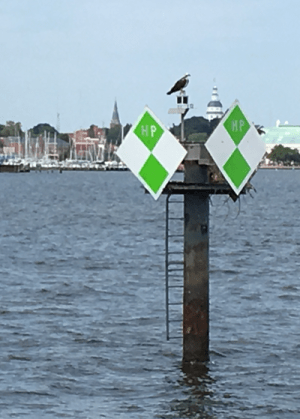 Magic happens whenever I’m cruising on water in new places. This morning I launched from historic Annapolis Harbor, located next to the U.S. Naval Academy. The ship’s captain was friendly and took time to point out several noteworthy sights.
 A month later he won one of the first battles at sea when he captured the English tender Edward. He had captured 20 ships by the end of the war, the contents of which were sold for $3 million at auction for the Continental Congress. Soon after, Barry became the first commissioned to the United States Navy.
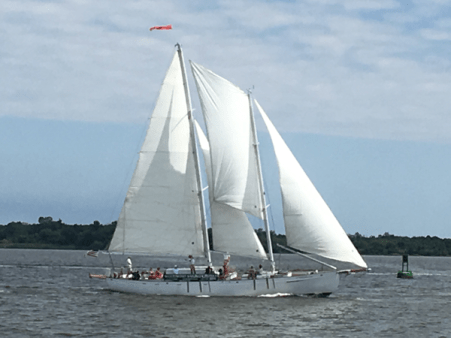 We later headed toward Chesapeake Bay and enjoyed a little sightseeing of civilian sailboats. But we couldn’t get away from the area’s rich history as the captain pointed out the steak house with a wooden domed roof. In its earlier life, the building housed congress for several months before moving to Washington D.C..



 CJ's Corner