 I’ve met several actors in the past six months who were a part of a feature film that haven’t released. They were adamant about the award winning film’s quality being high and didn’t understand why there was a problem getting distribution. In each case, the reason the film wasn’t picked up was obvious, considering its weak marketing strategy.
Independents are on pace this year to produce just shy of 5,000 films in the United States. Based on history, about 400 of those films will be released. The average person will hear about 20 of the films and they will see 1.5 of them. This is due to the lack of marketing focus given to the films.
Most filmmakers lack marketing skills and never create an affective campaign. Some filmmakers create a campaign, but miss the mark in connecting the film’s message to the right audience. Still others understand how to market to the right audience, but they forget the principles of marketing to the right distributor.
Understanding the basic marketing principles will advance the film to its place in the market. Here are a few basics:
Match the Story to the Audience
Films typically have up to five plotlines, but it’s the “A” (action) or “B” (theme) plotline that is used to market the film. These two plotlines answer the question, “What is the film about?” The next step is getting that answer to the right audience.
I recently watched the trailer for Return to the Hiding Place, an award winning film that should be aimed at Millennials. Its message is, “As the will of the students go, so goes the will of the nation.” However the title uses the word “Return” to reference The Hiding Place which Millennials know nothing about, since the film came out in 1975 – A decade before they were born.
By using the word “Return” in the title, the filmmakers are going after the Baby Boomer generation who may have seen the original film in their 20s or 30s. However, the audience was extremely small due to the film having a four walling release.
This mismatch of Baby Boomer nostalgia combined with a story line aimed at Millennials will make it difficult for the filmmaker to find distribution. Adding to this mismatch is the film’s Nazi backdrop, which most Millennials know little about. A recent talk show host took to the streets and interviewed Millennials about Hitler. Sadly, none of those interviewed had any idea who he was.
By changing the trailer, promotional materials, and title (although this might not be possible since its already winning awards) to aim the film specifically at the Millennials, the film is more likely to get a broader distribution. Thereby educating Millennials about the Holocaust.
Use Word of Mouth
The average person impacts 200 people a year. Those who participate in social media impact 500 people on average. Since most people in the film industry are into social media to promote their work, a cast and crew of 100 people can instantly reach 50,000.
If the message is executed properly, the fans can reach an additional 10 million people by using the first degree of separation. Since many messages can pass through six degrees of separation without fading, the potential is global. This out pouring of media about the film always excites potential distributors.
Developing a preproduction, production and post-production campaign takes advantage of the word of mouth process. Every cast and crewmember can be instructed on the exact phrases to use when promoting the film to family, friends and interviewers.
A Cry for Justice, another award winning film without immediate distribution, had a huge out pouring of publicity when the film was placed in the can. This was due to social media and an enthusiastic cast and crew. Unfortunately, the filmmaker didn’t provided promotional marketing phrases to the team, which may have caused incorrect information about distribution efforts to circulate.
Create A Marketing Plan
A marketing plan is typically created during the development stage of the film. It focuses on a primary audience and will address secondary demographics as well. Unfortunately, most filmmakers don’t build a marketing plan, and those who do typically build it after the film is finished, which is too late to control the message.
The plan must include vision statements and phrases that can be used by cast and crew to promote the film. It will also include social media content and schedules. An advertising plan would also be included. The key measurement on the plan’s success is the number of impressions it generates to the right audience.
Distributors were in charge of how films were marketed until the industry became decentralized. Filmmakers know more about their niche markets than the studios, who now make distribution deals based on the filmmaker’s marketing plan. In fact, distributors don’t even need to see the film if the marketing plan is well prepared.
Based on my conversations with two major distributors, the number one reason they turn down an award winning film is due to them not having a clue how to market it. They have also taken films they know nothing about and give it a solid test market release on 150 – 450 screens when the filmmaker’s marketing plan is sound. This accentuates the importance of a solid marketing plan.
As the old adage suggests, “Those who fail to plan, plan to fail,” is applicable in today’s film market. There is no one more qualified than the producer to establish the marketing plan or see to its creation by a marketing team. By establishing a plan, it will move the film into the top 10% of independent films being released and make the investors and distributor happy.
© 2013 by CJ Powers
Photo © Brian Jackson – Fotolia.com

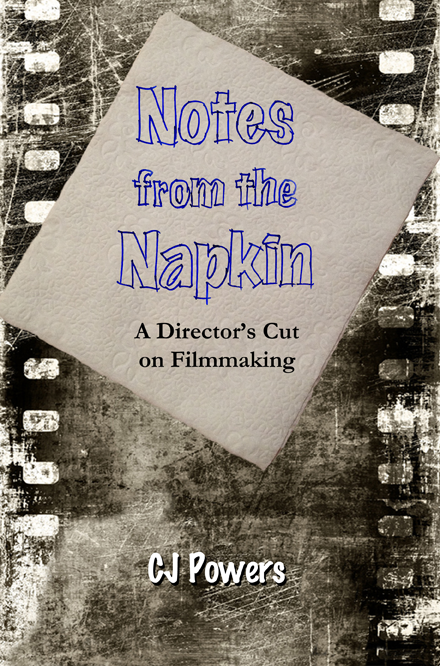 My latest book, Notes from the Napkin: A Director’s Cut on Filmmaking is now available at Amazon.com and at my estore.

 CJ's Corner