Logan vs. The Shack

Watching both films during opening weekend gave me a perspective that I hadn’t expected. Logan had a powerful message about self-sacrifice and unconditional love that many faith-based filmmakers would die for. The Shack on the other hand had a montage of messages that caused me to forget the one that seemed important to me at the time. The convoluted messages weakened the entire story.

Logan had great actors playing at the top of their game. Hugh Jackman and Patrick Stewart both hit grand slams with their multi-dimensional characters. The Shack also had greatness in Oscar® winner Octavia Spenser, but she was limited by playing a one-dimensional character, as was Sam Worthington.

The greatest weakness displayed by The Shack came from the writer breaking the cardinal rule of screenplay adaptation. The main story in the book (plot A) was about Mac’s journey from justified hatred to forgiveness, working through his abusive childhood and the loss of his daughter to a pedophile killer. The secondary story (plot B) was about the search for his kidnaped daughter, the serial killer, and finding closure from the crime.

For a successful adaptation to work on screen, plot-B must become the main story and plot-A must become the secondary story in order to create direction, action and pacing. By not doing this, the audience finds themselves eavesdropping on a man’s slow, methodical therapy session for the majority of the film. Had the writer switched the plotlines the story would’ve turned into a great thriller with multi-dimensional characters.

Instead, the writer decided to stay true to the book, which can’t be done properly in another medium. This decision killed the film from taking off as a general audience hit and confined it to a faith-based audience. When a show like the Lion King is taken from a successful film and turned into a Broadway hit, no one questions the necessary story transformation of the film and stage media.

But, some forget the differences between a book and film, which requires just as much transformation to shift the story from one medium to the other. The physical medium itself requires story changes to keep faithful to the original work.

Logan also held steady to its Marvel canon, while The Shack broke its biblical canon 11 times according to Berean Research. This breaking away from its beloved truths sent some panicking and protesting. Many true faith-based fans avoided the film for that very reason, and who can blame them? No one wants to watch a Star Trek movie that breaks the beloved Roddenberry canon.

Yet, there are plenty of churches that agreed to watch the film in support of the slow growing faith-based pool of films, so it should land around $60-70MM when all is said and done. But, had the story been structured for the medium with multi-dimensional characters, the story would have come in around $200-$250MM based on similar structured stories from the past.

I fully enjoyed Logan because it was a solid story with a Judeo-Christian worldview and phenomenal acting. I did not get my monies worth from The Shack because it was a poorly structured story, its message was an eclectic mix of several religions, and the talent was wasted with one-dimensional characters.

While I would’ve preferred a PG-13 version of Logan instead of its R-rating, I whole-heartedly enjoyed the story. The best part was watching the characters struggle with the human condition. At first Logan took the selfish route to alleviate his own pain, yet deep inside he still chose to help the professor. Then by the midpoint Logan is faced with the reality of love and its true meaning. After fighting with his internal issues, he succumbs to his heart and accepts what is true and right. He charges forward into act 3 demonstrating unconditional love through self-sacrifice for others—dying for his daughter and her friends.

The Shack could have been just as powerful, but the filmmakers chose a different path. It’s too bad people are supporting those bad choices, as the filmmaker will continue to make the same mistakes going forward because of his “success.”


Nominated Screenplays for 2017—Plus

Here are the nominations for Best Original and Best Adapted Screenplay and the scripts that I could find.

Best Original Screenplay:

Hell or High Water,” Taylor Sheridan

“La La Land,” Damien Chazelle

“The Lobster,” Yorgos Lanthimos, Efthimis Filippou

Manchester by the Sea,” Kenneth Lonergan

20th Century Women,” Mike Mills


Best Adapted Screenplay:

Arrival,” Eric Heisserer

Fences,” August Wilson

Hidden Figures,” Allison Schroeder

Lion,” Luke Davies

Moonlight,” Barry Jenkins, Tarell McCraney

Star Trek vs. Faith-Based Canon

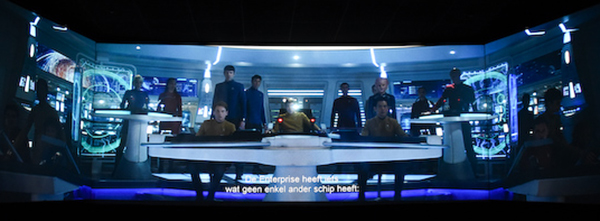
barco-escape-star-trek-beyond-2

Star Trek is one of the most revered science fiction franchises that hold tightly to its canon. The 13 motion pictures and 6 television series all follow the production bibles that have painstakingly been kept corruption free for 50 years. Even the independent fan films have focused on excruciating details to honor the canon.

A recent copyright infringement suit sped its first part of judgment thanks to the accuracy of the canon and the many production companies that continued adhering to the rules of the franchise world without exception. Many Star Trek bible elements have been released and highly supported by the fans, forcing production companies to scrutinize every aspect of their production in order to stay true to its canon.

But in the faith-based films that include stories based on the Bible, a canon of 66 books, few production companies adhere to it. The Young Messiah was released last March and was touted as one of the best faith-based films of 2016, but it broke canon with little repercussions.

The film is a story about Jesus at age seven and his family’s departure from Egypt to return back to Nazareth. This fresh childhood perspective gave audiences an explorative glimpse into how their future Savior grew into his religious identity.

Breaking canon in the name of “creative license” is something that Star Trek storytellers would never do. But, the makers of The Young Messiah had no problems stepping away from canon. According to the book of John, one of the 66 books within the Christian canon, Jesus performed his first “sign” or miracle at the wedding in Cana of Galilee. But, in the film, which takes place years earlier, he brought a dead bird back to life, healed his sick uncle and restored sight to a Rabbi.

While the director intended these signs to reveal the humanity of Jesus, which it did, it broke canon and distorted the truth for its viewers. This creates conflict between those defending faith-based films and those who teach from the canon in real life. And it doesn’t end there.

Back in the 1960’s a group of historical revisionists decided to adjust the thinking of the church through the media. They created a story that Jesus’ hands weren’t actually pierced when he was put on the cross because the Greek word for hand also included the wrist. They also stated that Jesus’ hands would’ve torn open due to his weight, and therefore, he was actually pierced in his wrists when they crucified him.

This notion broke canon, but evangelists liked the “new revelation” and spread the word throughout the world. Today, most pastors who weren’t around for the origin of this story teach that Jesus was pierced in his forearms, albeit close to the wrist. They shifted to the forearm because the wrist is just a series of bones that couldn’t be pierced, and the canon said not a bone in his body was broken, which piercing his wrist would have done. These further adjustments took congregations even farther away from the purity of the canon.

By the way, a couple years ago I interviewed a nurse who worked for an orthopedic hand surgeon. She said that Jesus could easily have been pierced in his hands because of the vast network of ligaments that crisscross like a web inside of the hand, which is also strong enough to hold the body’s weight without tearing.

This Easter a new faith-based film that has broken canon will be released by the title of The Shack. The most obvious departure from canon is that God the Father shows up as God the Mother. Canon states that God wanted to be called the Heavenly Father, but historical revisionists are pushing for God being able to show himself as anything he wants, which meets the canon of the Hindus and Universalists, not the Christians.

What I don’t understand is how Christians, whose lives depend on its writings, are so willing to break canon in the name of creative license, but Star Trek will do everything in its power to maintain their sacred canon. Even J. J. Abrams during the filming of Star Trek 2009 talked about the difficulty in maintaining canon, but how it was well rewarded by the audience’s appreciation.

So, why do faith-based films not follow canon? I’d love to hear your thoughts on the matter, especially since Star Trek is make believe (suggesting that canon doesn’t matter) and Christianity is reality (suggesting canon is critical).

Copyright © 2017 by CJ Powers